
The Ultimate Gorilla’s Nest Rwanda Luxury Lodge Review

One&Only Gorilla’s Nest Rwanda: Luxury Lodge Review, Prices & Gorilla Trekking Guide (2027)

One&Only Gorilla’s Nest stands as Rwanda’s most exclusive luxury gorilla lodge. It is set among eucalyptus trees near Volcanoes National Park. The private tract offers privacy and serene views. Its architecture blends natural materials with modern comforts. The result is a refined, intimate mountain retreat.

As a gateway to experiences, the lodge offers easy access to the park. It showcases a luxury gorilla lodge, rwanda gorilla trek,gorilla trekking, luxury gorilla safari in context. The setting provides privacy with forest views and seamless connections to the trails.

Kigali International Airport is about 2.5 hours away. Kinigi’s gorilla briefing headquarters are just a few minutes from the lodge. Guests enjoy fine dining, personalized service, and easy forest access. This combination makes it ideal for a luxury gorilla safari. Training and staff anticipate guests’ needs with discretion.
But is One&Only Gorilla’s Nest worth its premium price?

At Buutu Safaris, we have now experienced the lodge first-hand on two separate visits. Our original two-night stay included an unforgettable trek to the Susa gorilla family, exceptional dining and time in the forest spa. I returned for another overnight stay in April 2026, giving me an opportunity to see how the property had evolved.

What impressed us most on our return was the consistency of the staff’s exceptional hospitality and the noticeably improved privacy. The eucalyptus trees and surrounding plants and shrubs have grown, the individual accommodation units feel increasingly secluded within the forest.

This is our firsthand review of One&Only Gorilla’s Nest, including its location, rooms, service, dining, gorilla trekking access, accommodation prices and whether it deserves a place on your luxury Rwanda safari.


One&Only Gorilla’s Nest at a Glance

FeatureDetails
LocationKinigi, Musanze District, Rwanda
National parkVolcanoes National Park
AccommodationLuxury forest treehouses and suites
Kigali International AirportApproximately 2.5–3 hours by road
Helicopter transferApproximately 25 minutes from Kigali
Gorilla trekking briefing pointApproximately 5–10 minutes by road to Kinigi
Gorilla permitUS$1,500 per international visitor
DiningFine dining featuring Rwandan and international cuisine
WellnessForest spa, heated pool and fitness facilities
Other experiencesGolden monkeys, cultural visits, hiking and wellness
Ideal stay2–3 nights, or longer for multiple experiences
Best suited forLuxury travellers, couples, honeymooners and gorilla trekking enthusiasts
Buutu Safaris visitsOriginal two-night stay and April 2026 return visit

Our verdict: One&Only Gorilla’s Nest is an excellent choice for travelers seeking a luxury Rwanda gorilla safari, particularly those who value personalized service, privacy, exceptional accommodation and a short morning transfer to the gorilla trekking starting point.


Is One&Only Gorilla’s Nest Worth It? Our Firsthand Review

One&Only Gorilla’s Nest delivers a style of luxury that goes beyond elaborate interiors and expensive facilities.

What sets it apart is how successfully it combines comfort, nature, personal attention and access to one of Africa’s most remarkable wildlife experiences.

Our first visit left a lasting impression. We were welcomed with traditional Rwandan dancing, shown to an exceptionally spacious forest suite, treated to memorable meals in different restaurants and carefully prepared for our gorilla trek.

On returning in April 2026, we were interested to discover whether the property had maintained the same standards.

I found the staff just as exceptional as we remembered. A warm welcome felt more intimate as Patrick put his hand to his chest as he welcomed us.

The warmth of the welcome, attentiveness and professionalism remained defining features of the experience.

We also noticed an important change in the environment: the trees around the accommodation had matured, creating greater natural screening between the suites.

This additional vegetation improved the sense of seclusion and made the resort feel even more deeply integrated into its forest surroundings.

For a luxury lodge, privacy is almost as important as the physical accommodation itself, and this improvement was particularly noticeable.

What stood out during our two visits

  • Exceptional staff and consistently personalized service.
  • Spacious, beautifully furnished accommodation surrounded by eucalyptus trees.
  • Greater privacy during our January 2026 return visit.
  • Convenient access to the Volcanoes National Park trekking headquarters.
  • Memorable dining with locally inspired ingredients.
  • Thoughtful preparation for the gorilla trekking experience.
  • A relaxing forest spa that provided welcome recovery after trekking.

These are the qualities that make us comfortable recommending the lodge to travelers seeking an exclusive Rwanda gorilla safari.


Where Is One&Only Gorilla’s Nest Located?

One&Only Gorilla’s Nest is located in Kinigi, near Volcanoes National Park in northwestern Rwanda.

The resort is set within a beautiful eucalyptus forest with the Virunga volcanoes forming the dramatic backdrop to the region.

Its location is one of its greatest practical advantages.

Just Minutes from the Gorilla Trekking Starting Point

One of the biggest advantages of staying at One&Only Gorilla’s Nest is the very short drive to the Volcanoes National Park headquarters at Kinigi, where the gorilla trekking morning briefing takes place.

The headquarters is approximately 5–10 minutes away by road, depending on the exact transfer arrangements.

This makes the early morning much more comfortable.

Instead of a lengthy drive before the day’s activities, guests can enjoy breakfast at the lodge and reach the briefing point without spending a substantial amount of time traveling.

For older travelers, families with eligible trekking-age children, photographers carrying equipment and anyone who prefers a relaxed morning, this proximity is a meaningful advantage.

After the briefing, guests travel with their assigned group towards the appropriate trail head. That additional journey depends on which gorilla family has been allocated and should not be confused with the short drive to the park headquarters.

Our experience: I particularly value this location because it reduces unnecessary travel before what may already be a physically demanding day in the mountains.

Getting to One&Only Gorilla’s Nest from Kigali

In December 2024, we approached the lodge after crossing the Uganda-Rwanda Border at Cyanika. This was after our first gorilla trek on a safari that had 2 gorilla trekking experiences: the gorilla habituation experience in Uganda and standard gorilla trekking in Rwanda.The drive from Bwindi to One and Only Gorilla Nest took about 5 hours.

In 2026, we drove for approximately 2.5–3 hours from Kigali International Airport by road.

The drive passes through Rwanda’s beautiful hills and rural landscapes towards the Virunga Mountains.

A helicopter transfer from Kigali is also possible, with flight time of approximately 25 minutes, subject to scheduling and weather conditions.

For visitors arriving from the United States, I normally recommend spending at least two nights at the lodge so that the gorilla trek is not squeezed between long travel days.


Our First Visit: An Extraordinary Rwandan Welcome

Our first visit began with a welcome that remains one of our fondest memories of the resort.

As we drove towards the entrance, the distant sounds of traditional Rwandan Intore drums grew louder.

The performers approached our vehicle in an energetic display of traditional dance. The male dancers wore ceremonial headpieces and carried shields and spears, while the women moved gracefully in a performance that celebrated Rwanda’s cultural heritage.

It was a memorable introduction to the property.

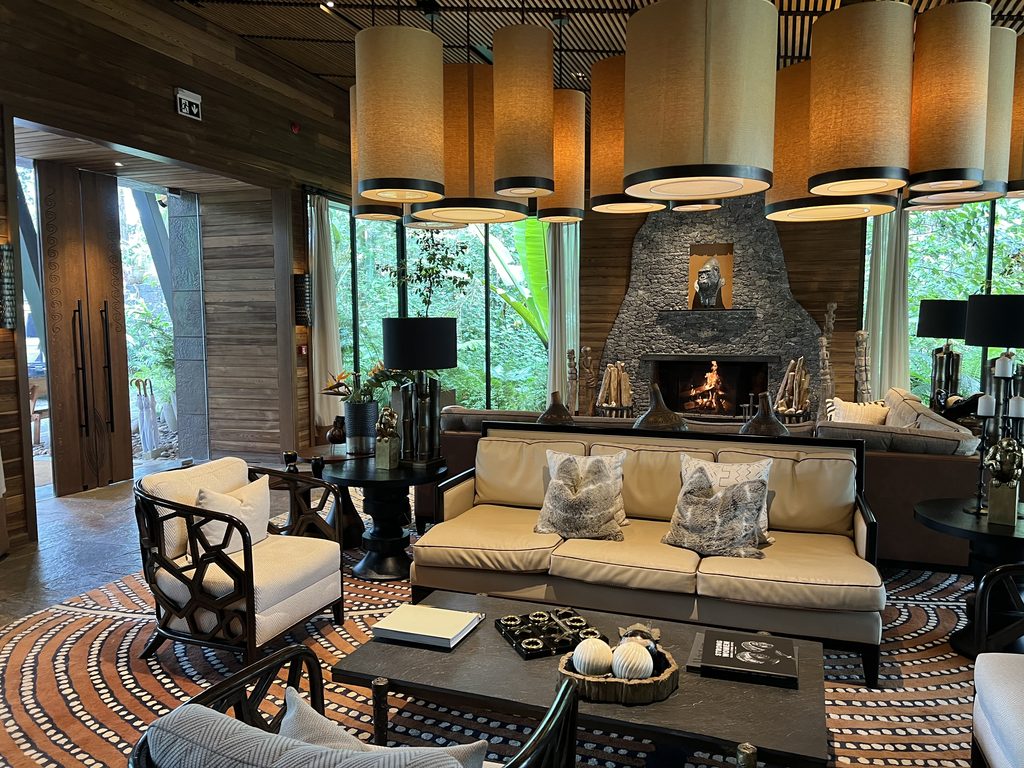
Our host, Barbara, welcomed us and guided us into the reception area, where a warm fireplace and beautifully presented refreshments awaited. The open and exceedingly spacious reception was inviting with multiple sitting areas. A massage chair was available for those who wanted neck massages.

The welcome immediately established the atmosphere of the lodge: elegant, attentive and unmistakably Rwandan.

From the beginning, the staff made us feel genuinely welcome rather than simply processed through the formalities of checking in.

That distinction is important at a luxury property.

The meals were first class as the lodge ensured we dined in different dining areas where food was served.


Our January 2026 Return Visit: Exceptional Staff and Greater Privacy

When we returned to One&Only Gorilla’s Nest for an overnight stay in January 2026, we were keen to see how the resort had developed since our previous experience.

Luxury properties can sometimes impress on a first visit but struggle to maintain the same level of service over time.

That was not our experience here.

The staff remained exceptional.

We again encountered the same culture of warm, attentive hospitality that had impressed us during our original stay.

Service felt polished without becoming overly formal, and the overall attention to guest comfort remained outstanding.

A More Private Forest Retreat

The most noticeable physical improvement was the growth of the trees and vegetation around the accommodation.

On our earlier visit, the forest setting had already been beautiful, with treehouses and suites surrounded by greenery.

By January 2026, the trees had matured further, providing more natural screening and greater privacy.

The accommodation felt more enclosed by the forest, with increased separation from neighboring units.

This change enhanced one of the resort’s greatest attractions: the opportunity to enjoy a luxury retreat surrounded by nature without sacrificing personal space.

The growth of the trees also gave the property a more established, immersive forest atmosphere.

For couples, honeymooners and travelers seeking quiet time after a demanding gorilla trek, this additional privacy makes a meaningful difference.

Our return visit confirmed that One&Only Gorilla’s Nest has retained its exceptional service while its forest environment has become even more attractive.


Luxury Accommodation at One&Only Gorilla’s Nest

The resort offers a collection of freestanding treehouses and suites carefully positioned among eucalyptus trees and landscaped gardens.

Rather than one large hotel building, the accommodation is spread across the forest setting.

This design contributes significantly to the property’s atmosphere.

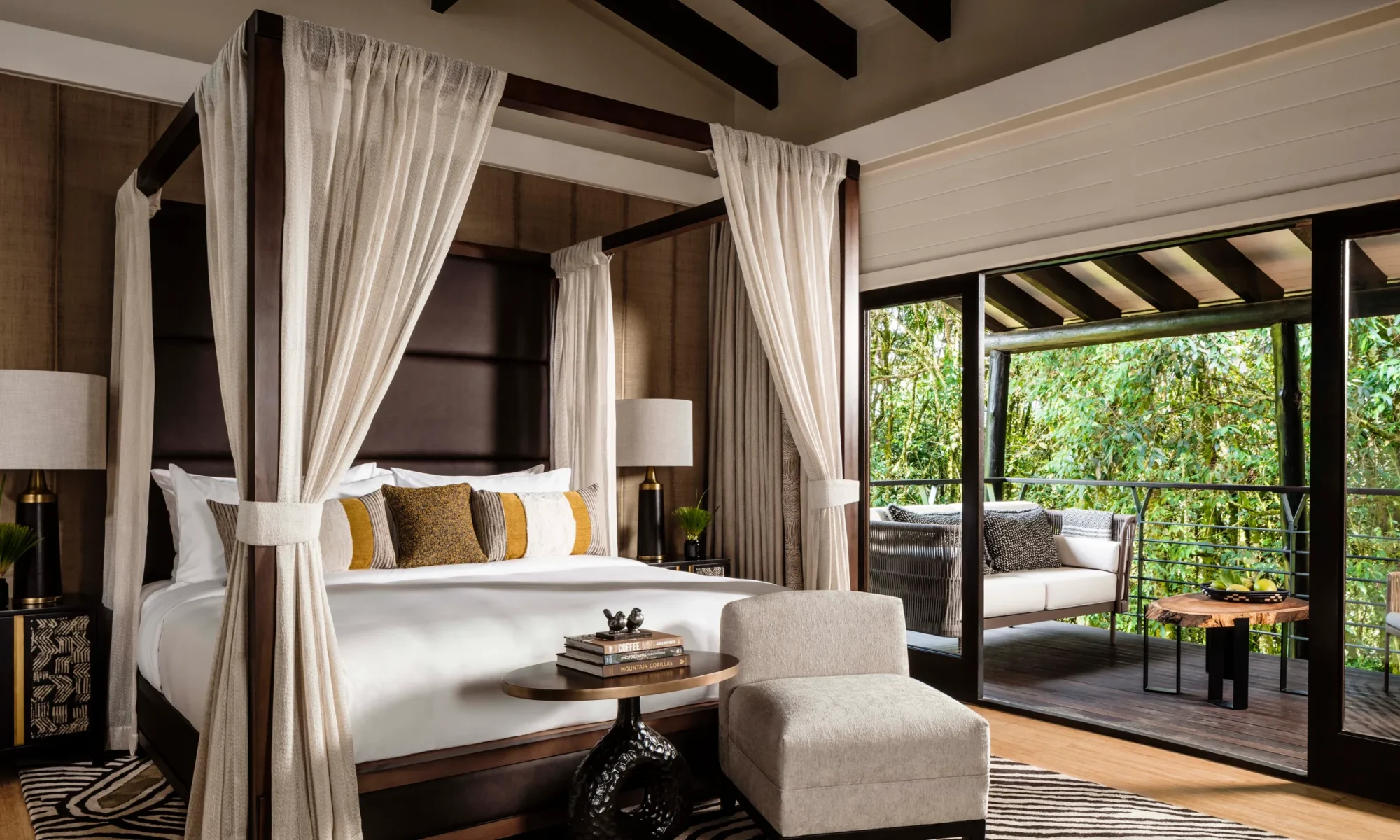
The rooms combine contemporary luxury with natural materials, local artistic influences, fireplaces, private outdoor spaces and large windows that bring the surrounding greenery into the living areas.

Forest Treehouse

The Forest Treehouse is an attractive option for couples seeking a luxurious forest retreat.

Features include a private deck, a comfortable bedroom, a soaking bathtub, outdoor shower and fireplace.

Its intimate scale makes it particularly appealing for honeymooners and couples whose main priority is spending time together surrounded by nature.

Virunga Suite

The Virunga Suite offers approximately 147 square meters (1,582 square feet) of space.

Its larger living areas and connection to the outdoors provide additional comfort for guests who appreciate spacious accommodation.

Ingagi Suite

The Ingagi Suite offers approximately 251 square meters (2,702 square feet), with generous living spaces and an expansive outdoor deck.

During our original stay, we enjoyed a beautifully secluded suite of this size, situated in a quiet part of the property.

Our host had carefully selected accommodation offering privacy and wonderful views of the surrounding forest.

A golf cart transferred us through the grounds to the suite, where floor-to-ceiling glass windows immediately drew our attention to the greenery outside.

The spacious interior featured elegant furniture, a fireplace, a dining area and beautiful natural finishes.

Outside, the expansive deck was furnished for relaxation, with comfortable seating and an open-air bathtub.

The gentle movement of eucalyptus leaves in the breeze created a remarkably peaceful atmosphere.

This became one of our favorite places to unwind.

Silverback Suite

The Silverback Suite sits at the top of the accommodation range.

It offers exceptionally generous living space, extensive privacy and premium facilities, including a private pool.

For travelers seeking the highest category of accommodation at One&Only Gorilla’s Nest, it is worth considering.

Which Room Would We Recommend?

For couples wanting a luxurious but intimate forest experience, the Forest Treehouse is a strong choice.

For guests who value additional living space and an expansive private deck, the Ingagi Suite is particularly attractive.

For travelers seeking the resort’s most exclusive accommodation experience, the Silverback Suite deserves consideration.

We recommend selecting the room based on the traveler’s privacy requirements, preferred facilities and budget rather than automatically choosing the most expensive category.


How Much Does One&Only Gorilla’s Nest Cost in 2027?

One&Only Gorilla’s Nest is an ultra-luxury property, and its accommodation prices reflect that positioning. Rates range from $4,830 to $26,000 per room per night depending on the season.

Rates vary considerably depending on the room category, season, occupancy, length of stay and package inclusions.

Accommodation prices depend on the season, room category, occupancy and inclusions. 

The published One&Only Gorilla’s Nest Rwanda rates for 2026–2027 start at approximately US$2,415 per person per night sharing, depending on the season.

These are the rates advertised for the entry-level Forest Treehouse, based on two guests sharing.

One&Only Gorilla’s Nest nightly rates

Travel datesPer person/nightPer room/night (2 guests)
1 Nov – 21 Dec 2026$2,415$4,830
22 Dec 2026 – 6 Jan 2027$4,130$8,260
7 Jan – 28 Feb 2027$3,005$6,010
1 Mar – 31 May 2027$2,415$4,830
Jun – Dec 2027On requestOn request

For 2027, travelers should request a date-specific quotation rather than assume that one published nightly price applies throughout the year.

What Is Included in the Accommodation Rate?

The lodge’s published Forest Treehouse inclusions currently feature:

  • Breakfast, lunch and dinner.
  • Selected beverages with meals.
  • Selected resort activities, subject to availability.
  • Trekking equipment such as ponchos, gaiters and backpacks.
  • Assistance with preparing for outdoor activities.
  • Additional resort services according to the selected booking conditions.

Not every service or experience is necessarily included in every reservation, so inclusions should be confirmed before booking.

Is the Gorilla Permit Included?

Gorilla trekking permits are generally arranged separately unless specifically included in a safari package.

The standard Rwanda gorilla permit costs US$1,500 per international visitor.

This provides access to a guided gorilla trek and up to one hour with a habituated mountain gorilla family once located.

At Buutu Safaris, we can prepare a customized luxury Rwanda safari quotation combining the accommodation, gorilla permits, private transfers, guiding and other requested activities.

Planning a stay in 2027? Request current One&Only Gorilla’s Nest rates and gorilla permit availability for your preferred dates.


Gorilla Trekking from One&Only Gorilla’s Nest

Gorilla trekking is the primary reason many travelers visit Volcanoes National Park.

The experience begins early in the morning with a briefing at Kinigi park headquarters, where visitors receive instructions and are assigned to trekking groups.

From there, guests proceed towards the relevant trailheads with guides, trackers and park staff.

The hiking time depends on the location of the assigned gorilla family, weather conditions, terrain and the group’s pace.

Once the gorillas are located, visitors can spend up to one hour observing them.

Our Trek to the Susa Gorilla Family

During our original stay, we trekked to see the Susa gorilla family.

The experience was extraordinary.

Our encounter involved 23 mountain gorillas, a remarkable sight that made the trek especially memorable.

Watching the interactions between different members of the family reinforced why mountain gorilla trekking remains one of Africa’s most extraordinary wildlife experiences.

Before departing, the lodge staff had carefully prepared us for the day.

They provided or helped organize useful trekking equipment, including walking sticks, gloves, ponchos and gaiters.

Our packed lunch was beautifully presented, reflecting the same attention to detail we experienced throughout our stay.

Although the trek was physically demanding, the combination of the gorilla encounter and the lodge’s thoughtful preparation made it one of the highlights of our visit.

On our second visit we trekked the Kwitonda family of gorillas. The trek lasted no more than an hour before we found the gorillas. The trek was special because we had never had 5 gorilla silverbacks in one place. We also got to see recently named babies which remained jolly throughout the hour.

What Should You Bring for Gorilla Trekking?

We recommend sturdy waterproof hiking boots, long trousers, a long-sleeved shirt, gloves, rain protection, drinking water and a small daypack.

Porters are available to assist trekkers and can be particularly helpful on steep or slippery trails.

Guests should also be realistic about their fitness and mobility. Trekking conditions vary daily, and no operator can guarantee an easy walk.


Dining at One&Only Gorilla’s Nest

Food was one of the great pleasures of our original stay.

The lodge offers refined dining that draws inspiration from Rwandan produce while incorporating a range of international culinary influences.

Our first dinner was a beautifully presented four-course meal.

The menu featured locally inspired ingredients, including baby aubergines and fresh seasonal produce.

We selected duck for our main course and thoroughly enjoyed the balance of flavors and presentation.

On another evening, we chose Osso buco, a rich and memorable dish that demonstrated the kitchen’s ability to combine familiar international cuisine with the hospitality of Rwanda.

Breakfast was equally impressive.

We enjoyed an extensive selection of dishes before departing for our gorilla trek, and the staff ensured everything was carefully timed around the morning’s activities.

What impressed us was not simply the quality of the food but the service surrounding each meal.

Dining felt unhurried, personal and beautifully coordinated.

For a luxury gorilla lodge, this matters because guests often arrive after long international journeys or return tired from trekking.


The Forest Spa: Relaxation After Gorilla Trekking

After our memorable trek to the Susa gorilla family, we returned to the resort and made our way to the spa.

The wellness facilities are set within the eucalyptus forest, creating a peaceful environment surrounded by greenery, flowers and birdsong.

We chose a full-body massage using coconut oil and locally grown coffee ingredients.

After hours spent walking through the forest, the treatment was exactly what we needed.

The combination of skilled therapists, natural surroundings and soothing treatments made the experience particularly memorable.

Later, we returned to our suite and spent time relaxing on the large outdoor deck.

The tranquil setting was ideal for an evening yoga session and quiet reflection after the day’s adventures.

For travelers planning a luxury gorilla safari, we strongly recommend leaving free time after the trek rather than scheduling too many activities.

The lodge itself is part of the experience and deserves time to be enjoyed.


Other Activities at One&Only Gorilla’s Nest

While mountain gorilla trekking is the main attraction, the resort and surrounding region offer several other experiences.

Golden Monkey Trekking

Golden monkeys inhabit the bamboo forests of Volcanoes National Park.

Their energetic movements, striking coloring and social behavior provide a very different primate experience from mountain gorilla trekking.

Rwandan Cultural Experiences

Guests can explore local cultural traditions through visits and activities organized in the surrounding communities.

The lodge also offers opportunities to learn about Rwandan coffee, music, storytelling and traditional performances.

Hiking and Nature Experiences

Volcanoes National Park provides opportunities for guided walks and hikes, including routes associated with the Virunga volcanoes and Dian Fossey’s conservation legacy.

Spa and Wellness

Guests can enjoy spa treatments, relaxation, yoga and the lodge’s wellness facilities.

For travelers staying three nights or longer, these experiences can be incorporated without rushing the main gorilla trek.


All three provide access to gorilla trekking in Volcanoes National Park.

The gorilla encounter itself is not determined by the price of the lodge.

Instead, the main differences involve accommodation, resort facilities, atmosphere, privacy, service style and individual preferences.

One&Only Gorilla’s Nest vs Other Luxury Gorilla Lodges in Rwanda

Rwanda has several exceptional luxury lodges near Volcanoes National Park.

Travelers comparing One&Only Gorilla’s Nest often also consider Wilderness Bisate and Singita Kwitonda Lodge.

LodgeDistinguishing characterBest for
One&Only Gorilla’s NestLuxury forest resort with extensive wellness facilitiesTravellers wanting a private forest retreat with a full luxury resort experience
Wilderness BisateDistinctive architecture, intimate setting and conservation emphasisTravellers seeking an architecturally distinctive, conservation-focused stay
Singita Kwitonda LodgeContemporary ultra-luxury accommodation and strong conservation positioningTravellers seeking an exclusive, highly personalised luxury experience

Why we particularly like Gorilla’s Nest: Having stayed there twice, we can speak directly about the service, suite experience, dining, wellness facilities and the improved natural privacy we noticed in January 2026.


A 3-Day Luxury Rwanda Gorilla Trekking Safari at One&Only Gorilla’s Nest

For travelers with limited time, three days and two nights provide an excellent introduction to Rwanda’s mountain gorillas.

Day 1: Kigali to One&Only Gorilla’s Nest

Arrive at Kigali International Airport, where your private Buutu Safaris guide will meet you.

Travel through Rwanda’s beautiful hills towards Volcanoes National Park.

Check in at One&Only Gorilla’s Nest, enjoy your suite and relax before dinner.

Overnight: One&Only Gorilla’s Nest.

Day 2: Gorilla Trekking in Volcanoes National Park

Enjoy an early breakfast before the short transfer to Kinigi park headquarters.

Attend the gorilla trekking briefing and proceed with your assigned guide and group to locate a habituated gorilla family.

Spend up to one hour observing the mountain gorillas.

Return to the lodge for lunch and an afternoon of relaxation.

A spa treatment is an excellent way to finish the day.

Overnight: One&Only Gorilla’s Nest.

Day 3: Return to Kigali

Enjoy breakfast before departing for Kigali.

Depending on your international flight schedule, add a city tour or other experiences before proceeding to the airport.

Optional extension: Add golden monkey trekking, a second gorilla trek, Nyungwe chimpanzees, Akagera National Park or a longer safari in Uganda, Kenya or Tanzania.


When Is the Best Time to Stay at One&Only Gorilla’s Nest?

Gorilla trekking is available throughout the year, and One&Only Gorilla’s Nest can be enjoyed in every season.

The drier periods generally offer more comfortable hiking conditions, while the rainy seasons bring particularly lush forest landscapes.

PeriodGeneral conditions
June–SeptemberTypically drier; popular gorilla trekking period
December–FebruaryOften relatively drier; good for trekking
March–MayWetter, with lush green scenery
October–NovemberWetter conditions and potentially muddy trails

Because Rwanda has a tropical mountain climate, rain can occur at any time of year.

For high-demand travel periods, book accommodation and gorilla permits well in advance.


Is One&Only Gorilla’s Nest Suitable for Older Travelers?

Yes, it can be an excellent accommodation choice for older luxury travelers because the lodge is in a largely flat location with barely any steps compared to lodges in Bwindi and Volcanoes National Park. The lodge is also close to the starting point with a short drive to the park headquarters.

Its spacious accommodation, attentive staff, comfortable transfers and wellness facilities are all valuable.

However, staying at a luxury lodge does not make the gorilla trek itself easy.

Mountain gorillas move freely through the forest, and trekking terrain can be steep and slippery.

We recommend discussing any mobility concerns during the planning stage.

A porter can provide valuable assistance, while more substantial mobility support may require special arrangements and advance confirmation.

The lodge’s proximity reduces the morning road transfer, but it does not remove the physical demands of the trek.


Frequently Asked Questions About One&Only Gorilla’s Nest

Where is One&Only Gorilla’s Nest in Rwanda?

One&Only Gorilla’s Nest is located in Kinigi, near Volcanoes National Park in northwestern Rwanda, approximately 2.5–3 hours by road from Kigali International Airport.

How far is One&Only Gorilla’s Nest from the gorilla trekking starting point?

The lodge is approximately 5–10 minutes by road from the Kinigi park headquarters, where morning gorilla trekking briefings take place. After the briefing, additional travel to an allocated trail head may be required.

Is One&Only Gorilla’s Nest worth the money?

For travelers who value privacy, exceptional hospitality, luxury accommodation, fine dining, wellness facilities and convenient access to gorilla trekking, it is a compelling option. Our January 2026 return visit reinforced our positive impression of the staff and the property’s increasingly private forest setting.

How much does it cost to stay at One&Only Gorilla’s Nest in 2027?

Accommodation prices depend on the season, room category, occupancy and inclusions. 

The published One&Only Gorilla’s Nest Rwanda rates for 2026–2027 start at approximately US$2,415 per person per night sharing, depending on the season.

These are the rates advertised for the entry-level Forest Treehouse, based on two guests sharing.

One&Only Gorilla’s Nest nightly rates

Travel datesPer person/nightPer room/night (2 guests)
1 Nov – 21 Dec 2026$2,415$4,830
22 Dec 2026 – 6 Jan 2027$4,130$8,260
7 Jan – 28 Feb 2027$3,005$6,010
1 Mar – 31 May 2027$2,415$4,830
Jun – Dec 2027On requestOn request

Because rates change, we recommend requesting a personalized 2027 quotation rather than relying on a generic nightly rate.

Is the gorilla permit included in the accommodation price?

Not necessarily. The standard gorilla permit for international visitors is US$1,500 per person and is usually booked separately unless specifically included in a package.

How many nights should I stay?

We recommend at least two nights for a comfortable gorilla trekking trip. Three nights allow more time to enjoy the spa, accommodation and optional golden monkey trekking or other activities.

Does One&Only Gorilla’s Nest have a spa?

Yes. The property features forest-inspired wellness facilities and spa treatments, making it particularly attractive for relaxation after gorilla trekking.

Can I visit One&Only Gorilla’s Nest without trekking gorillas?

Yes. Visitors can enjoy the accommodation, dining, wellness facilities and selected cultural experiences without undertaking a gorilla trek.

Is One&Only Gorilla’s Nest suitable for families?

Family suitability depends on the ages of the children, room configurations and the resort’s current booking policies. Mountain gorilla trekking itself is restricted to visitors aged 15 and above. Families should confirm the lodge’s minimum guest age before booking.

Can I combine One&Only Gorilla’s Nest with a safari in Uganda?

Yes. A stay at Gorilla’s Nest can be combined with Uganda’s Bwindi Impenetrable National Park, Kibale National Park or Queen Elizabeth National Park. Travelers can also continue to Kenya or Tanzania for a classic East African safari.


Our Final Verdict: Would We Stay at One&Only Gorilla’s Nest Again?

Absolutely.

Having experienced One&Only Gorilla’s Nest on two separate occasions, including our return visit in January 2026, we remain particularly impressed by the consistency of the staff’s service.

The lodge combines an exceptional location near Volcanoes National Park with luxury accommodation, beautiful grounds, memorable dining and a wonderfully relaxing spa.

On our return, the maturing forest vegetation had created noticeably greater privacy, enhancing the sense of staying within a secluded natural retreat.

And for gorilla trekkers, the short drive to the Kinigi briefing point is a genuine practical advantage.

There are several outstanding luxury gorilla lodges in Rwanda, and the best choice ultimately depends on personal preferences.

But for travelers seeking a luxurious forest resort with exceptional service and convenient access to mountain gorilla trekking, One&Only Gorilla’s Nest remains one of our strongest recommendations.

https://www.instagram.com/reel/DD-QwPXu7ny/?utm_source=ig_web_copy_link&exln=MzRlODBiNWFlZA==&srtk=MzRlODBiNWFlZA==


Plan Your Luxury Rwanda Gorilla Safari with Buutu Safaris

Experience One&Only Gorilla’s Nest with local safari experts who have stayed there themselves.

Buutu Safaris is a family-owned Ugandan safari company operating since 1995, specializing in gorilla trekking and tailor-made East African wildlife journeys.

We arrange luxury gorilla safaris in Rwanda and Uganda, including accommodation, gorilla permits, private transportation, experienced guiding and onward travel.

Whether you are planning a three-day Rwanda gorilla escape, a luxury honeymoon or a longer East African safari, our team can design an itinerary around your interests, travel dates and preferred style of accommodation.

Request One&Only Gorilla’s Nest Rates & Availability

FAQs

1. What is the best time to visit One & Only Gorilla’s Nest?

The best time to visit One & Only Gorilla’s Nest is during the dry seasons, which are:

  • June to September: This is generally considered the peak season with the best weather. Expect less rain and pleasant temperatures, making trekking more comfortable.
  • December to February: Another dry period with good weather conditions for exploring the park.

Why these times are ideal:

Better Weather: Less rain means drier trails and more comfortable trekking conditions.

Clearer Views: Reduced rainfall often results in clearer views of the stunning volcanic scenery.

Peak Season: While this means higher prices and more crowds, it also ensures the best availability for gorilla trekking permits.

2. How much does it cost to stay at The One & Only Gorilla’s Nest?

Prices range from $,4800 to $26,000 depending on the season.

4. Is One&Only Gorilla’s Nest family-friendly?

Yes, The One&Only Gorilla Nest is child friendly with the team taking special care to look after families. They have spacious Virunga Suite at 147 square meters, The Ingagi Suite at 251 square meters and the Silverback Suite at 409 square meters. The chefs also prepare personalized meals for the kids and there are several play areas for children.
A safari in Uganda is 30 percent cheaper compared to one in neighbouring Kenya

Our riverboat guide looks at me earnestly. ‘Did you know that hippos are actually really bad swimmers but elephants can swim very well?’ asks Clinton.

We are on a small boat in Murchison Falls game park on the Victoria Nile River in north-west Uganda. There are hippo eyes all around our boat, their crinkly eyebrows peeping above the water.

‘They look like they’re swimming but their feet are on the muddy ground flats,’ he says.

Just then, there is a gasp from my fellow travellers. In the middle of the river, a family of elephants is crossing. They are up to their bellies in water, feet on the shallow bottom. Two babies have their trunks firmly wrapped around their mothers’ tails for security.

The big bull flaps his ears as the boat approaches. At the back of the line are the teenagers. They’re having a ball, lolloping around like overgrown labradors. They suck water up and then spray it every which way. One of them ducks under and rolls over. Another dives submarine-style and uses his trunk as a snorkel. ‘See how they swim?’ says Clinton.

Uganda is a small landlocked country in East Africa. It shares borders with Kenya and Tanzania and is crammed with wildlife, but the price of its safaris is comparatively cheaper. A good-value safari costs about £200 per day – 30 per cent lower than in Kenya.

And the bonus is that you are not competing with crowds. You won’t have to share your lion with 20 other vehicles jostling for the best camera positions. If you have the budget, there is also the option to visit gorillas in the Bwindi Impenetrable Forest – a permit in Uganda costs half that of one in Rwanda.

Another plus is the accommodation. There are lots of authentic options, built with techniques in harmony with the environment.

English is the common language and the country is relatively stable after civil wars raged in the 1970s and 1980s. The current president, Yoweri Museveni, has been in power for nearly 40 years and under pressure for human rights violations. He helped to topple Idi Amin and has held office since 1986, although he is facing mounting calls to step down.

Murchison Falls is the country’s biggest game park. Ibra, my driver, and I head out at first light for a land-based adventure.

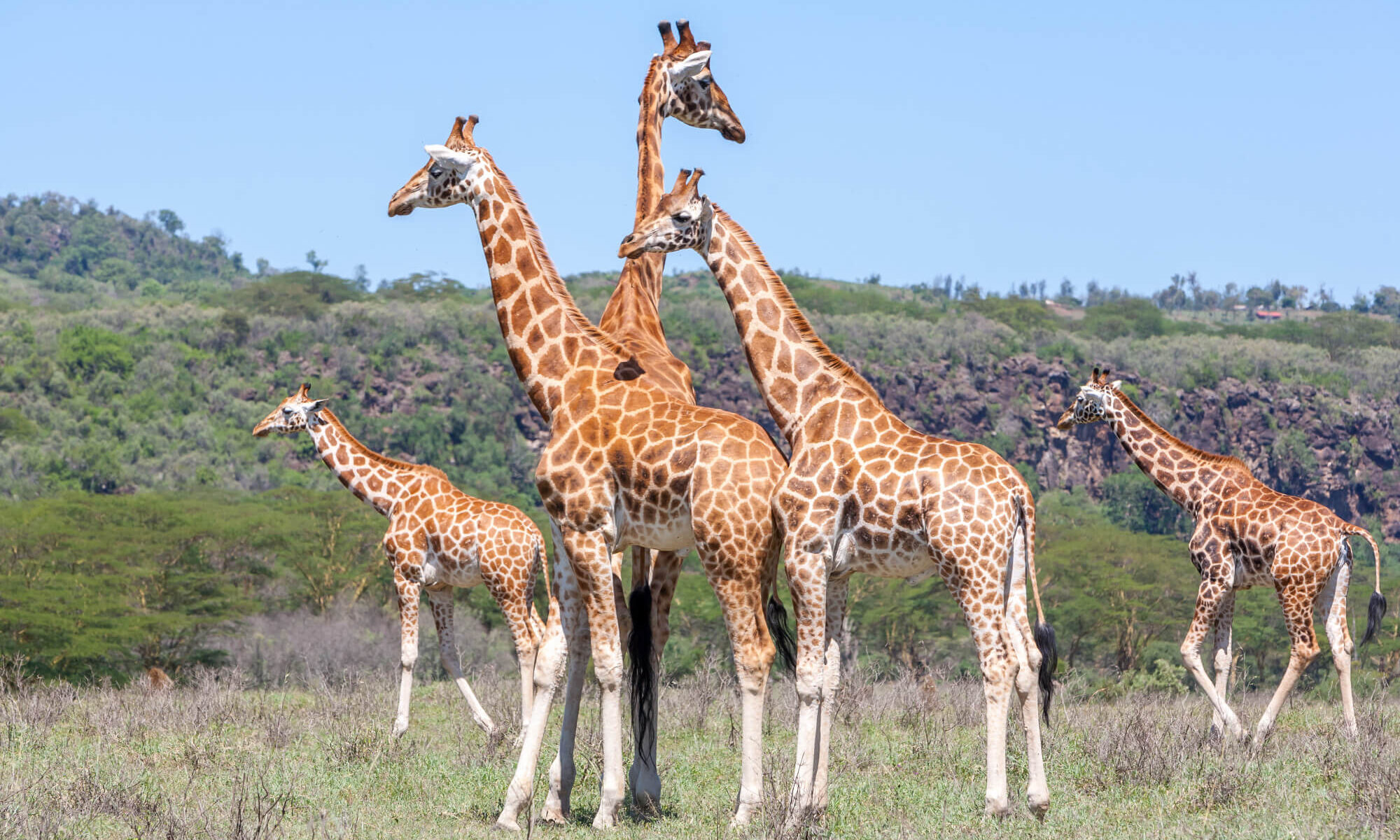
‘Look,’ says Ibra. Ahead is a small herd of giraffes, walking with that peculiar swaying grace. One stretches up its neck and nibbles a delicacy from a thorn tree. We are so close that I can see the individual chin hairs on the big male. 

‘Giraffes have the same number of vertebrae in their necks as humans – seven. But it’s just that theirs can be 10 inches long,’ says Ibra. One for the pub quiz. As we drive on, four different types of antelope play tag with our jeep. A sullen group of water buffalos – the most dangerous animal in the bush – glare out at us from a water hole.

We have the park to ourselves but then we spot a small cluster of vans. A lion is moving slowly through the grasses, coming in and out of view.

It’s an adrenaline rush.

Later, I spot two sets of furry ears in the bush and then a hyena breaks cover and gallops straight ahead of us for several hundred yards. ‘I’ve never seen one do that before,’ concedes Ibra.

Uganda is not all about safari. It has good restaurants and a busy nightlife scene in the cities. Music and dancing are a major part of life and Ugandans will twerk at any opportunity.

Women wear wrap skirts and headscarves in bright colours. They rule the open-air markets, sitting in front of piles of mangos, pineapples and large avocados.

Don’t try Ugandan food if you are on a protein or keto diet. It majors in carbohydrates and the portions are vast.

My favourite food is the Rolex. It’s an omelette wrapped in a chapatti and made fresh in front of you on an iron griddle at tiny roadside stalls. 

After the excitement of seeing the Big Five, I want to relax for my last few days so head to Lake Bunyonyi, known for its peace and bird-watching. I’m picked up by boat and cruise across the water to my lodge on one of the 29 islands. Blue kingfishers and regal-crested cranes swoop over the boat.

I’m billeted in a thatched hut with no door; the shower is outside and warmed by the sun.

My last day is spent watching a family of kingfishers dart in the shallows as regal-crested cranes fly by – and remembering those mischievous teenage elephants snorkelling down the Nile.

What You Need To Know When Planning For A Gorilla Trekking Safari?

Gorilla Trekking is a thrilling and once-in-a-lifetime experience that allows you to get up close and personal with some of the world’s most magnificent creatures – the mountain gorillas. Found in the dense forests of Uganda, Rwanda, and the Democratic Republic of Congo, these gentle giants are critically endangered and only a limited number of permits are issued per day to ensure their conservation. 

Choosing the right safari operator: 

When planning a gorilla trekking safari, it is crucial to select a reliable and experienced safari operator. Look for operators with a good track record in organising wildlife safaris, particularly gorilla treks. They should have knowledgeable guides, good reviews from previous clients, and prioritise the safety and well-being of the gorillas and tourists alike.

Uganda:

The Pearl of Africa- Uganda is a popular destination for gorilla trekking, offering a unique opportunity to explore the lush Bwindi Impenetrable National Park. This park is home to almost half of the world’s remaining mountain gorillas, making it the best place to encounter these majestic creatures. In addition to the gorillas, Bwindi is teeming with other wildlife, including over 120 mammal species and over 350 bird species.

Rwanda:

Land of a Thousand Hills Rwanda is another excellent destination for gorilla trekking, with Volcanoes National Park being the main attraction. This park is famous for its breathtaking landscape and its population of habituated mountain gorillas. Trekking through the misty forests of Volcanoes National Park is an awe-inspiring experience that offers a chance to witness the gorillas in their natural habitat.

The Democratic Republic of Congo:

An Adventure in the Wild For the more adventurous traveller, the Democratic Republic of Congo provides an off-the-beaten-path gorilla trekking experience. Virunga National Park is home to the critically endangered mountain gorillas and offers a chance to explore one of Africa’s most biodiverse regions. While trekking in Congo can be challenging, it rewards visitors with stunning scenery and a truly authentic experience in the wild. 

Booking a Permit to partake in a gorilla trekking safari:

It is essential to book a permit in advance. Due to conservation efforts, permits are limited and sell out quickly, especially during peak seasons. It is advisable to book your permit several months in advance to secure your spot and avoid disappointment. The permits are often quite expensive, but the funds generated from them go towards gorilla conservation efforts. 

Guidelines for a Successful Trek:

Gorilla trekking requires physical fitness and a sense of adventure. You will be walking through dense forests and uneven terrains, so it is vital to be prepared with appropriate hiking gear. Remember to bring sturdy hiking boots, long pants, waterproof clothing, and insect repellent. Additionally, respect the gorillas’ space and follow the guidelines provided by your tour guide to ensure their well-being and minimise the impact on their natural habitat. Conclusion Gorilla trekking is an extraordinary experience that offers a unique insight into the world of these gentle giants.

Whether you choose Uganda, Rwanda, or the Democratic Republic of Congo as your destination, the opportunity to see mountain gorillas up close will leave a lasting impression. Remember to plan ahead, choose a reputable safari operator such as Buutu Safaris, and respect the gorillas and their environment. Start planning your gorilla trekking adventure today and embark on an unforgettable journey into the heart of Africa’s forests.

Choose the Right Destination

When it comes to gorilla trekking, there are three main destinations to choose from: Uganda, Rwanda, and the Democratic Republic of Congo. Each offers a unique experience, but all provide an opportunity to observe these magnificent creatures in their natural habitat. Uganda, known as the “Pearl of Africa,” is home to the famous Bwindi Impenetrable National Park. This lush rainforest is home to nearly half of the world’s mountain gorilla population.

Trekking in Uganda offers a chance to not only see gorillas but also discover other incredible wildlife and stunning landscapes. Rwanda, often referred to as the “Land of a Thousand Hills,” is known for its beautiful Volcanoes National Park. Here, visitors can engage in an unforgettable gorilla trekking experience. The park is easily accessible from the capital city of Kigali, making it a convenient choice for travellers with limited time. For the more adventurous traveller, the Democratic Republic of Congo provides an off-the-beaten-path gorilla trekking experience. Virunga National Park is home to the critically endangered mountain gorillas and offers a chance to explore one of Africa’s most biodiverse regions. While trekking in Congo can be challenging

How do you differentiate Chimpanzees from Gorillas?

Many times people will come visit Uganda and Rwanda to see mountain Gorillas and Chimpanzees but often confuse gorillas for chimpanzees.These two Apes  have distinctive features,and this is how you will be able to tell a difference on your next primate safari in Uganda and Rwanda.

Comparing Mountain Gorillas vs Chimpanzees;

Classification:

While mountain gorillas and chimpanzees are both Great Apes, the former belongs to the Gorilla Beringei  species while the latter is part of the Pan troglodytes species.

It is undeniable that humans are closely related to these primates but the chimpanzees share more DNA with us (98.6%) compared to the Gorillas that share 98.2% only. This less than 2% genetic difference is remarkable.

Appearance:

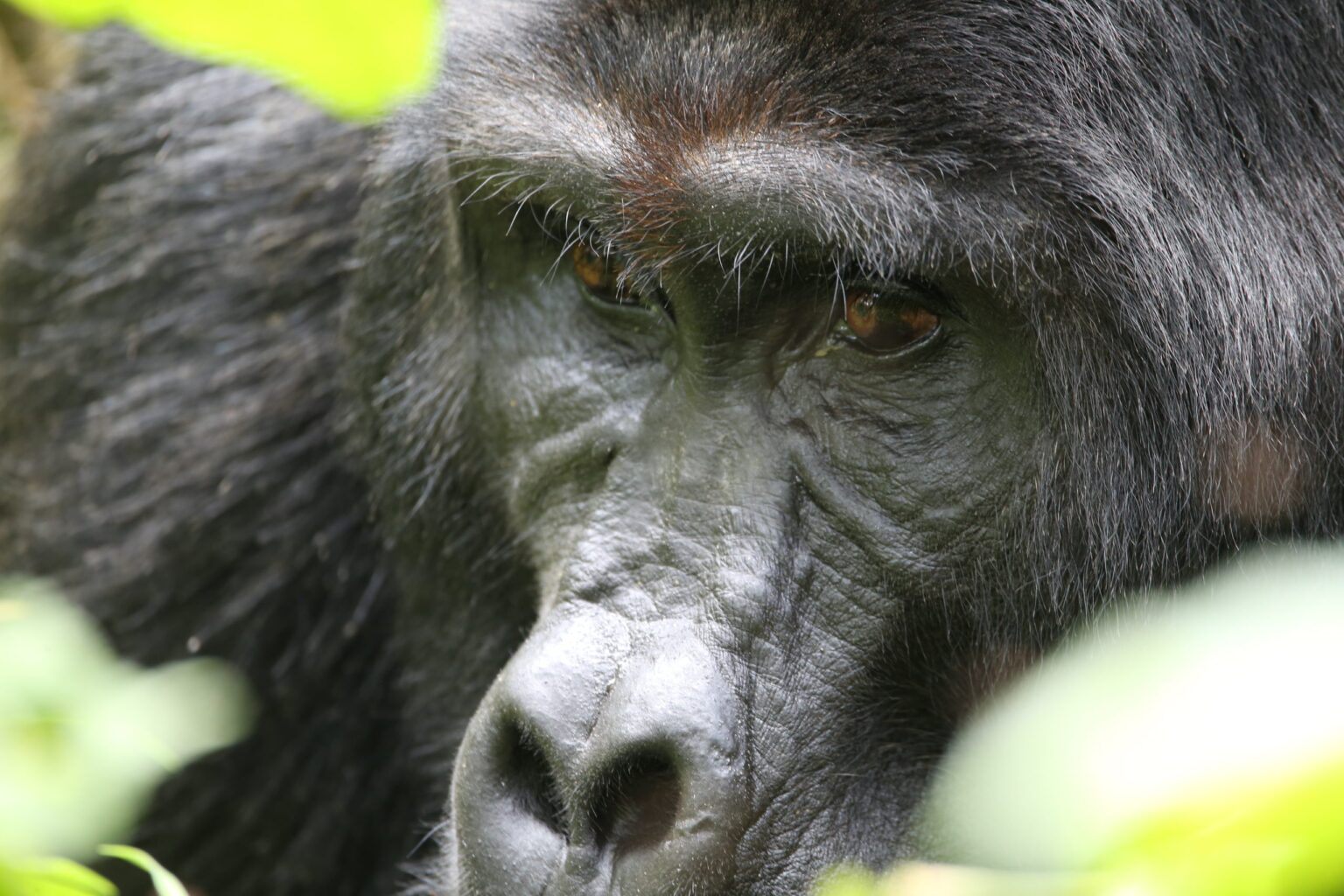
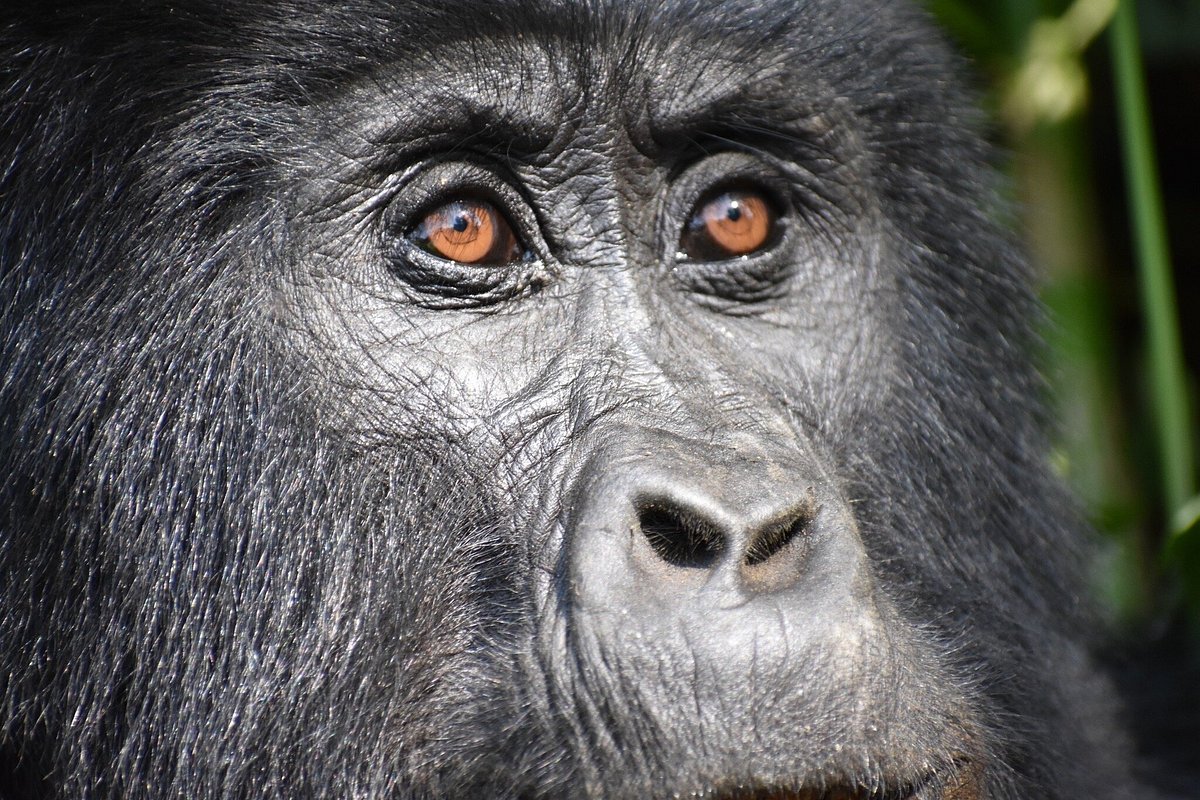
Mountain Gorillas have a long and thick fur coat, blue-black or brownish-gray in color, which provides insulation against colder temperatures. Young, reproductively immature male gorillas are known as “blackbacks.” Fully mature males sport a swath of silver-colored hair along their backs, leading them to be called “silverbacks.” This silvering begins at about age 13.

As babies, chimpanzees’ expressive, human-like faces are bare of fur and pinkish in color, as are the palms of their hands and soles of their feet. But as they mature, this pinkish skin coloring changes to black. White beards adorn the underside of chins for both males and females.

The chimps also have large ears that frame the faces of these primates and provide them with excellent hearing. Endowed with good eyesight and color vision, chimpanzee’s forward-facing eyes allow them to clearly focus on objects. 

Intelligence:

It is for a fact that both gorillas and chimpanzees are intelligent species but when you compare them, chimpanzees are more intelligent compared to the mountain gorillas.

During your Uganda Gorilla & Chimpanzee Safari, you will notice their intelligence owing to the fact that they are more closely related to us humans.

Size, strength and Lifespan

Mountain gorillas weigh approximately 227kg(500 pounds) and are 6 feet tall compared to the chimpanzees that weigh approximately 68 kgs (150 pounds) and are  5 feet tall.

As a matter of fact, gorillas are known to be the largest Apes in their family line and surprisingly, they are 10 times heavier and stronger than humans.

Average chimpanzee lifespan in the wild is between 45 and 50 years, with some living as long as 60 years. Then for mountain gorillas in the wild it is 40 – 50 years.

Diet

Like their human cousins, chimpanzees are omnivores. That is, their diet consists of both plant and animal life. While the bulk of their diet is seasonal fruits, leaves, flowers, bark, seeds, and nuts, chimpanzees also hunt and eat mammals smaller than themselves, including other primates such as colobus monkeys. Groups of chimpanzees have cooperated to successfully stalk and kill young antelopes, often using sticks as weapons. To munch on one of their favorite snacks, termites, chimpanzees will use a twig to dislodge the insects from their nests. They use rocks to smash open nuts and use leaves to catch water.

Mountain gorillas eat a mostly vegetarian diet that consists of leaves, stems, bark, shoots, roots, flowers, and fruit. Less than 1 percent of its diet comes from insects. Adult males consume up to 75 lb (34 kg) a day; adult females consume up to 40 lb (18 kg) a day. Gorillas get their daily water requirement through the plants they eat.

Social

Chimpanzees and gorillas are both social primates, which you will attest to during our primate tours but the fact still remains that the former are more sociable, friendly, welcoming, and will be attentive to your presence.

Gorillas on the other hand are down to earth but docile, quite shy, and prefer going about their daily routines.

Geographical location and nature of habitats

These Great Apes live in the dense rainforests of Africa and can’t live in the same home range owing to their protective and territorial behavior.

However, you will be surprised by how gorillas live in far more isolated locations than their counterparts that can stay in less dense vegetation like forested savannahs. This isn’t possible with the gorillas that occupy the humid rainforests, most cases in isolated locations.

The mountain gorillas (one of the sub-species of gorillas) for instance live in the dense rainforest on mountains hence making it more difficult to track gorillas than it is with chimpanzees.

Gorillas prefer building their nests on the ground and live in relatively smaller families/groups of 5-20 individuals while chimpanzee nests are mainly built on trees and they live in larger communities/troops of up to 40 individuals.

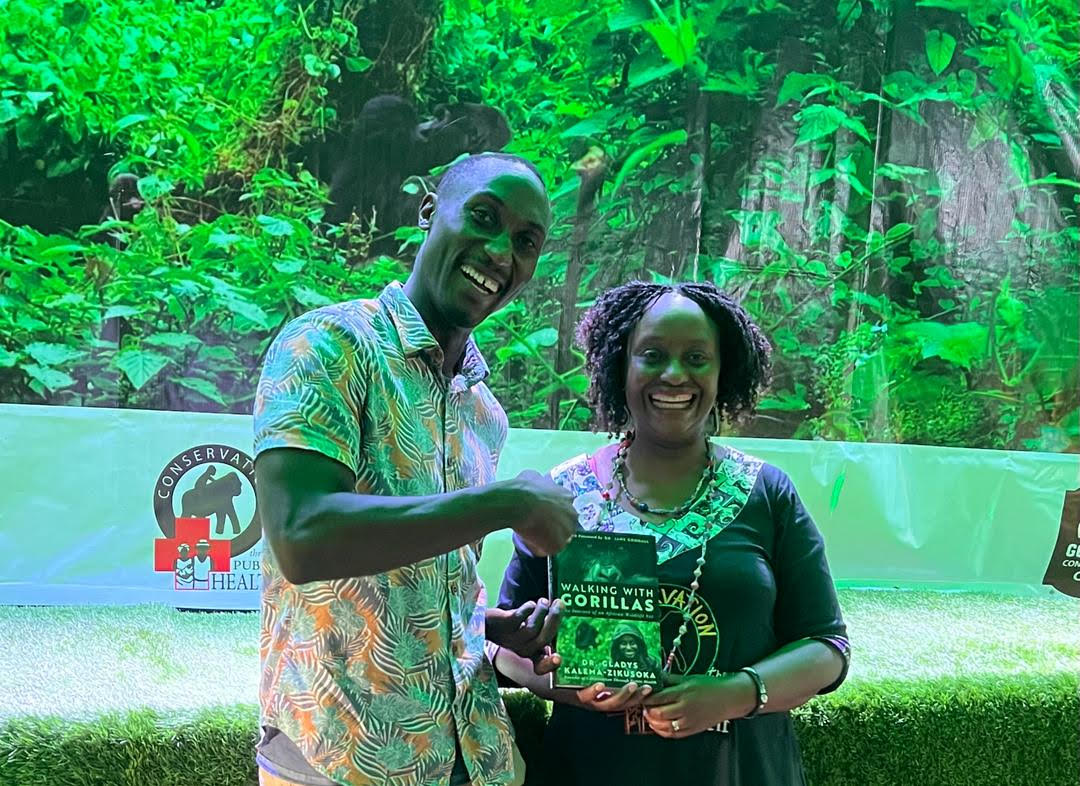
A Conversation with Dr Gladys Zikusooka -Kalema on her new book “Walking With Gorillas”

Our Chief Exploring Officer Daudi Mutalya Balye had the good fortune of catching up with Dr Gladys Zikusoka-Kalema at the launch of her groundbreaking book – Walking With Gorillas. The book details the remarkable journey undertaken by Uganda’s first wildlife vet and the great work of the men and women of Uganda in the conservation of Uganda’s rich biodiversity. We spoke and posed pertinent questions to her for insights of one of Uganda’s leading thinkers and conservationists.

Daudi Mutalya (Buutu Safaris): Congratulations on the monumental book “Walking with the Gorillas”. It was impossible to put the book down when I started reading. I hope more people will read the book and that the book will inspire young and old for generations to come. Thank you for taking the lead in writing a good African story. Gorilla conservation in Uganda has been a tremendous success. How can we scale up this successful conservation model?

Dr Zikusooka Kalema: Yes. I think the success is down to the fact that when Bwindi Impenetrable National Park (BINP) was created, conservation had changed from keeping people out and wildlife in, to engaging communities in conservation. And so that is the main reason gorilla conservation has been a success story. Most of the people from the area were employed by the park. The park focused on employing people from the area around the park. 20% of the park entry fees goes to the communities and 10 dollars from every permit goes to the communities. All this really helped. 

And, the entrepreneurs, the porters have all been supported. The porters are some of the wealthiest in the community. The whole industry has developed around gorillas. The schools and the clinics were supported. It supported the entire economy and turned it around. So people were more willing to protect gorillas because they knew there was a future.

Local involvement, increased revenue sharing and improved veterinary care. All gorillas which fall sick will have someone attending to them. And also improving community health because when people are healthy, they will not make the gorillas sick, and that’s what we focus on in Conservation Through Public Health. The revenue sharing can improve but it is better than in most places.

Daudi Mutalya BTS: The success of gorilla conservation has led to more gorillas. We can assume the continued success of gorilla conservation is going to further increase the number of gorillas so how do we then increase the space for gorilla habitat? 

I think we can increase the space for the gorillas by expanding the park. We have no choice. Rwanda has already started doing it. Uganda has to do it. We have to expand the park by convincing people to sell their land. We can’t run away from it. And they have already started selling to tour operators.

Which I feel is not very good because the gorillas will be locked in by the lodges. Some areas like where there is that narrow neck is a key area. We need land for the gorillas themselves.

I know some lodges do put aside land but others just put buildings.

Daudi Mutalya BTS: We have a rich traditional heritage and yet a huge part has been lost in times of modernity. You have a rich Buganda traditional background. How do we reclaim some of the lost traditional conservation practices that were at the core of conservation?
Through conservation education. 

Documenting everything is key to preserving our traditional heritage. We are not very good at doing things as Africans. We are good at talking but not writing. 

Engaging the cultural institutions, our ancestors for example the Buganda, Tooro kingdom or whichever kingdom. They all have clan leaders and people with this traditional knowledge. Our ancestors and clan leaders, all that is very important. We need to tap it before it disappears. 

When we were celebrating 10 years of UWEC we got the Nabagereka (The Queen of Buganda) to help. In fact, I write about it in the book. 

Buutu Safaris: How do we get conservation outside the park to a more traditional way where conservation remains at the centre of our society?

We need to engage the kingdoms and work closely with the clan leaders. I am so glad that Prince Wassajja was here. We need to revitalise that – working closely with the clan leaders.

Thank you so much once again. All the best with the book tour.

Is Gorilla Trekking Ethical?

Yes, a resounding yes. Gorilla trekking based conservation was created as an African centric solution with conservation and poverty alleviation as top priorities. Its success over the last ten years provides a good template for responsible tourism as it has demonstrated how inclusive travel can help in fighting poverty in Africa.

In the 1990s, the government of Uganda responded to the dire mountain gorilla crisis by creating Bwindi Impenetrable National Park and Mgahinga National Park in the south west of the country. Similarly, Rwanda government created Volcanoes National Park which sits on the border with Uganda and shares an eco-system with Mgahinga National Park. These three parks created a safe haven for mountain gorillas as habitat loss was stopped and poaching reduced.

The governments acknowledged that to conserve the unique forest habitat, the mountain gorillas and other fauna, they had to address the poverty question which precipitated human gorilla conflict. Gorilla trekking was the innovative solution that was created to conserve the forest while enabling Ugandans and Rwandans rise from poverty.

To ensure conservation was aligned to needs of the communities, the government put in place a revenue sharing scheme where 20% of the revenue from gorilla trekking was shared with the local communities. On our visit to Rushaga village in Bwindi last year, we witnessed the revenue sharing as members of Rushaga community received cows from their portion of the revenue they received.

The government effort also created direct employment for marginalised youth who previously engaged in poaching wildlife. As safari lodges opened to accommodate tourists around the national parks, more opportunities were created for Africans in the hospitality sector.As the tourist numbers increased, more opportunities were created in birding and guiding, arts and crafts and for traditional experiences like local gin brewing arose.

The evidence of the success is best seen in the attitude change towards gorillas. There are no fences around the gorilla forest but the communities are now the zealous protectors of the forest. Communities are the intelligence network and work diligently with the authorities to protect the forest and gorillas. Mountain gorillas are now revered in these communities. In Rwanda, the fanfare at the baby gorilla naming ceremony “Kwita Izina ” of new gorillas attests to the intimate connection gorillas have taken in society.

Gorilla trekking has saved gorillas from extinction, enabled thousands rise from poverty and improved independence of African countries by providing much needed non AID revenue. Gorilla trekking has spurred conservation based economy inone of the most unique ecological areas. Thousands of visits every year make it possible to conserve the unique gorilla ecosystem and the mountain gorillas. The gorilla conservation model prioritizes the wellbeing of Ugandans and Rwandans living on margins by creating employment and important opportunities for artisans and dancers especially for women and youth.

Gorilla trekking is probably one of the most successful conservation project in Africa in the last 20 years thanks to the efforts of UWA and RWA. Gorilla trekking conservation gives insights into how humanity can create green sustainable economy.

Having said that, the authorities need to limit the numbers of trekkers per day which means the price needs to rise further. Less number of visitors will cause no distress to gorillas, or damage to their environment. There are various studies have highlighted the contribution of the revenue sharing scheme in Bwindi Impenetrable Forest National Park communities.

There is also the persistent question of the Batwa families who have remained inpoverty despite numerous government interventions to compensate them for their displacement during the creation of national parks. The main reasons for the failure remain a lack of coordination between government and private organizations; unscrupulous Ugandans and Rwandans who use Batwa plight to profit, rampant alcoholism and family breakdown in Batwa.

Responsible tourism is key to conservation of these habituated animals. Strict adherence to standard protocols set in place, and limiting the  number of visitors will create a  viable sustainable green economy.

The Beautiful Long Horned Ankole Cows of Uganda

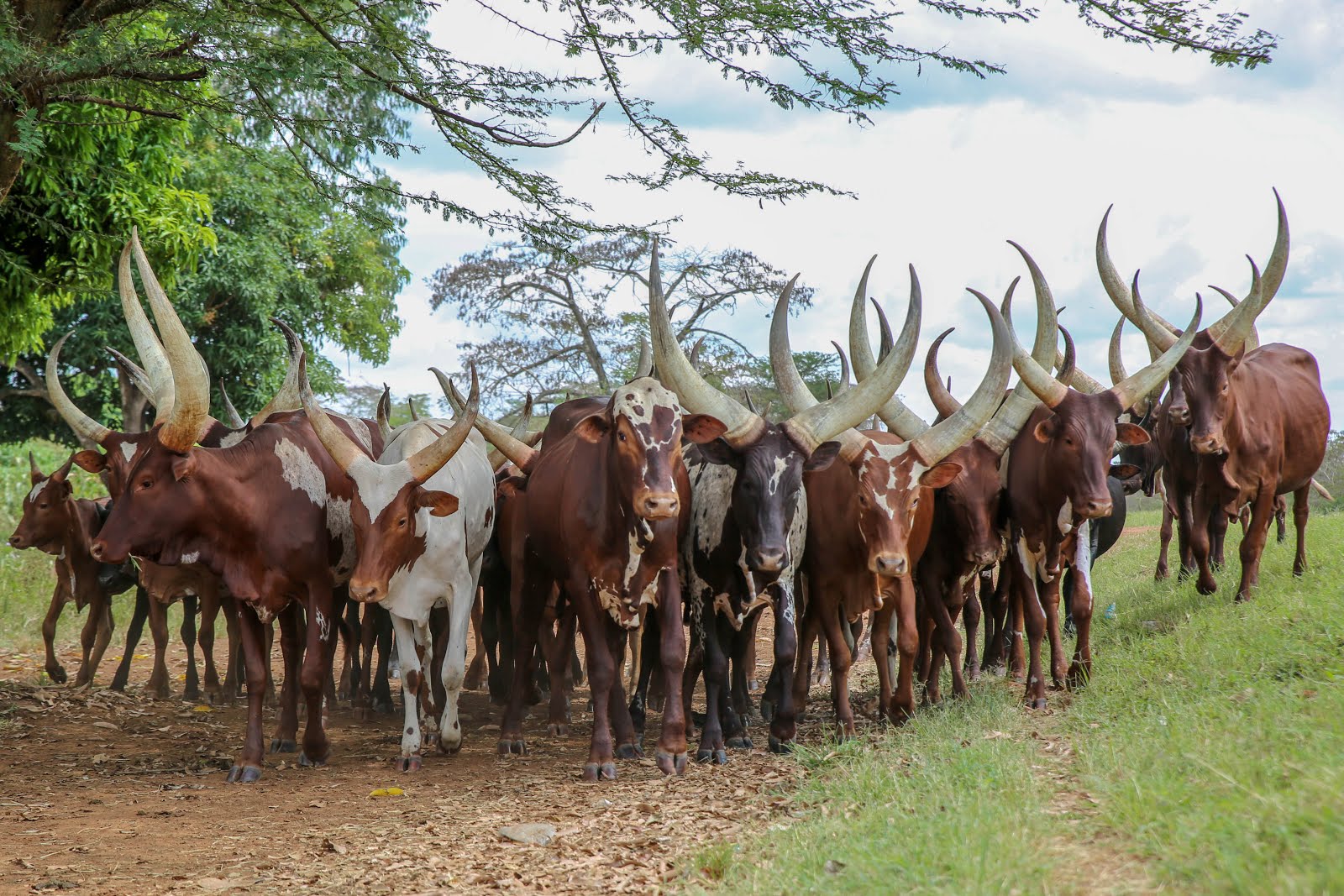
a herd of long horned cattle along masaka kabale highway

One of the most memorable animals travellers encounter outside Uganda’s national parks is the magnificent Ankole long-horned cow. Originally associated with the Ankole region of western Uganda, these striking cattle can now be seen across much of Uganda and parts of Rwanda. In Rwanda, long-horned cattle are closely associated with traditional royal cattle culture.

For many visitors travelling through western Uganda, one of the most enjoyable moments is simply being delayed on the road while a herd of enormous long-horned cattle crosses in front of the safari vehicle.

Their extraordinary horns, cultural importance and long relationship with pastoral communities make them far more than ordinary livestock.

Why Are Ankole Cattle So Famous?

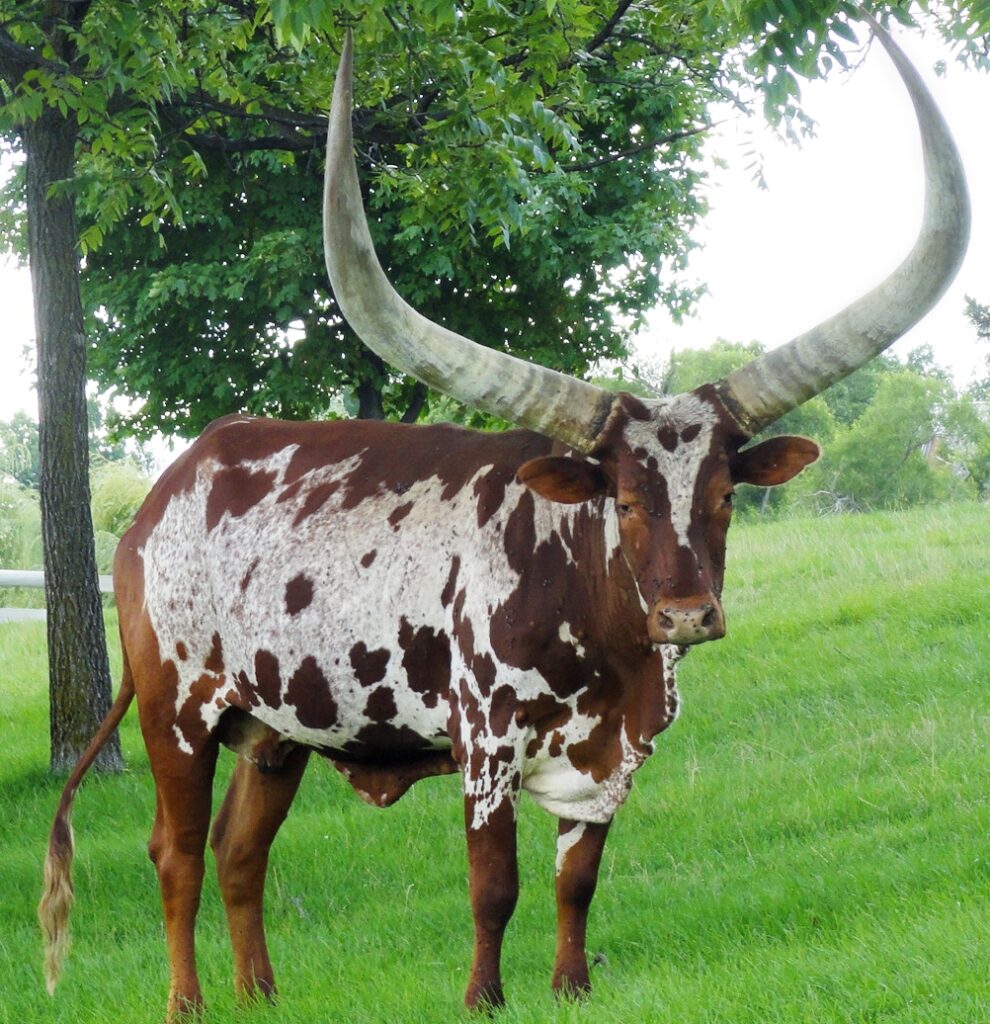
Ankole cattle are immediately recognisable because of their enormous horns. Their horns are among the largest found on any cattle breed and can grow into several striking shapes, including wide lateral horns and elegant upward-curving forms.

Beyond their appearance, the horns also have a practical purpose. Blood circulates through the horn structure and can help disperse body heat before returning to the animal, an adaptation suited to the warm environments in which the cattle have lived for generations.

Historically, large horns may also have provided some protection when cattle grouped together against predators.

The History of Ankole Long-Horned Cattle

Ankole cattle have been associated with East Africa for centuries. They belong to the broader group of African Sanga cattle, which developed through ancient cattle populations introduced and adapted across eastern Africa over long periods of time. Long-horned cattle also appear in ancient African and Egyptian imagery, showing just how old the relationship between people and distinctive long-horned cattle may be.

Over generations, the cattle became particularly important to pastoral communities in western Uganda. They were valued not only for survival, but also for identity, social standing and cultural continuity.

Cattle as a Symbol of Wealth and Status

Traditionally, Ankole cattle were not kept primarily for beef.

Ownership of cattle represented:

  • wealth
  • social status
  • family security
  • prestige
  • inheritance
  • marriage arrangements
  • cultural identity

The number and quality of cattle owned by a family could influence its social standing within the community.

Even today, long-horned cattle remain an important symbol of pride in many parts of western Uganda.

Why Were Ankole Cattle So Important?

For pastoral communities, cattle provided many of the basic necessities of life.

They supplied:

  • milk
  • occasional meat
  • manure
  • hides
  • horns
  • social wealth
  • marriage gifts

Milk was particularly important.

Historically, cattle were rarely slaughtered casually. A healthy animal represented long-term value, so slaughter was often associated with ceremonies, major social events or an animal that was no longer productive. Some pastoral traditions also included consuming mixtures of milk and cattle blood without killing the animal.

Ankole Cattle and Marriage Traditions

Cattle have traditionally played an important role in marriage arrangements and bride wealth. A valuable cow could represent far more than its market price. It might symbolize respect between families and form part of an important cultural relationship. Even today, cattle remain deeply connected to traditional marriage practices in parts of Uganda.

Milk, Ghee and Traditional Pastoral Life

Milk is one of the most important products associated with Ankole cattle.

Traditional households developed methods of:

  • milking cattle
  • preserving milk
  • making ghee
  • storing dairy products

Visitors to western Uganda can sometimes participate in cultural experiences that demonstrate traditional milking and ghee-making techniques.

These encounters provide a much deeper understanding of pastoral life than simply seeing the cattle beside the road.

How Ankole Cattle Are Used Today

Ankole cattle remain economically important.

They are raised for:

  • milk
  • beef
  • breeding
  • cultural value
  • tourism experiences

Their dung is also useful as organic manure, particularly in agricultural areas.

Traditionally, cattle dung has also been used in the construction and finishing of homes and other structures.

Hides and horns may be used to create decorative or practical products.

Ankole Cattle Beyond Uganda

The unusual appearance of Ankole cattle has attracted interest far beyond East Africa.

Long-horned cattle have been bred in several countries, including South Africa and the United States.

Their distinctive appearance has made them desirable among collectors and specialist cattle breeders.

This international interest demonstrates just how remarkable the breed is, but the strongest cultural connection remains with the communities of East Africa where these cattle have been part of life for generations.

Where Can You See Ankole Long-Horned Cattle in Uganda?

Western Uganda is one of the best regions to encounter the cattle.

Travellers may see them while travelling through areas around:

  • Mbarara
  • Kiruhura
  • Lake Mburo

They are frequently seen grazing close to roads and villages.

For travellers who want more than a roadside sighting, a cultural farm visit can offer a much richer experience.

Visit an Ankole Cattle Farm

A farm experience can introduce visitors to traditional cattle-keeping practices.

Depending on the location and programme, activities may include:

  • observing cattle herding
  • traditional milking
  • learning how ghee is made
  • discussions with cattle keepers
  • learning about local pastoral traditions
  • photographing the cattle

The Igongo Cultural Centre and surrounding western Uganda cultural experiences can also provide insight into Ankole history and traditions.

Ankole Cattle and Lake Mburo National Park

Lake Mburo National Park fits naturally into a cultural itinerary focused on Ankole cattle.

The surrounding region has strong pastoral traditions, and visitors may encounter cattle communities before or after a wildlife safari.

A journey through this part of Uganda can therefore combine:

  • Ankole cattle culture
  • zebras
  • giraffes
  • antelope
  • hippos
  • birdlife
  • traditional pastoral communities

This creates an excellent transition between cultural tourism and wildlife safari.

Combine Ankole Cattle Culture With Gorilla Trekking in Uganda

Seeing Ankole cattle can also become part of a much larger western Uganda safari.

Travellers heading toward Bwindi Impenetrable National Park for mountain gorilla trekking often pass through landscapes where cattle keeping remains an important part of local life.

Rather than simply driving through the region, a well-designed safari can include time to understand this cultural heritage.

A typical journey could combine:

  • an Ankole cattle experience
  • Lake Mburo National Park
  • Queen Elizabeth National Park
  • mountain gorilla trekking in Bwindi
  • community and cultural experiences

This creates a safari that combines Uganda’s wildlife, culture, landscapes and mountain gorillas.

From Ankole Cattle to Mountain Gorillas

One of the advantages of travelling through western Uganda is the variety of experiences within one journey.

You might begin the morning learning how a pastoral family manages its long-horned cattle and several days later find yourself walking through Bwindi’s rainforest in search of a mountain gorilla family.

These experiences tell two very different stories about Uganda.

One is about the relationship between people and livestock.

The other is about conservation and one of the world’s rarest great apes.

Together, they provide a richer understanding of the country than wildlife viewing alone.

Suggested Western Uganda Cultural & Wildlife Route

StopMain Experience
Lake Mburo / Ankole RegionLong-horned cattle, pastoral culture and wildlife
Queen Elizabeth National ParkGame drives, elephants, lions, hippos and boat safari
Bwindi Impenetrable National ParkMountain gorilla trekking
Local CommunitiesCultural experiences and village visits

This route can be adapted depending on your available time and interests.

Can You Add an Ankole Cattle Experience to a Gorilla Safari?

Yes.

An Ankole cattle experience works particularly well for travellers driving through western Uganda toward Bwindi. It can often be added without dramatically changing the main safari route.

For travellers who want a deeper cultural experience, we can also build more time into the itinerary for farm visits and local interactions.

What Else Can You Combine With Gorilla Trekking?

A western Uganda gorilla safari can also include:

  • chimpanzee trekking in Kibale
  • Queen Elizabeth National Park
  • Lake Mburo National Park
  • Lake Bunyonyi
  • traditional communities
  • birding
  • crater lakes
  • boat safaris

This allows travellers to experience much more than a single gorilla trek.

Plan an Ankole Cultural & Gorilla Safari

We can combine an Ankole cattle and cultural experience with Lake Mburo, Queen Elizabeth National Park and gorilla trekking in Bwindi.

Tell us your travel dates, number of travellers and preferred safari length, and we can help build the route around your interests.

Save Murchison Falls

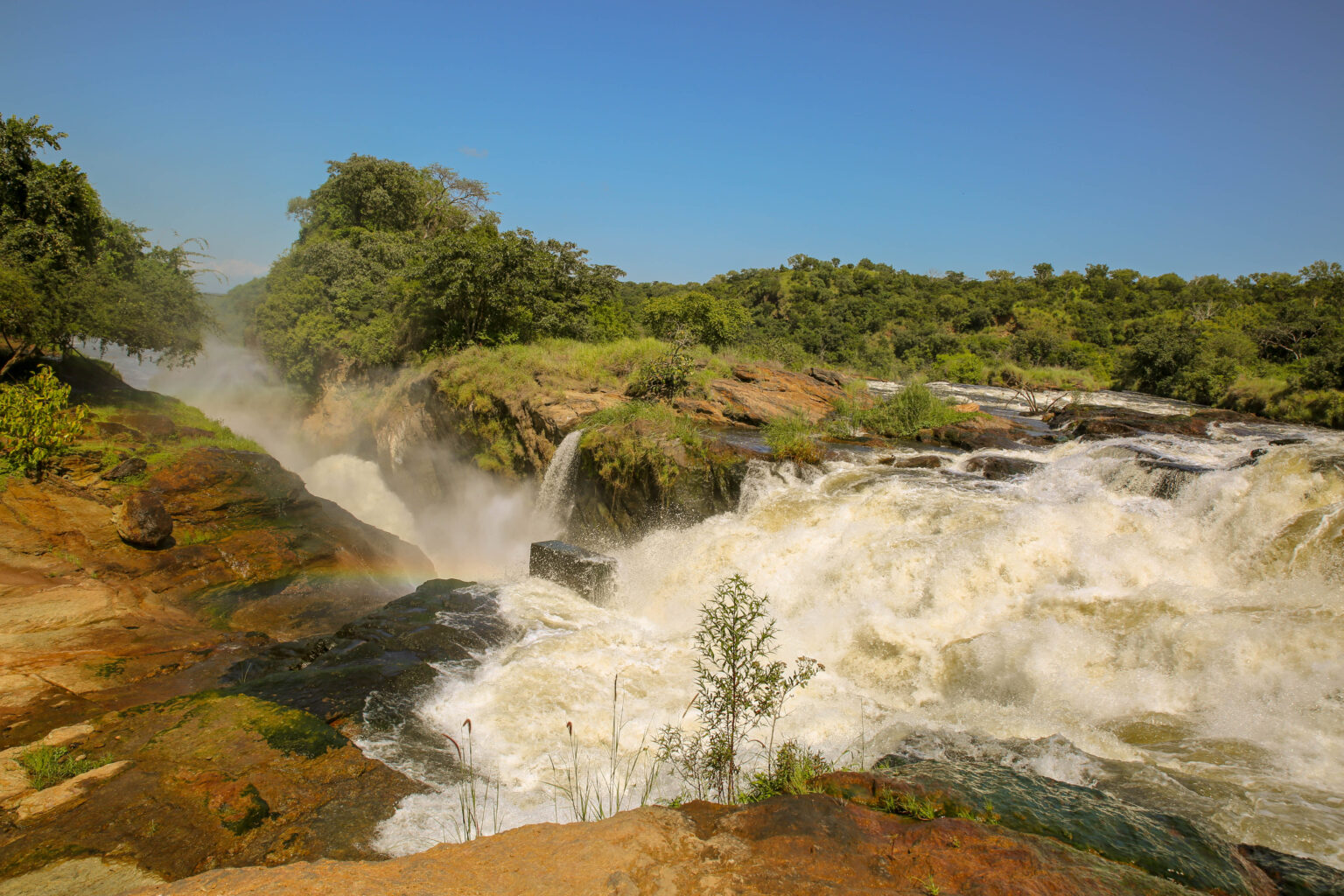
Murchison Falls is one of the most iconic sights of Uganda ‘’The Pearl of Africa.” It is said to be the world’s most powerful waterfall as the Nile gushes through a 6 metre gorge at the river’s narrowest point in its 6,670km length. The legendary waterfall is also the historical place of the Babiito dynasty of Bunyoro Kingdom which traces its origins back to this waterfall. A hike up the falls from the bottom is probably one of the most exhilarating hikes in the world as one has views of the falls from different angles.

Midway through the hike, one sees both Murchison Falls and Uhuru Falls. Words and Youtube videos simply cannot do it justice, so I would advise everyone to visit. The falls are the centerpiece of the expansive 5,072 square km Murchison Falls conservation area, Uganda’s biggest and most popular national park. The park is home to elephants, Nubian giraffes, lions, leopards, hyenas, herds of buffalo, antelopes, chimpanzees & other primates, over 450 species of birds, and a vast range of biodiversity. These unique features attract over 100,000 visitors a year and this number is growing at an annual rate of 8%. The economic benefits are in the tens of millions of dollars from the park fees, chimpanzee and hike fees and the lodge fees paid by these visitors. But, for some seemingly unfathomable reason, the Uganda government wants to dam this thunderous waterfall.

Of course the argument is that we need power, but we now have more power in Uganda than we can consume. So this government’s energy projects beggar belief, especially in times like this where the environmental crisis is claiming more biodiversity by the day all over the world. Is the Uganda government ready to destroy Murchison Falls or Uhuru falls for that matter? Over the last ten years the government has built 3 dams on the Nile in Uganda. In 2010, we watched helplessly as the beautiful Bujagali falls were destroyed by a dam, and then the Karuma, Ayago and Itanda falls. In Jinja, we suffered the brunt of the effects as tourism declined after the falls disappeared. But this time round, we are not going to just sit back and watch as our heritage is destroyed. We have to secure Murchison Falls for future generations of Ugandans and the entire world.

In Jinja, before the construction of the Isimba dam in 2013, we had discussions with Ministry of Energy officials about this government’s energy strategy. We advised against the construction of many dams along the river and instead proposed the government focus on one mega dam –like the Ethiopians have done –as this would have a lower environmental impact. The Uganda government’s multiple dam construction strategy is akin to the construction of numerous pit latrines all over one’s homestead/compound. Pit latrines are most useful but digging many in one’s compound creates a hazardous nuisance. No sane Ugandan builds pit latrines in their front yard. So it is wise for one to construct one deep latrine tucked away behind the house. But the government didn’t listen. Six years later, the government still hasn’t learnt this and is now back to construct yet another dam on the Nile.

Have we not learnt from the environmentally tragic western capitalistic system of economics? The European and US capitalistic approach had initially failed to factor in economic benefits of nature into their capitalistic economic model. As such, environmental damage to the world at large as a result of the pervasive profit driven production and consumption took its toll on the environment in Europe, the United States and the world at large as a few individuals and nations benefited at the cost of the majority. And now, nearly 200 years after the start of the industrial revolution, Americans and Europeans have only just realised the damage the economic system has caused. Western countries are in panic, doing whatever is necessary to save the world from plastic and other detrimental effects of uncontrolled capitalistic production.

Western governments have imposed strict taxes on harmful commodities and pursued brave subsidy programs to encourage greener living. Indeed Europeans and Americans have lost so much biodiversity that they now flock to sub-Saharan countries to see biodiversity like mahogany and mvule trees, elephants, birds and plants that their forefathers destroyed in their own countries during the madness of unbridled capitalism. One would think that Ugandans would ask themselves why a European or an American pays $1,500 for a flight to come to Uganda to spend a further $10,000 just to drive around Uganda and see the country we have. But, it appears our politicians are lost in maximising power and economic benefit whereas the average Ugandan is preoccupied by short term needs like paying school fees, constructing houses and going for Kwanjula (traditional wedding ceremonies). We barely ever take time to think about the environment –the very thing that sustains our life. Future generations will judge us very harshly, so I implore fellow Ugandans to come together and not only fight for Murchison Falls, but also start taking environmental issues seriously. Selfish leadership will capitalize on our ignorance and rob not only us, but our future generations.

There are many renewable energy alternatives that are now viable in Uganda. Solar energy is one such alternative that ought to be explored given the monumental leaps in the technology in the last 5 years. The government can learn from the UK, a country with minimal sunshine yet their government encourages citizens to use renewable energy. The UK used a two pronged approach that allowed individuals to take matters in their own hands and invest in solar energy using government grants and subsidies. As such wind turbines and solar powered homes increased to one million. The government also encouraged large scale investment in renewable resources.
The UK government’s solar energy initiatives were so successful that for the first time in 2016 the sun provided more energy to the UK grid than coal plants. Uganda has a lot more sunlight hours than the UK as it straddles the equator. There are many sustainable alternative means of meeting our energy needs.
Leave Murchison Falls be.