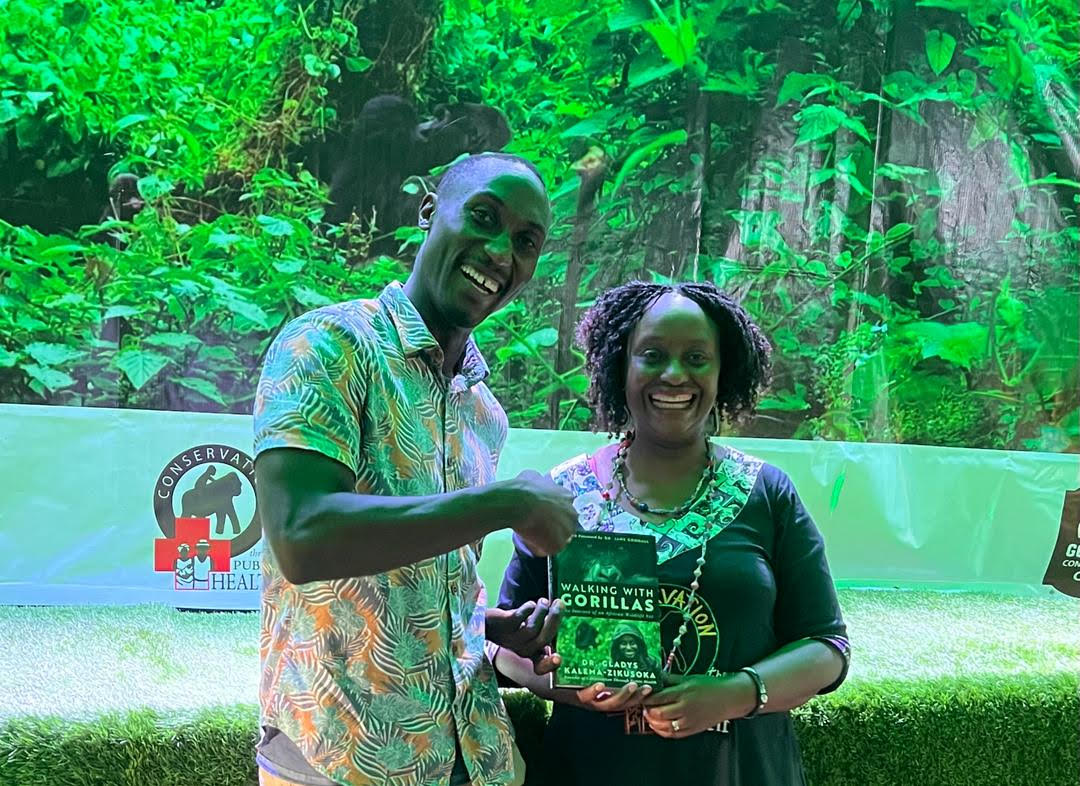
Our Chief Exploring Officer Daudi Mutalya Balye had the good fortune of catching up with Dr Gladys Zikusoka-Kalema at the launch of her groundbreaking book – Walking With Gorillas. The book details the remarkable journey undertaken by Uganda’s first wildlife vet and the great work of the men and women of Uganda in the conservation of Uganda’s rich biodiversity. We spoke and posed pertinent questions to her for insights of one of Uganda’s leading thinkers and conservationists.
Daudi Mutalya (Buutu Safaris): Congratulations on the monumental book “Walking with the Gorillas”. It was impossible to put the book down when I started reading. I hope more people will read the book and that the book will inspire young and old for generations to come. Thank you for taking the lead in writing a good African story. Gorilla conservation in Uganda has been a tremendous success. How can we scale up this successful conservation model?
Dr Zikusooka Kalema: Yes. I think the success is down to the fact that when Bwindi Impenetrable National Park (BINP) was created, conservation had changed from keeping people out and wildlife in, to engaging communities in conservation. And so that is the main reason gorilla conservation has been a success story. Most of the people from the area were employed by the park. The park focused on employing people from the area around the park. 20% of the park entry fees goes to the communities and 10 dollars from every permit goes to the communities. All this really helped.
And, the entrepreneurs, the porters have all been supported. The porters are some of the wealthiest in the community. The whole industry has developed around gorillas. The schools and the clinics were supported. It supported the entire economy and turned it around. So people were more willing to protect gorillas because they knew there was a future.
Local involvement, increased revenue sharing and improved veterinary care. All gorillas which fall sick will have someone attending to them. And also improving community health because when people are healthy, they will not make the gorillas sick, and that’s what we focus on in Conservation Through Public Health. The revenue sharing can improve but it is better than in most places.
Daudi Mutalya BTS: The success of gorilla conservation has led to more gorillas. We can assume the continued success of gorilla conservation is going to further increase the number of gorillas so how do we then increase the space for gorilla habitat?
I think we can increase the space for the gorillas by expanding the park. We have no choice. Rwanda has already started doing it. Uganda has to do it. We have to expand the park by convincing people to sell their land. We can’t run away from it. And they have already started selling to tour operators.
Which I feel is not very good because the gorillas will be locked in by the lodges. Some areas like where there is that narrow neck is a key area. We need land for the gorillas themselves.
I know some lodges do put aside land but others just put buildings.
Daudi Mutalya BTS: We have a rich traditional heritage and yet a huge part has been lost in times of modernity. You have a rich Buganda traditional background. How do we reclaim some of the lost traditional conservation practices that were at the core of conservation? Through conservation education.
Documenting everything is key to preserving our traditional heritage. We are not very good at doing things as Africans. We are good at talking but not writing.
Engaging the cultural institutions, our ancestors for example the Buganda, Tooro kingdom or whichever kingdom. They all have clan leaders and people with this traditional knowledge. Our ancestors and clan leaders, all that is very important. We need to tap it before it disappears.
When we were celebrating 10 years of UWEC we got the Nabagereka (The Queen of Buganda) to help. In fact, I write about it in the book.
Buutu Safaris: How do we get conservation outside the park to a more traditional way where conservation remains at the centre of our society?
We need to engage the kingdoms and work closely with the clan leaders. I am so glad that Prince Wassajja was here. We need to revitalise that – working closely with the clan leaders.
Thank you so much once again. All the best with the book tour.
Yes, a resounding yes. Gorilla trekking based conservation was created as an African centric solution with conservation and poverty alleviation as top priorities. Its success over the last ten years provides a good template for responsible tourism as it has demonstrated how inclusive travel can help in fighting poverty in Africa.
In the 1990s, the government of Uganda responded to the dire mountain gorilla crisis by creating Bwindi Impenetrable National Park and Mgahinga National Park in the south west of the country. Similarly, Rwanda government created Volcanoes National Park which sits on the border with Uganda and shares an eco-system with Mgahinga National Park. These three parks created a safe haven for mountain gorillas as habitat loss was stopped and poaching reduced.
The governments acknowledged that to conserve the unique forest habitat, the mountain gorillas and other fauna, they had to address the poverty question which precipitated human gorilla conflict. Gorilla trekking was the innovative solution that was created to conserve the forest while enabling Ugandans and Rwandans rise from poverty.
To ensure conservation was aligned to needs of the communities, the government put in place a revenue sharing scheme where 20% of the revenue from gorilla trekking was shared with the local communities. On our visit to Rushaga village in Bwindi last year, we witnessed the revenue sharing as members of Rushaga community received cows from their portion of the revenue they received.
The government effort also created direct employment for marginalised youth who previously engaged in poaching wildlife. As safari lodges opened to accommodate tourists around the national parks, more opportunities were created for Africans in the hospitality sector.As the tourist numbers increased, more opportunities were created in birding and guiding, arts and crafts and for traditional experiences like local gin brewing arose.
The evidence of the success is best seen in the attitude change towards gorillas. There are no fences around the gorilla forest but the communities are now the zealous protectors of the forest. Communities are the intelligence network and work diligently with the authorities to protect the forest and gorillas. Mountain gorillas are now revered in these communities. In Rwanda, the fanfare at the baby gorilla naming ceremony “Kwita Izina ” of new gorillas attests to the intimate connection gorillas have taken in society.
Gorilla trekking has saved gorillas from extinction, enabled thousands rise from poverty and improved independence of African countries by providing much needed non AID revenue. Gorilla trekking has spurred conservation based economy inone of the most unique ecological areas. Thousands of visits every year make it possible to conserve the unique gorilla ecosystem and the mountain gorillas. The gorilla conservation model prioritizes the wellbeing of Ugandans and Rwandans living on margins by creating employment and important opportunities for artisans and dancers especially for women and youth.
Gorilla trekking is probably one of the most successful conservation project in Africa in the last 20 years thanks to the efforts of UWA and RWA. Gorilla trekking conservation gives insights into how humanity can create green sustainable economy.
Having said that, the authorities need to limit the numbers of trekkers per day which means the price needs to rise further. Less number of visitors will cause no distress to gorillas, or damage to their environment. There are various studies have highlighted the contribution of the revenue sharing scheme in Bwindi Impenetrable Forest National Park communities.
There is also the persistent question of the Batwa families who have remained inpoverty despite numerous government interventions to compensate them for their displacement during the creation of national parks. The main reasons for the failure remain a lack of coordination between government and private organizations; unscrupulous Ugandans and Rwandans who use Batwa plight to profit, rampant alcoholism and family breakdown in Batwa.
Responsible tourism is key to conservation of these habituated animals. Strict adherence to standard protocols set in place, and limiting the number of visitors will create a viable sustainable green economy.
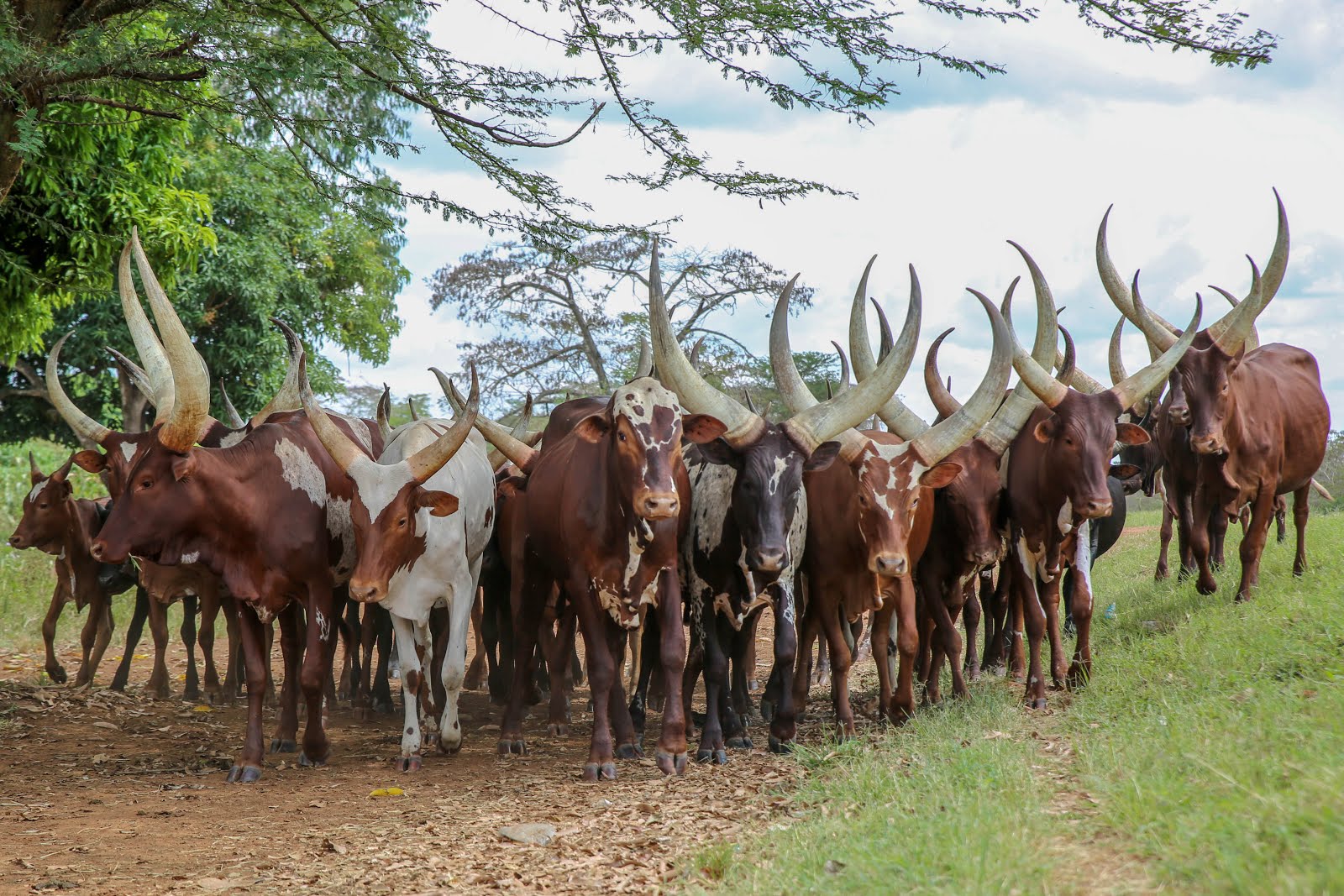
One of the most memorable animals travellers encounter outside Uganda’s national parks is the magnificent Ankole long-horned cow. Originally associated with the Ankole region of western Uganda, these striking cattle can now be seen across much of Uganda and parts of Rwanda. In Rwanda, long-horned cattle are closely associated with traditional royal cattle culture.
For many visitors travelling through western Uganda, one of the most enjoyable moments is simply being delayed on the road while a herd of enormous long-horned cattle crosses in front of the safari vehicle.
Their extraordinary horns, cultural importance and long relationship with pastoral communities make them far more than ordinary livestock.
Why Are Ankole Cattle So Famous?
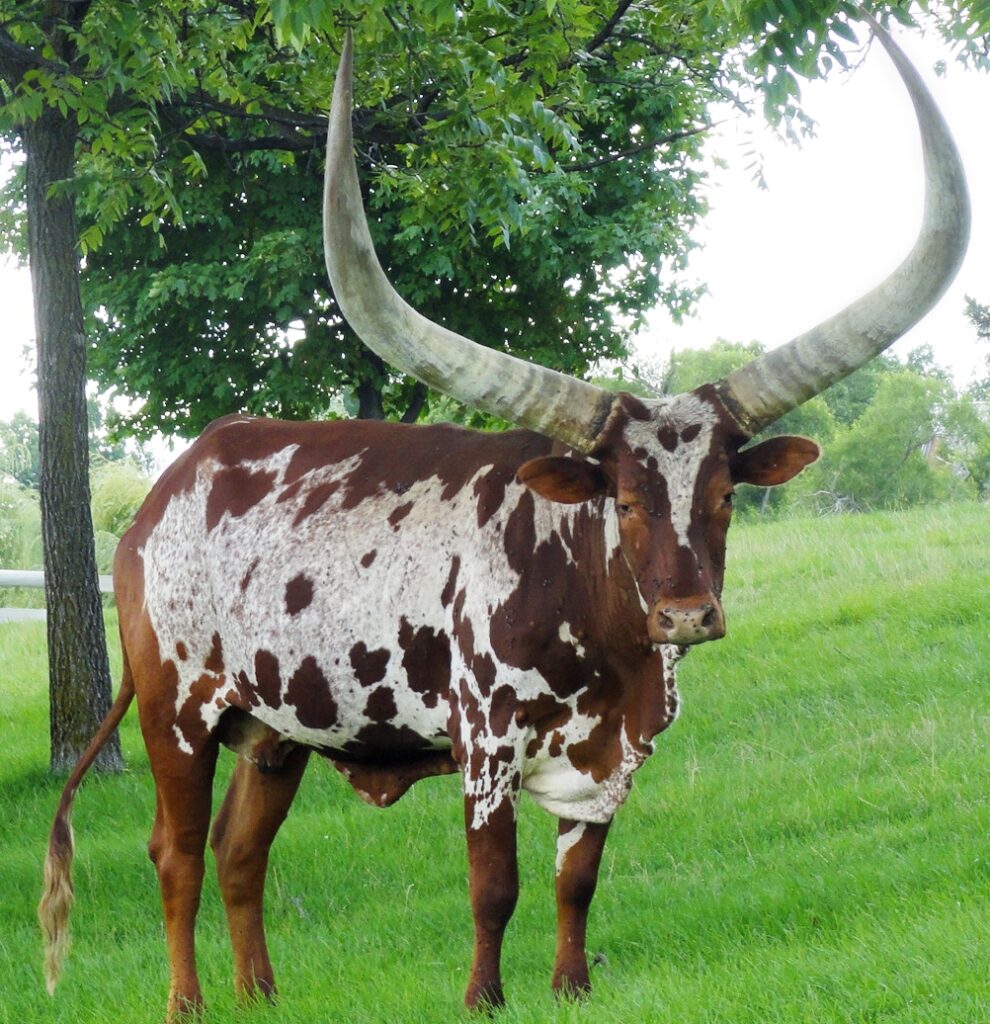
Ankole cattle are immediately recognisable because of their enormous horns. Their horns are among the largest found on any cattle breed and can grow into several striking shapes, including wide lateral horns and elegant upward-curving forms.
Beyond their appearance, the horns also have a practical purpose. Blood circulates through the horn structure and can help disperse body heat before returning to the animal, an adaptation suited to the warm environments in which the cattle have lived for generations.
Historically, large horns may also have provided some protection when cattle grouped together against predators.
The History of Ankole Long-Horned Cattle
Ankole cattle have been associated with East Africa for centuries. They belong to the broader group of African Sanga cattle, which developed through ancient cattle populations introduced and adapted across eastern Africa over long periods of time. Long-horned cattle also appear in ancient African and Egyptian imagery, showing just how old the relationship between people and distinctive long-horned cattle may be.
Over generations, the cattle became particularly important to pastoral communities in western Uganda. They were valued not only for survival, but also for identity, social standing and cultural continuity.
Cattle as a Symbol of Wealth and Status
Traditionally, Ankole cattle were not kept primarily for beef.
Ownership of cattle represented:
wealth
social status
family security
prestige
inheritance
marriage arrangements
cultural identity
The number and quality of cattle owned by a family could influence its social standing within the community.
Even today, long-horned cattle remain an important symbol of pride in many parts of western Uganda.
Why Were Ankole Cattle So Important?
For pastoral communities, cattle provided many of the basic necessities of life.
They supplied:
milk
occasional meat
manure
hides
horns
social wealth
marriage gifts
Milk was particularly important.
Historically, cattle were rarely slaughtered casually. A healthy animal represented long-term value, so slaughter was often associated with ceremonies, major social events or an animal that was no longer productive. Some pastoral traditions also included consuming mixtures of milk and cattle blood without killing the animal.
Ankole Cattle and Marriage Traditions
Cattle have traditionally played an important role in marriage arrangements and bride wealth. A valuable cow could represent far more than its market price. It might symbolize respect between families and form part of an important cultural relationship. Even today, cattle remain deeply connected to traditional marriage practices in parts of Uganda.
Milk, Ghee and Traditional Pastoral Life
Milk is one of the most important products associated with Ankole cattle.
Traditional households developed methods of:
milking cattle
preserving milk
making ghee
storing dairy products
Visitors to western Uganda can sometimes participate in cultural experiences that demonstrate traditional milking and ghee-making techniques.
These encounters provide a much deeper understanding of pastoral life than simply seeing the cattle beside the road.
How Ankole Cattle Are Used Today
Ankole cattle remain economically important.
They are raised for:
milk
beef
breeding
cultural value
tourism experiences
Their dung is also useful as organic manure, particularly in agricultural areas.
Traditionally, cattle dung has also been used in the construction and finishing of homes and other structures.
Hides and horns may be used to create decorative or practical products.
Ankole Cattle Beyond Uganda
The unusual appearance of Ankole cattle has attracted interest far beyond East Africa.
Long-horned cattle have been bred in several countries, including South Africa and the United States.
Their distinctive appearance has made them desirable among collectors and specialist cattle breeders.
This international interest demonstrates just how remarkable the breed is, but the strongest cultural connection remains with the communities of East Africa where these cattle have been part of life for generations.
Where Can You See Ankole Long-Horned Cattle in Uganda?
Western Uganda is one of the best regions to encounter the cattle.
Travellers may see them while travelling through areas around:
Mbarara
Kiruhura
Lake Mburo
They are frequently seen grazing close to roads and villages.
For travellers who want more than a roadside sighting, a cultural farm visit can offer a much richer experience.
Visit an Ankole Cattle Farm
A farm experience can introduce visitors to traditional cattle-keeping practices.
Depending on the location and programme, activities may include:
observing cattle herding
traditional milking
learning how ghee is made
discussions with cattle keepers
learning about local pastoral traditions
photographing the cattle
The Igongo Cultural Centre and surrounding western Uganda cultural experiences can also provide insight into Ankole history and traditions.
Ankole Cattle and Lake Mburo National Park
Lake Mburo National Park fits naturally into a cultural itinerary focused on Ankole cattle.
The surrounding region has strong pastoral traditions, and visitors may encounter cattle communities before or after a wildlife safari.
A journey through this part of Uganda can therefore combine:
Ankole cattle culture
zebras
giraffes
antelope
hippos
birdlife
traditional pastoral communities
This creates an excellent transition between cultural tourism and wildlife safari.
Combine Ankole Cattle Culture With Gorilla Trekking in Uganda
Seeing Ankole cattle can also become part of a much larger western Uganda safari.
Travellers heading toward Bwindi Impenetrable National Park for mountain gorilla trekking often pass through landscapes where cattle keeping remains an important part of local life.
Rather than simply driving through the region, a well-designed safari can include time to understand this cultural heritage.
A typical journey could combine:
an Ankole cattle experience
Lake Mburo National Park
Queen Elizabeth National Park
mountain gorilla trekking in Bwindi
community and cultural experiences
This creates a safari that combines Uganda’s wildlife, culture, landscapes and mountain gorillas.
From Ankole Cattle to Mountain Gorillas
One of the advantages of travelling through western Uganda is the variety of experiences within one journey.
You might begin the morning learning how a pastoral family manages its long-horned cattle and several days later find yourself walking through Bwindi’s rainforest in search of a mountain gorilla family.
These experiences tell two very different stories about Uganda.
One is about the relationship between people and livestock.
The other is about conservation and one of the world’s rarest great apes.
Together, they provide a richer understanding of the country than wildlife viewing alone.
Suggested Western Uganda Cultural & Wildlife Route
Stop
Main Experience
Lake Mburo / Ankole Region
Long-horned cattle, pastoral culture and wildlife
Queen Elizabeth National Park
Game drives, elephants, lions, hippos and boat safari
Bwindi Impenetrable National Park
Mountain gorilla trekking
Local Communities
Cultural experiences and village visits
This route can be adapted depending on your available time and interests.
Can You Add an Ankole Cattle Experience to a Gorilla Safari?
Yes.
An Ankole cattle experience works particularly well for travellers driving through western Uganda toward Bwindi. It can often be added without dramatically changing the main safari route.
For travellers who want a deeper cultural experience, we can also build more time into the itinerary for farm visits and local interactions.
What Else Can You Combine With Gorilla Trekking?
A western Uganda gorilla safari can also include:
chimpanzee trekking in Kibale
Queen Elizabeth National Park
Lake Mburo National Park
Lake Bunyonyi
traditional communities
birding
crater lakes
boat safaris
This allows travellers to experience much more than a single gorilla trek.
Plan an Ankole Cultural & Gorilla Safari
We can combine an Ankole cattle and cultural experience with Lake Mburo, Queen Elizabeth National Park and gorilla trekking in Bwindi.
Tell us your travel dates, number of travellers and preferred safari length, and we can help build the route around your interests.
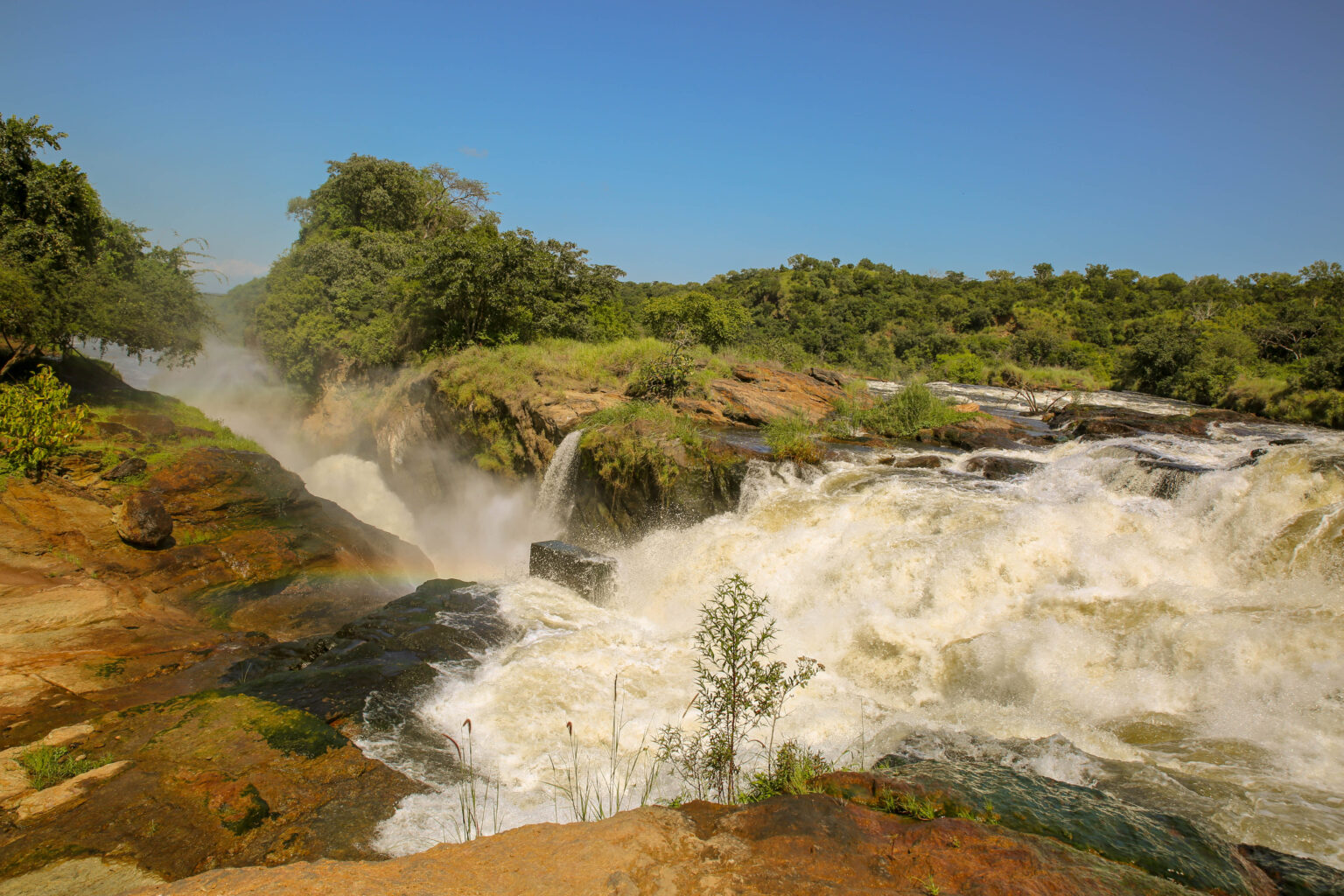
Murchison Falls is one of the most iconic sights of Uganda ‘’The Pearl of Africa.” It is said to be the world’s most powerful waterfall as the Nile gushes through a 6 metre gorge at the river’s narrowest point in its 6,670km length. The legendary waterfall is also the historical place of the Babiito dynasty of Bunyoro Kingdom which traces its origins back to this waterfall. A hike up the falls from the bottom is probably one of the most exhilarating hikes in the world as one has views of the falls from different angles.
Midway through the hike, one sees both Murchison Falls and Uhuru Falls. Words and Youtube videos simply cannot do it justice, so I would advise everyone to visit. The falls are the centerpiece of the expansive 5,072 square km Murchison Falls conservation area, Uganda’s biggest and most popular national park. The park is home to elephants, Nubian giraffes, lions, leopards, hyenas, herds of buffalo, antelopes, chimpanzees & other primates, over 450 species of birds, and a vast range of biodiversity. These unique features attract over 100,000 visitors a year and this number is growing at an annual rate of 8%. The economic benefits are in the tens of millions of dollars from the park fees, chimpanzee and hike fees and the lodge fees paid by these visitors. But, for some seemingly unfathomable reason, the Uganda government wants to dam this thunderous waterfall.
Of course the argument is that we need power, but we now have more power in Uganda than we can consume. So this government’s energy projects beggar belief, especially in times like this where the environmental crisis is claiming more biodiversity by the day all over the world. Is the Uganda government ready to destroy Murchison Falls or Uhuru falls for that matter? Over the last ten years the government has built 3 dams on the Nile in Uganda. In 2010, we watched helplessly as the beautiful Bujagali falls were destroyed by a dam, and then the Karuma, Ayago and Itanda falls. In Jinja, we suffered the brunt of the effects as tourism declined after the falls disappeared. But this time round, we are not going to just sit back and watch as our heritage is destroyed. We have to secure Murchison Falls for future generations of Ugandans and the entire world.
In Jinja, before the construction of the Isimba dam in 2013, we had discussions with Ministry of Energy officials about this government’s energy strategy. We advised against the construction of many dams along the river and instead proposed the government focus on one mega dam –like the Ethiopians have done –as this would have a lower environmental impact. The Uganda government’s multiple dam construction strategy is akin to the construction of numerous pit latrines all over one’s homestead/compound. Pit latrines are most useful but digging many in one’s compound creates a hazardous nuisance. No sane Ugandan builds pit latrines in their front yard. So it is wise for one to construct one deep latrine tucked away behind the house. But the government didn’t listen. Six years later, the government still hasn’t learnt this and is now back to construct yet another dam on the Nile.
Have we not learnt from the environmentally tragic western capitalistic system of economics? The European and US capitalistic approach had initially failed to factor in economic benefits of nature into their capitalistic economic model. As such, environmental damage to the world at large as a result of the pervasive profit driven production and consumption took its toll on the environment in Europe, the United States and the world at large as a few individuals and nations benefited at the cost of the majority. And now, nearly 200 years after the start of the industrial revolution, Americans and Europeans have only just realised the damage the economic system has caused. Western countries are in panic, doing whatever is necessary to save the world from plastic and other detrimental effects of uncontrolled capitalistic production.
Western governments have imposed strict taxes on harmful commodities and pursued brave subsidy programs to encourage greener living. Indeed Europeans and Americans have lost so much biodiversity that they now flock to sub-Saharan countries to see biodiversity like mahogany and mvule trees, elephants, birds and plants that their forefathers destroyed in their own countries during the madness of unbridled capitalism. One would think that Ugandans would ask themselves why a European or an American pays $1,500 for a flight to come to Uganda to spend a further $10,000 just to drive around Uganda and see the country we have. But, it appears our politicians are lost in maximising power and economic benefit whereas the average Ugandan is preoccupied by short term needs like paying school fees, constructing houses and going for Kwanjula (traditional wedding ceremonies). We barely ever take time to think about the environment –the very thing that sustains our life. Future generations will judge us very harshly, so I implore fellow Ugandans to come together and not only fight for Murchison Falls, but also start taking environmental issues seriously. Selfish leadership will capitalize on our ignorance and rob not only us, but our future generations.
There are many renewable energy alternatives that are now viable in Uganda. Solar energy is one such alternative that ought to be explored given the monumental leaps in the technology in the last 5 years. The government can learn from the UK, a country with minimal sunshine yet their government encourages citizens to use renewable energy. The UK used a two pronged approach that allowed individuals to take matters in their own hands and invest in solar energy using government grants and subsidies. As such wind turbines and solar powered homes increased to one million. The government also encouraged large scale investment in renewable resources. The UK government’s solar energy initiatives were so successful that for the first time in 2016 the sun provided more energy to the UK grid than coal plants. Uganda has a lot more sunlight hours than the UK as it straddles the equator. There are many sustainable alternative means of meeting our energy needs. Leave Murchison Falls be.