
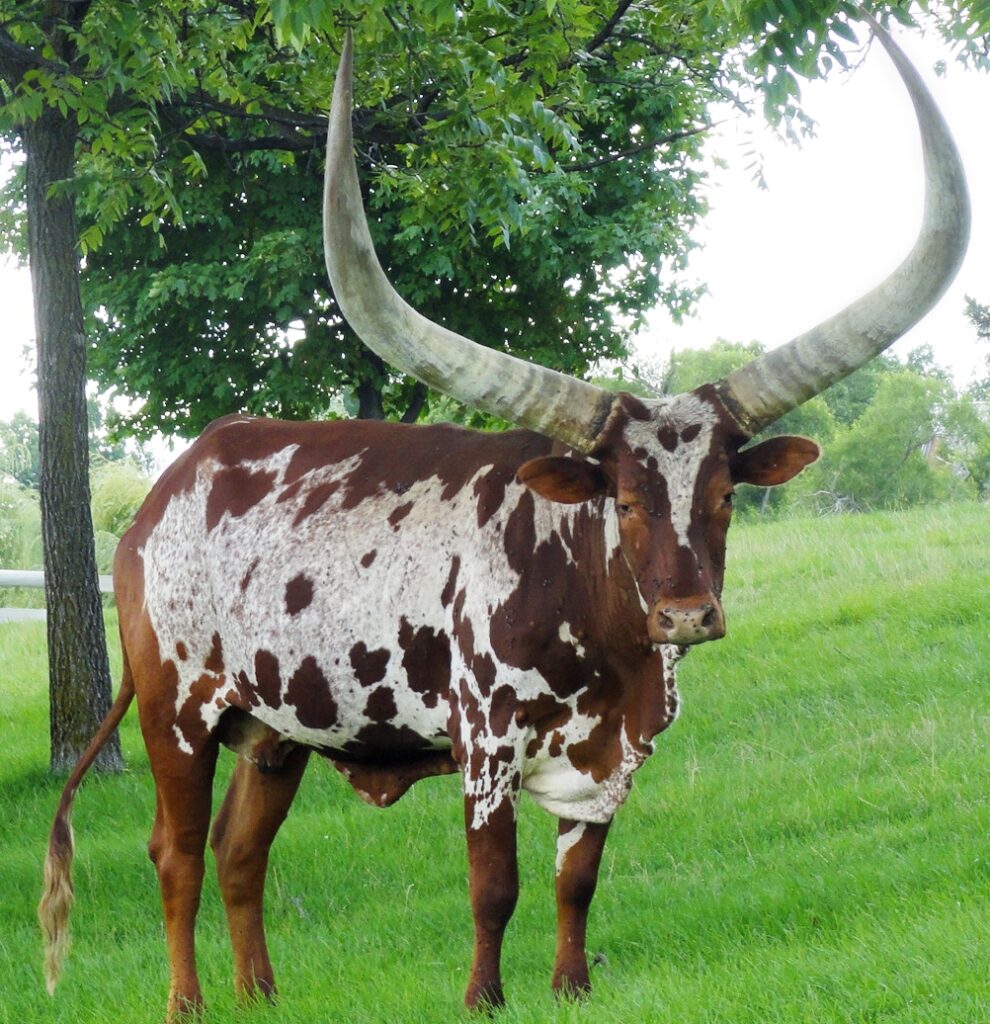
One of the most memorable animals travellers encounter outside Uganda’s national parks is the magnificent Ankole long-horned cow. Originally associated with the Ankole region of western Uganda, these striking cattle can now be seen across much of Uganda and parts of Rwanda. In Rwanda, long-horned cattle are closely associated with traditional royal cattle culture.
For many visitors travelling through western Uganda, one of the most enjoyable moments is simply being delayed on the road while a herd of enormous long-horned cattle crosses in front of the safari vehicle.
Their extraordinary horns, cultural importance and long relationship with pastoral communities make them far more than ordinary livestock.
Why Are Ankole Cattle So Famous?
Ankole cattle are immediately recognisable because of their enormous horns. Their horns are among the largest found on any cattle breed and can grow into several striking shapes, including wide lateral horns and elegant upward-curving forms.
Beyond their appearance, the horns also have a practical purpose. Blood circulates through the horn structure and can help disperse body heat before returning to the animal, an adaptation suited to the warm environments in which the cattle have lived for generations.
Historically, large horns may also have provided some protection when cattle grouped together against predators.
The History of Ankole Long-Horned Cattle
Ankole cattle have been associated with East Africa for centuries. They belong to the broader group of African Sanga cattle, which developed through ancient cattle populations introduced and adapted across eastern Africa over long periods of time. Long-horned cattle also appear in ancient African and Egyptian imagery, showing just how old the relationship between people and distinctive long-horned cattle may be.
Over generations, the cattle became particularly important to pastoral communities in western Uganda. They were valued not only for survival, but also for identity, social standing and cultural continuity.
Cattle as a Symbol of Wealth and Status
Traditionally, Ankole cattle were not kept primarily for beef.
Ownership of cattle represented:
- wealth
- social status
- family security
- prestige
- inheritance
- marriage arrangements
- cultural identity
The number and quality of cattle owned by a family could influence its social standing within the community.
Even today, long-horned cattle remain an important symbol of pride in many parts of western Uganda.
Why Were Ankole Cattle So Important?
For pastoral communities, cattle provided many of the basic necessities of life.
They supplied:
- milk
- occasional meat
- manure
- hides
- horns
- social wealth
- marriage gifts
Milk was particularly important.
Historically, cattle were rarely slaughtered casually. A healthy animal represented long-term value, so slaughter was often associated with ceremonies, major social events or an animal that was no longer productive. Some pastoral traditions also included consuming mixtures of milk and cattle blood without killing the animal.
Ankole Cattle and Marriage Traditions
Cattle have traditionally played an important role in marriage arrangements and bride wealth. A valuable cow could represent far more than its market price. It might symbolize respect between families and form part of an important cultural relationship. Even today, cattle remain deeply connected to traditional marriage practices in parts of Uganda.
Milk, Ghee and Traditional Pastoral Life
Milk is one of the most important products associated with Ankole cattle.
Traditional households developed methods of:
- milking cattle
- preserving milk
- making ghee
- storing dairy products
Visitors to western Uganda can sometimes participate in cultural experiences that demonstrate traditional milking and ghee-making techniques.
These encounters provide a much deeper understanding of pastoral life than simply seeing the cattle beside the road.
How Ankole Cattle Are Used Today
Ankole cattle remain economically important.
They are raised for:
- milk
- beef
- breeding
- cultural value
- tourism experiences
Their dung is also useful as organic manure, particularly in agricultural areas.
Traditionally, cattle dung has also been used in the construction and finishing of homes and other structures.
Hides and horns may be used to create decorative or practical products.
Ankole Cattle Beyond Uganda
The unusual appearance of Ankole cattle has attracted interest far beyond East Africa.
Long-horned cattle have been bred in several countries, including South Africa and the United States.
Their distinctive appearance has made them desirable among collectors and specialist cattle breeders.
This international interest demonstrates just how remarkable the breed is, but the strongest cultural connection remains with the communities of East Africa where these cattle have been part of life for generations.
Where Can You See Ankole Long-Horned Cattle in Uganda?
Western Uganda is one of the best regions to encounter the cattle.
Travellers may see them while travelling through areas around:
- Mbarara
- Kiruhura
- Lake Mburo
They are frequently seen grazing close to roads and villages.
For travellers who want more than a roadside sighting, a cultural farm visit can offer a much richer experience.
Visit an Ankole Cattle Farm
A farm experience can introduce visitors to traditional cattle-keeping practices.
Depending on the location and programme, activities may include:
- observing cattle herding
- traditional milking
- learning how ghee is made
- discussions with cattle keepers
- learning about local pastoral traditions
- photographing the cattle
The Igongo Cultural Centre and surrounding western Uganda cultural experiences can also provide insight into Ankole history and traditions.
Ankole Cattle and Lake Mburo National Park
Lake Mburo National Park fits naturally into a cultural itinerary focused on Ankole cattle.
The surrounding region has strong pastoral traditions, and visitors may encounter cattle communities before or after a wildlife safari.
A journey through this part of Uganda can therefore combine:
- Ankole cattle culture
- zebras
- giraffes
- antelope
- hippos
- birdlife
- traditional pastoral communities
This creates an excellent transition between cultural tourism and wildlife safari.
Combine Ankole Cattle Culture With Gorilla Trekking in Uganda
Seeing Ankole cattle can also become part of a much larger western Uganda safari.
Travellers heading toward Bwindi Impenetrable National Park for mountain gorilla trekking often pass through landscapes where cattle keeping remains an important part of local life.
Rather than simply driving through the region, a well-designed safari can include time to understand this cultural heritage.
A typical journey could combine:
- an Ankole cattle experience
- Lake Mburo National Park
- Queen Elizabeth National Park
- mountain gorilla trekking in Bwindi
- community and cultural experiences
This creates a safari that combines Uganda’s wildlife, culture, landscapes and mountain gorillas.
From Ankole Cattle to Mountain Gorillas
One of the advantages of travelling through western Uganda is the variety of experiences within one journey.
You might begin the morning learning how a pastoral family manages its long-horned cattle and several days later find yourself walking through Bwindi’s rainforest in search of a mountain gorilla family.
These experiences tell two very different stories about Uganda.
One is about the relationship between people and livestock.
The other is about conservation and one of the world’s rarest great apes.
Together, they provide a richer understanding of the country than wildlife viewing alone.
Suggested Western Uganda Cultural & Wildlife Route
| Stop | Main Experience |
|---|---|
| Lake Mburo / Ankole Region | Long-horned cattle, pastoral culture and wildlife |
| Queen Elizabeth National Park | Game drives, elephants, lions, hippos and boat safari |
| Bwindi Impenetrable National Park | Mountain gorilla trekking |
| Local Communities | Cultural experiences and village visits |
This route can be adapted depending on your available time and interests.
Can You Add an Ankole Cattle Experience to a Gorilla Safari?
Yes.
An Ankole cattle experience works particularly well for travellers driving through western Uganda toward Bwindi. It can often be added without dramatically changing the main safari route.
For travellers who want a deeper cultural experience, we can also build more time into the itinerary for farm visits and local interactions.
What Else Can You Combine With Gorilla Trekking?
A western Uganda gorilla safari can also include:
- chimpanzee trekking in Kibale
- Queen Elizabeth National Park
- Lake Mburo National Park
- Lake Bunyonyi
- traditional communities
- birding
- crater lakes
- boat safaris
This allows travellers to experience much more than a single gorilla trek.
Plan an Ankole Cultural & Gorilla Safari
We can combine an Ankole cattle and cultural experience with Lake Mburo, Queen Elizabeth National Park and gorilla trekking in Bwindi.
Tell us your travel dates, number of travellers and preferred safari length, and we can help build the route around your interests.
