
The Essential Gorilla Trekking Guide with Expert Tips

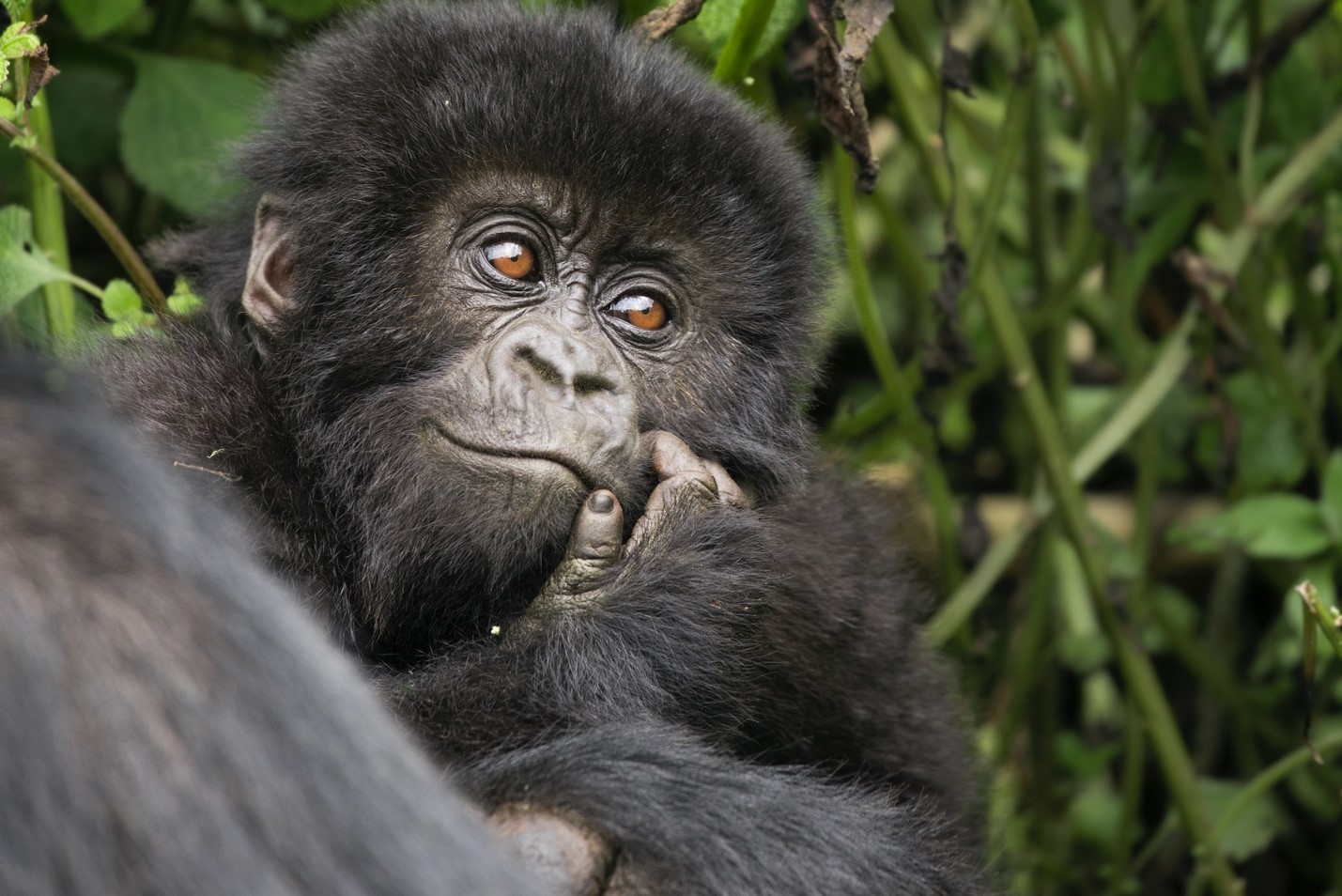
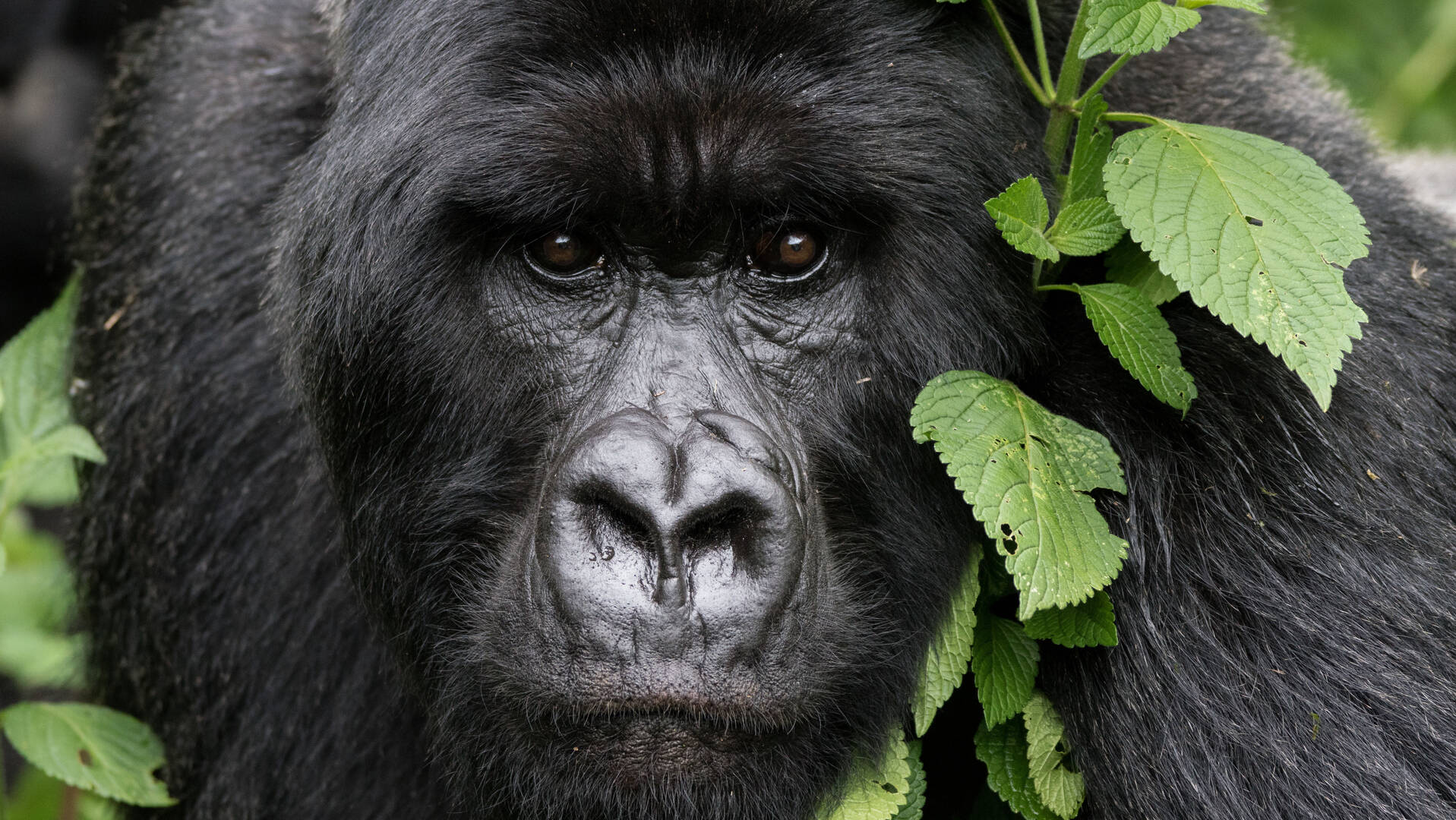
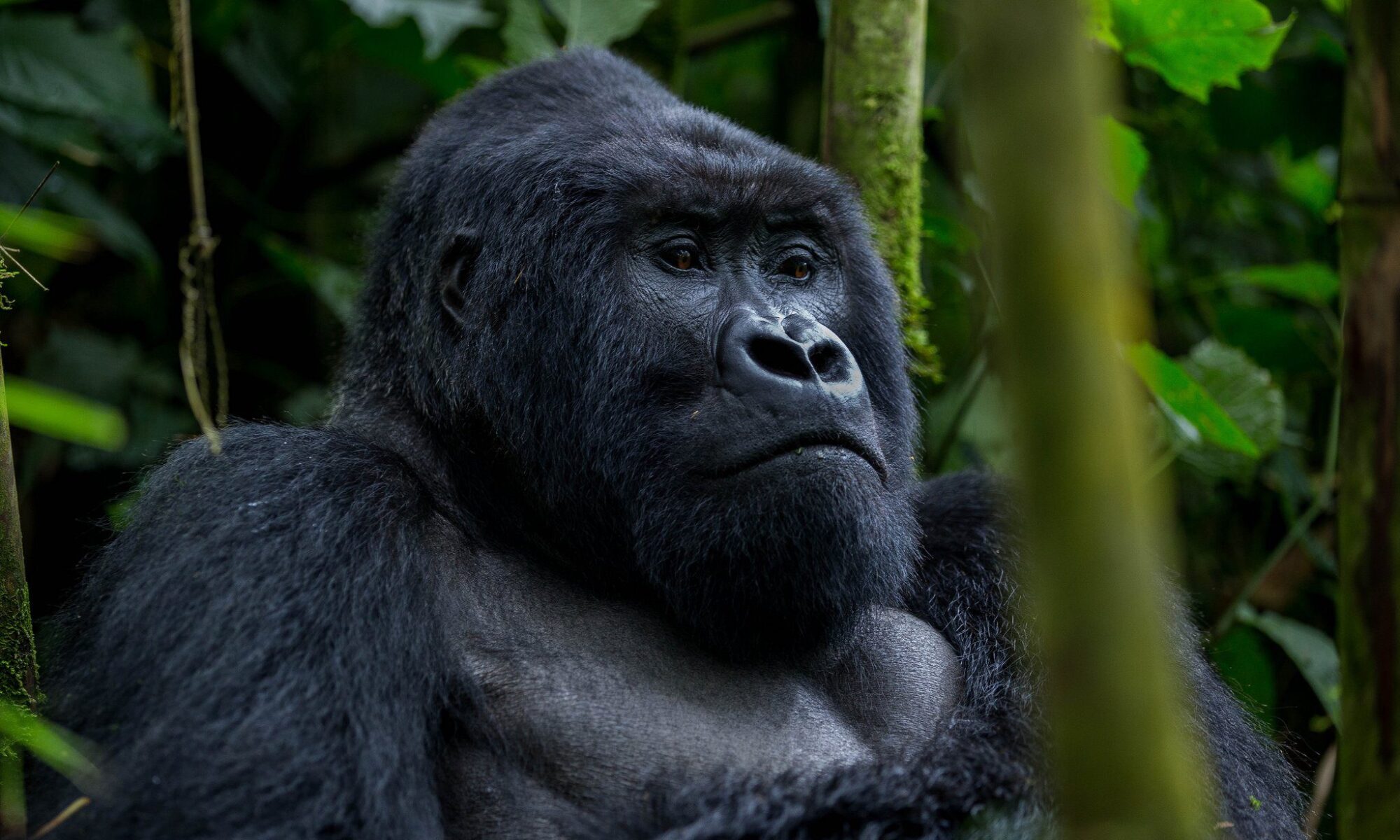
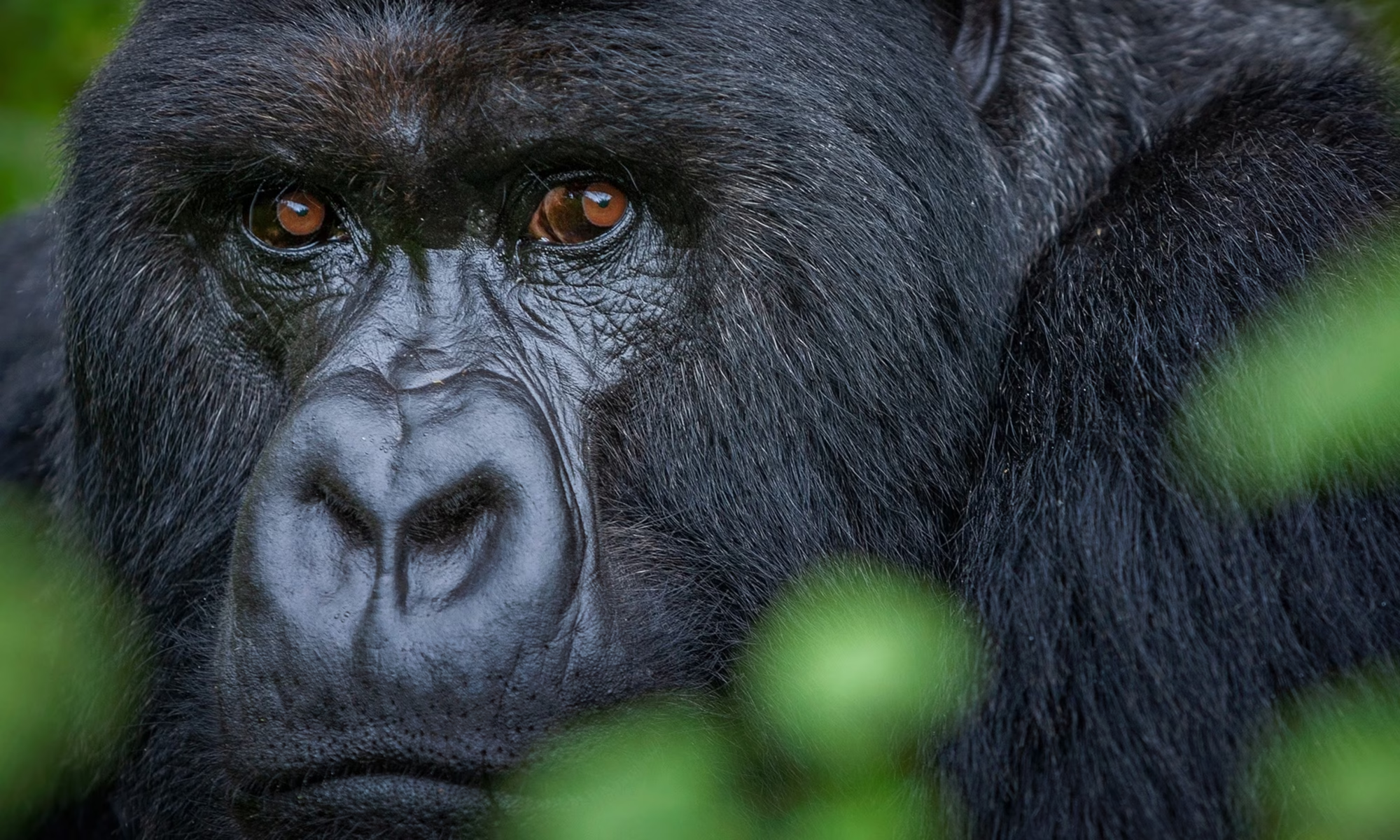
mountain gorilla face

GORILLA TREKKING AT A GLANCE 

Gorilla Trekking FactAnswer
CountriesUganda and Rwanda, plus DRC under different travel considerations
Uganda parksBwindi and Mgahinga
Rwanda parkVolcanoes National Park
Minimum age15
Standard Uganda permitUS$ 800
Standard Rwanda permitUS$ 1,500
Time with gorillasUsually 1 hour on a standard trek
Trek durationVaries according to gorilla location and terrain
FitnessModerate fitness recommended
Porter recommended?Yes
Best booking adviceSecure permit before finalising the lodge
Best time to bookAs early as possible for fixed travel dates

Gorilla trekking is one of the most extraordinary wildlife experiences available anywhere in Africa. It is far from a traditional safari, where wildlife is usually observed from the comfort of a vehicle. To see mountain gorillas, you must enter their world on foot.

You walk through tropical rainforest, follow paths across steep mountain slopes, cross streams, and push through thick vegetation with experienced trackers until, somewhere deep inside the forest, you encounter a family of wild mountain gorillas.

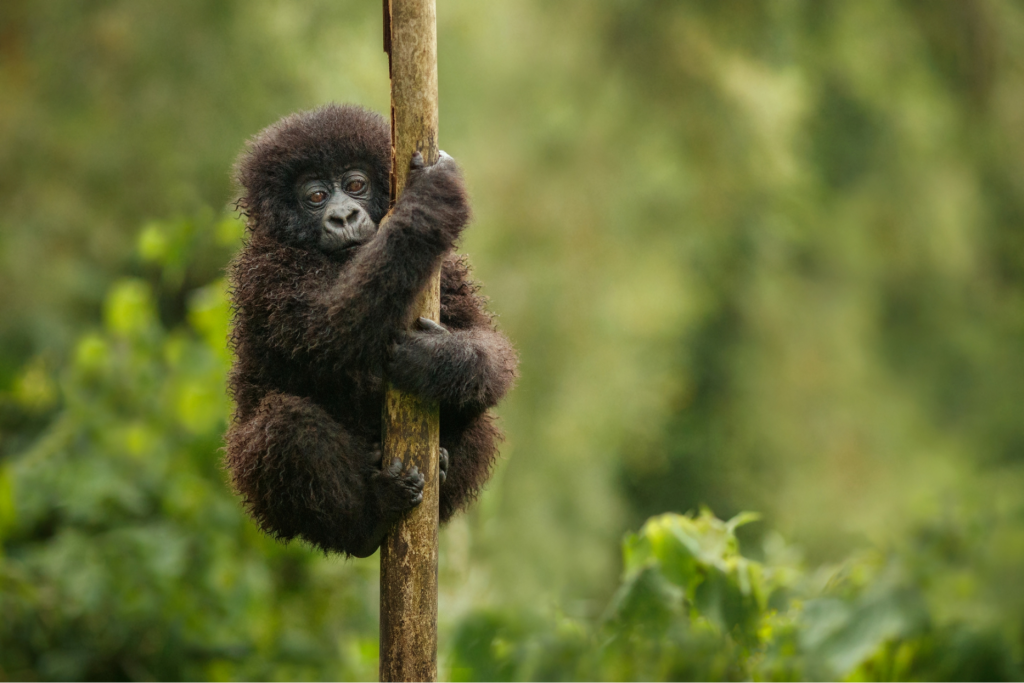
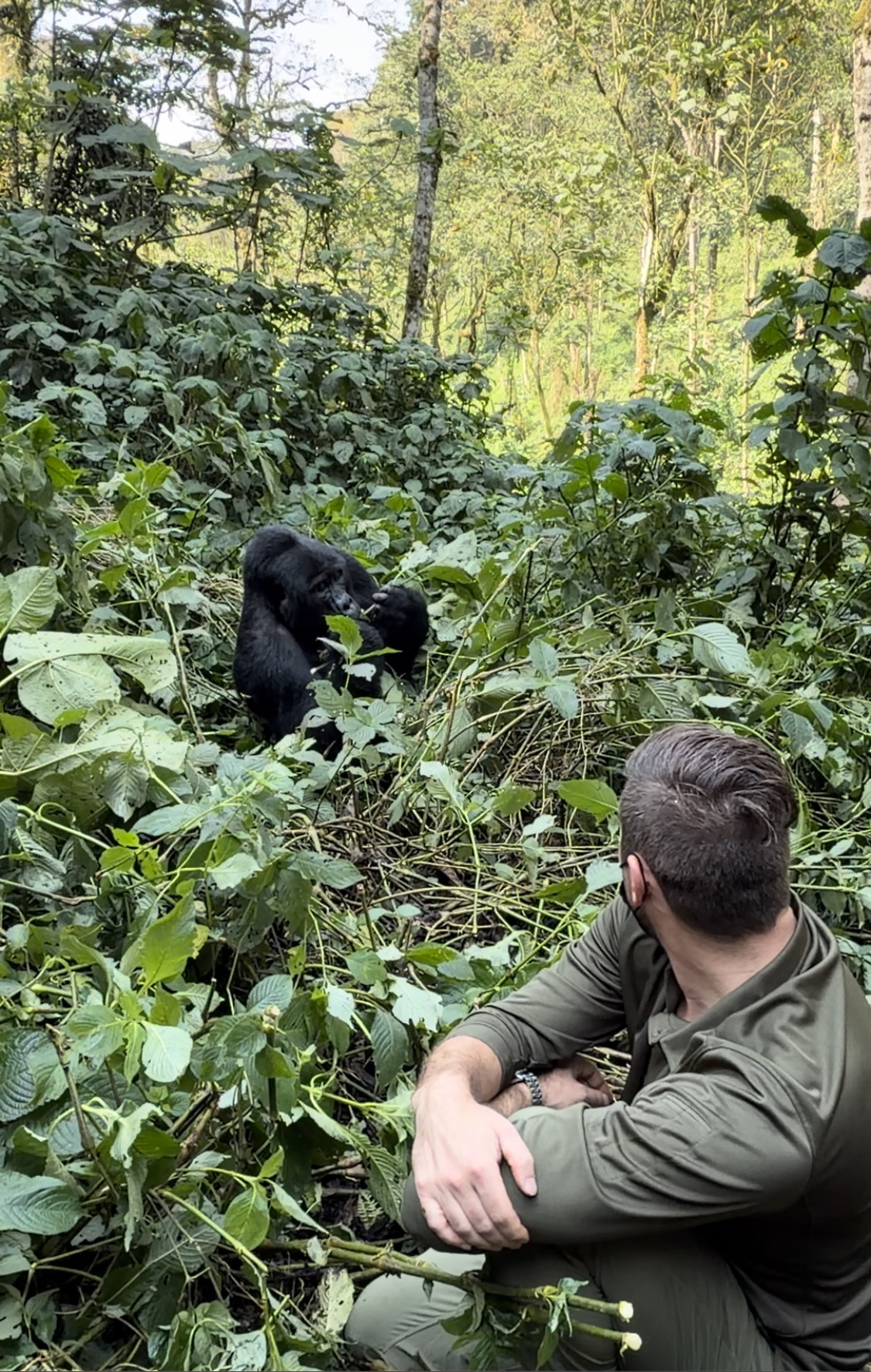
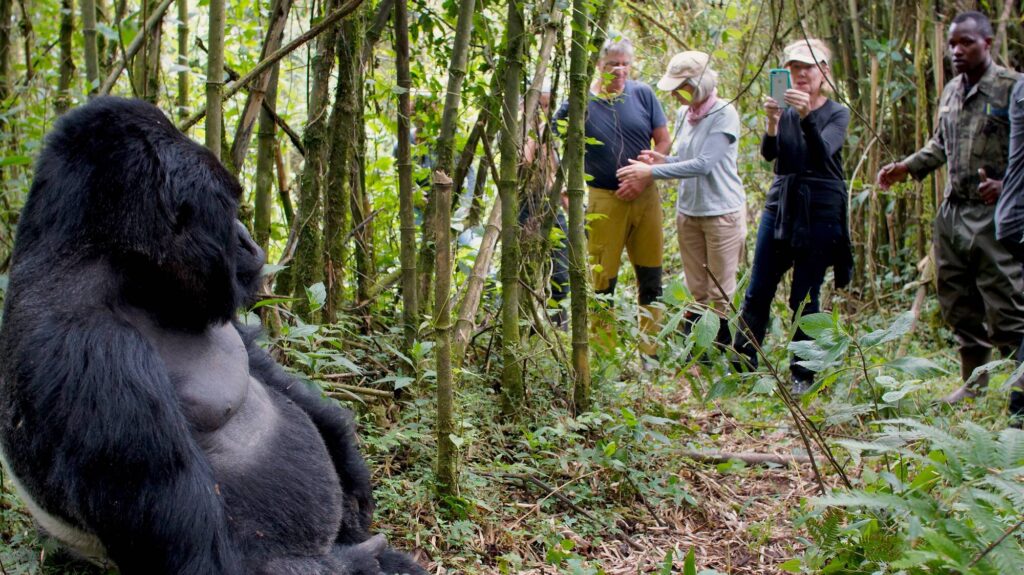
There is usually a remarkable change in atmosphere when the gorillas are finally located. The conversation stops, cameras are prepared and the group follows the ranger quietly through the vegetation. Sometimes the first gorilla you notice is a young animal climbing through the branches. On another trek it might be an enormous silverback sitting quietly on the forest floor, pulling vegetation toward himself and eating with almost complete indifference to the humans watching nearby. A mother may carry an infant against her body while juveniles wrestle, climb trees or chase each other through the undergrowth.

Nothing is staged. The gorillas are not captive animals and they are not trained to perform for visitors. They move freely through the forest, choosing where they feed, rest and travel. This is what makes gorilla trekking so powerful. For a short period, humans are allowed to enter the natural environment of one of our closest relatives and observe their lives at remarkably close range.

Uganda is one of the world’s most important destinations for mountain gorilla trekking. The experience takes place in two protected areas in the south-west of the country: Bwindi Impenetrable National Park and Mgahinga Gorilla National Park. Bwindi is the better known of the two and contains several different gorilla trekking regions, while Mgahinga forms part of the dramatic Virunga volcanic landscape shared by Uganda, Rwanda and the Democratic Republic of Congo.

Planning a gorilla safari involves more than deciding to visit Bwindi. Our guests should understand gorilla permits, trekking sectors, weather, accommodation, fitness, transportation, and the time required. They may also decide whether to combine gorillas with chimpanzees, traditional game viewing, Rwanda, Kenya, or Tanzania. The Ultimate Gorilla Trekking Guide provides detailed plans for these choices.

This comprehensive Uganda gorilla trekking guide has been created to answer those questions. The Ultimate Gorilla Trekking Guide explains what to expect before you arrive.

At Buutu Safaris, we believe that a successful gorilla safari begins long before you enter the forest. The right gorilla permit needs to be matched with the right trekking region, the right accommodation and a realistic safari route. When those pieces are planned properly, the gorilla trek becomes the highlight of a much larger journey through one of Africa’s most diverse wildlife destinations.

What Is Gorilla Trekking?

Gorilla trekking is a guided journey through natural forest to locate and observe a habituated family of wild gorillas. In Uganda, experienced park rangers and trackers lead visitors through mountain forests where gorilla families are monitored as part of long-term conservation programs.

The word “habituated” is particularly important when understanding how gorilla tourism works. A habituated gorilla is not a tame gorilla. It remains a completely wild animal. Habituation is instead a gradual process during which researchers, trackers and conservation teams carefully introduce a gorilla family to the presence of people. Over time, the animals learn that these controlled groups of humans do not represent a threat.

This process allows small groups of visitors to observe certain gorilla families without producing the level of alarm that could result if unhabituated wild gorillas suddenly encountered humans.

The trek normally begins early in the morning at the relevant park headquarters. Visitors are registered and briefed before being divided into groups and assigned a particular gorilla family. Trackers often have some knowledge of where that family was observed previously, but gorillas are constantly moving through the forest in search of food and suitable resting areas.

This means no two gorilla treks are exactly the same.

Some guests may walk for a relatively short period before locating their gorilla family. Others may spend several hours climbing through steep forest terrain. Rain, vegetation, altitude and the movement of the gorillas can all influence the difficulty of the day.

Once the gorillas are located, however, the trek changes into an observation experience. Guests normally spend a limited period with the gorilla family while following strict instructions from the rangers. During this time you may watch gorillas feeding, resting, grooming, playing or moving through the vegetation.

The experience can feel surprisingly intimate. Gorillas communicate through body language, vocalizations and subtle social interactions. Young gorillas behave with an energy that can seem almost childlike, while the enormous silverback may appear remarkably calm.

It is this combination of wilderness, uncertainty and familiarity that makes gorilla trekking unlike almost any other safari activity.

Where Can You Go Gorilla Trekking in Uganda?

Mountain gorilla trekking in Uganda takes place in Bwindi Impenetrable National Park and Mgahinga Gorilla National Park. Both parks lie in south-western Uganda, but they offer very different landscapes and experiences.

Bwindi is an ancient mountain rainforest of steep valleys, ridges, streams and dense vegetation. It is Uganda’s principal gorilla trekking destination and contains several separate trekking areas. The forest is incredibly atmospheric, particularly in the early morning when mist can hang between the hills and clouds drift across the canopy.

Mgahinga, by contrast, lies within the Virunga Mountains. Here the landscape is dominated by massive extinct volcanoes rising above bamboo forests and montane vegetation. The park is considerably smaller than Bwindi but offers some of Uganda’s most spectacular mountain scenery.

Most first-time guests choose Bwindi because it has more trekking regions, more accommodation and greater flexibility when designing itineraries. However, Mgahinga should not be considered an inferior alternative. For some travelers, particularly those interested in volcano hiking, golden monkeys and the wider Virunga ecosystem, Mgahinga can actually be the better choice.

Gorilla Trekking in Bwindi Impenetrable National Park

Bwindi Impenetrable National Park is the heart of gorilla trekking tourism in Uganda. Located in the south-western highlands, the forest protects an extraordinary ecosystem that has survived for thousands of years.

The landscape itself contributes greatly to the experience. Bwindi is not a flat tropical forest. It rises and falls dramatically across mountain slopes and deeply cut valleys. Dense vegetation covers almost every available surface, while streams descend through the forest and disappear beneath enormous tree ferns and tangled vines.

This geography explains why travelers should understand the structure of Bwindi before making accommodation reservations.

Bwindi is divided into four main gorilla trekking sectors: Buhoma, Ruhija, Rushaga and Nkuringo. Each has its own trekking headquarters and nearby accommodation. Although all four are technically within Bwindi, traveling between them can take considerable time because mountain roads follow ridges and valleys rather than straight lines.

One of the most common planning errors is booking a beautiful lodge without first confirming which trekking sector the gorilla permit belongs to. A lodge described online as being “in Bwindi” may be several hours away from your actual trekking headquarters.

For this reason, checking in with us for gorilla permit availability should normally be considered before accommodation is finalized.

Gorilla Trekking in Buhoma

Buhoma lies in the northern part of Bwindi and is one of Uganda’s most famous gorilla trekking areas. It was among the earliest parts of the forest to develop organized gorilla tourism and has consequently developed a broad range of accommodation.

The landscape around Buhoma feels distinctly tropical. Forest-covered slopes rise above the village while lodges and camps sit close to the park boundary. On cool mornings, clouds and mist can settle over the hills before lifting as the day warms.

One of Buhoma’s greatest logistical advantages is its relationship with Queen Elizabeth National Park, particularly the Ishasha sector. Travelers combining a traditional wildlife safari with gorilla trekking can often travel from Queen Elizabeth toward Buhoma, creating a natural transition from open savanna to rainforest.

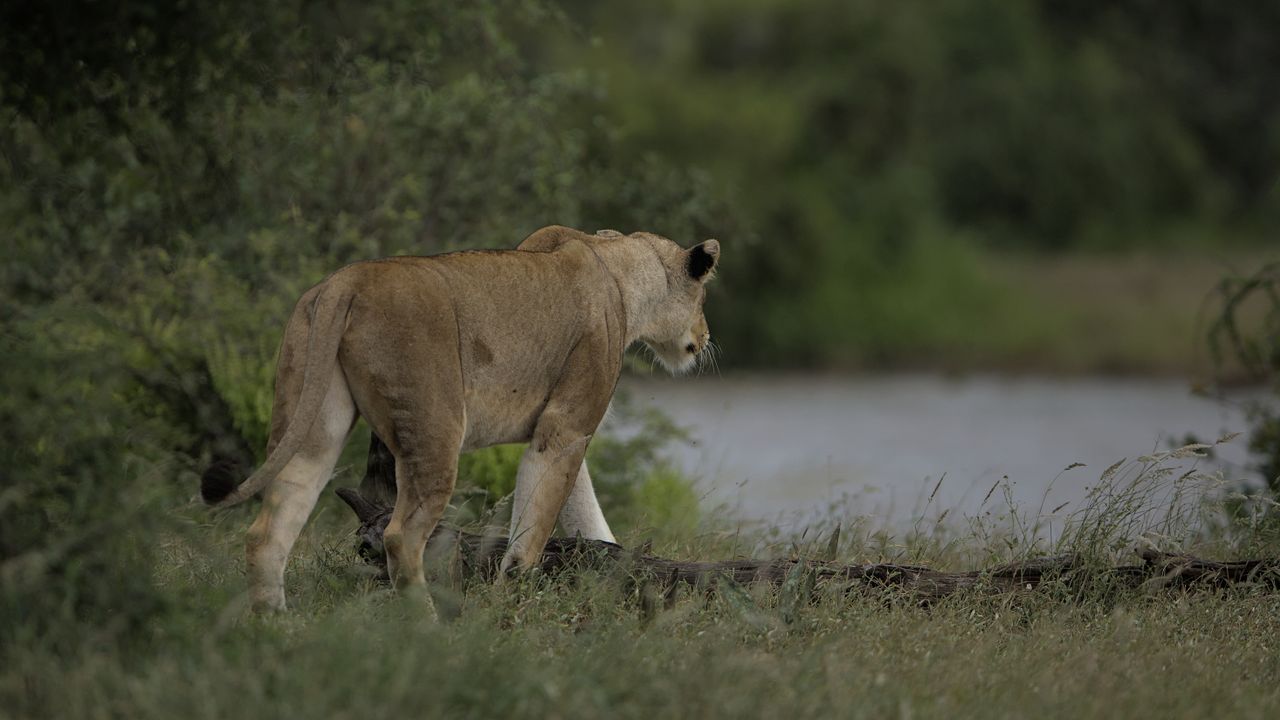
This makes Buhoma particularly attractive for travelers who want to see lions, elephants, buffaloes and other large mammals before continuing to mountain gorillas.

The region also offers opportunities for forest walks, birdwatching and community experiences when time permits.

However, travelers should never assume that trekking in Buhoma will necessarily be easier than trekking elsewhere. Gorilla families move continuously and the difficulty of the trek depends significantly on where the assigned family is located on that particular day.

A family that spent the previous evening near the edge of the forest could move much farther into the hills by morning. Accommodation is key but should be considered after securing a permit. Our preferred choice in this region is Gorilla Forest Lodge.

Gorilla Trekking in Ruhija

Ruhija lies on the eastern side of Bwindi and offers a somewhat different atmosphere. The landscape is high, cool and mountainous, with magnificent views across forested ridges.

It is particularly attractive to travelers with an interest in birds. Bwindi is one of Africa’s most significant birding destinations and the forests around Ruhija are especially important for several Albertine Rift species.

The higher altitude can make mornings noticeably cool, so travelers should be prepared for changing temperatures. Once trekking begins, however, climbing through the forest quickly produces enough warmth.

Ruhija can work very well within certain Uganda itineraries, particularly when the route approaches Bwindi from the east. As everywhere in the park, accommodation should be selected according to the trekking permit rather than simply by looking at a map.Our best choice here is Kiho Gorilla Safari Lodge.

The roads around Bwindi frequently appear shorter on maps than they feel in practice. Mountain terrain, weather and road conditions all affect journey times.

This is why local route knowledge becomes particularly important when designing a gorilla safari.

Gorilla Trekking in Rushaga

Rushaga is one of the principal trekking areas in southern Bwindi. The surrounding countryside is among the most beautiful in Uganda, with steep cultivated hills descending into valleys before rising again toward the dark edge of the forest.

The southern position of Rushaga makes it particularly useful for travelers approaching Kisoro or combining the gorilla experience with Lake Bunyonyi, Mgahinga Gorilla National Park or Rwanda.

Rushaga is also strongly associated with Uganda’s Gorilla Habituation Experience. This makes it especially interesting for serious photographers, primate enthusiasts and travelers who want more time observing gorillas than is permitted during a conventional trek.

Accommodation in southern Bwindi has expanded considerably and travelers can now choose from relatively simple lodges through to sophisticated luxury properties.Our preferred lodge being Gorilla Treetops Lodge.

The scenery also makes Rushaga attractive even beyond the gorilla experience. Roads wind through terraced hills and small communities, while the volcanic mountains toward Kisoro may sometimes be visible in the distance.

Gorilla Trekking in Nkuringo

Nkuringo lies in southern Bwindi and is famous for its dramatic mountain scenery. The region sits high above deep valleys, with extensive views across cultivated hills and, under favorable conditions, toward the Virunga volcanoes.

The terrain around Nkuringo can be challenging. Steep slopes are part of the landscape and travelers should be comfortable with hill walking. However, as with every sector, the actual difficulty of the gorilla trek depends on where the gorillas happen to be.

Some treks may be demanding while others prove surprisingly manageable.

Nkuringo is particularly attractive to adventurous travelers who value scenery almost as much as wildlife. The surrounding countryside is beautiful enough that simply driving through the region can become one of the highlights of a Uganda safari. For accommodation, we prefer our guests staying at Clouds Mountain Gorilla Lodge.

It also combines naturally with Kisoro, Rushaga, Lake Mutanda, Lake Bunyonyi and Mgahinga.

Which Bwindi Gorilla Trekking Sector Is Best?

There is no single Bwindi trekking sector that can objectively be described as the best. The correct choice depends on the guest.

Permit availability is one of the first considerations. Gorilla permits are limited, so preferred dates may determine which sectors remain available.

Your wider itinerary is equally important. When coming from Queen Elizabeth National Park, our guests may be better suited to a different sector from someone arriving through Kisoro. A guest flying into the region may also require a different approach from someone traveling entirely by road.

Accommodation preferences matter as well. Some sectors have a larger variety of properties, while particular luxury lodges may naturally work with specific trekking headquarters.

Fitness can also play a role, although nobody can guarantee an easy trek simply by selecting one sector over another.

At Buutu Safaris, we generally recommend choosing a sector by looking at the entire safari rather than treating the gorilla trek as an isolated activity. The days immediately before and after Bwindi matter. A well-designed route can eliminate unnecessary driving and create a much more relaxed safari.

Gorilla Trekking in Mgahinga Gorilla National Park

Mgahinga Gorilla National Park is smaller and less famous than Bwindi, but it offers one of Uganda’s most visually spectacular gorilla experiences.

The park forms part of the Virunga mountain ecosystem and is dominated by three enormous volcanoes: Mount Muhabura, Mount Gahinga and Mount Sabyinyo.

These mountains give Mgahinga a very different character from Bwindi. Instead of endless ridges covered by ancient rainforest, the landscape feels volcanic and expansive. Bamboo forests climb the mountain slopes while clouds frequently gather around the summits.

Mountain gorillas move within this ecosystem, while the park is also famous for golden monkeys.

For travelers who enjoy active adventures, Mgahinga can be incorporated into an itinerary that includes gorilla trekking, golden monkey tracking and volcano hiking.

Its proximity to Kisoro also makes it convenient for certain Rwanda and southern Uganda itineraries.

For many years, Mgahinga was overlooked by travelers automatically choosing Bwindi. That is unfortunate because the park offers an exceptional wilderness experience in its own right.

Bwindi or Mgahinga: Which Is Better for Gorilla Trekking?

Bwindi is usually the better option for travelers seeking the greatest flexibility. It has several trekking sectors, a larger selection of lodges and more established combinations with other Uganda safari destinations.

Mgahinga may appeal more strongly to travelers fascinated by mountain landscapes and the Virunga volcanoes. It is also attractive for those who want to combine mountain gorillas with golden monkeys or serious hiking.

Neither park should be regarded as a second-rate substitute for the other.

The best choice depends on the itinerary.

For some travelers, the ancient rainforest atmosphere of Bwindi creates exactly the experience they imagined. For others, walking beneath the enormous volcanoes of Mgahinga becomes the more memorable setting.

How Much Does Gorilla Trekking in Uganda Cost?

The cost of gorilla trekking in Uganda includes much more than the gorilla permit. The permit is the most important fixed cost, but our guests also need to consider accommodation, transportation, meals, guiding, park activities and, where applicable, domestic flights.

Gorilla permit rates are controlled by the Uganda Wildlife Authority and can change over time. Rates can also differ according to residency categories and specific promotional periods.

For this reason, guests should always confirm the permit price that applies to their actual trekking date with us rather than relying on an old article found through Google.

The final cost of a gorilla safari depends heavily on travel style. A short overland trip using comfortable mid-range lodges will cost considerably less than a luxury fly-in safari with premium accommodation.

However, the permit itself remains essentially the same conservation experience regardless of whether you sleep in a simple lodge or a high-end forest property.

This makes gorilla trekking unusual within luxury travel. Paying more for accommodation can transform comfort and service, but it does not purchase a “better” gorilla family or a longer standard encounter.

Everyone entering the forest is subject to the same conservation rules.

What Does a Uganda Gorilla Permit Include?

A Uganda gorilla permit authorizes one person to participate in the designated gorilla trekking experience on a particular date.

The permit covers access to the regulated trekking activity and the park personnel involved in guiding and managing the encounter.

It does not generally include your safari vehicle, accommodation, meals outside the park activity or the rest of your Uganda itinerary.

This distinction is important when comparing gorilla safari prices online.

Some advertised prices include permits while others exclude them. Some include private transportation while others are based on scheduled group departures. Luxury properties may quote accommodation separately from park fees.

Travelers should therefore compare the complete cost of the safari rather than simply selecting the lowest headline figure.

At Buutu Safaris, we prefer to explain clearly what is and is not included before a guest commits to a program.

How Do You Book a Gorilla Permit in Uganda?

For most international travelers, the easiest way to organize gorilla permits is as part of the complete safari planning process.

The permit should normally be considered early because it determines where you need to be on the morning of the trek.

Once approximate travel dates are known, permit availability can be checked. The available sector can then be matched with appropriate accommodation and transportation.

This order is important.

Guests sometimes book flights and hotels first and only later begin searching for gorilla permits. If the preferred trekking date or sector is no longer available, substantial changes may then be required.

Another common error is reserving accommodation before establishing which trekking sector will be used.

The safer sequence is to establish travel dates, check suitable gorilla availability, secure the permit and then finalize the lodge and surrounding safari route.

How Far in Advance Should You Book Gorilla Trekking?

The earlier you can book, the greater your flexibility.

This is particularly important for peak travel periods, Christmas and New Year holidays, larger groups and guests requiring particular luxury lodges.

It also matters when combining Uganda with Kenya or Tanzania because international and regional flight schedules create additional constraints.

Gorilla tourism is intentionally controlled. Visitor numbers cannot simply be increased whenever demand rises because the purpose of the permit system is partly to limit pressure on the gorillas.

For this reason, popular dates can become unavailable.

Planning ahead gives you more choice over trekking sector, accommodation and safari routing.

That said, last-minute gorilla safaris can sometimes be arranged when permits remain available. Travelers with flexible dates may be able to take advantage of cancellations or remaining availability.

The important point is not to assume. Check before making other non-refundable arrangements.

What Is the Best Time for Gorilla Trekking in Uganda?

Gorilla trekking in Uganda can take place throughout the year. There is therefore no single month in which guests must visit.

However, weather can influence the difficulty of the trek.

Uganda’s gorilla habitat is rainforest, which means rain can occur at virtually any time of year. Even during relatively dry months, a sunny morning can become wet very quickly.

Broadly speaking, periods around June through September and December through February are often relatively drier and therefore popular with travelers.

Drier conditions can make forest paths easier underfoot. Mud is one of the main factors that increases the difficulty of gorilla trekking, particularly on steep slopes.

The wetter periods can produce heavier rain and more slippery trails, but they should not automatically be dismissed.

Rain transforms Bwindi.

Leaves become intensely green, streams fill, clouds drift through the valleys and mist can create spectacular photographic conditions.

There can also be fewer travelers moving around some areas during quieter periods.

The best time therefore depends on what you value most.

If relatively easier trail conditions are the priority, aim for one of the generally drier periods. If lush scenery, photography and quieter travel appeal more strongly, wetter months can be extremely rewarding.

Is June to September a Good Time for Gorilla Trekking?

June through September is one of the most popular times for gorilla trekking and Uganda safaris generally.

The period often provides relatively favorable weather and fits conveniently with summer holidays in Europe and North America.

It also combines extremely well with safaris in Kenya and Tanzania.

A guest might, for example, experience mountain gorillas in Uganda before continuing to the Masai Mara or Serengeti or vice versa.

The disadvantage of traveling during popular months is demand.

Preferred gorilla permits and accommodation can become harder to secure, particularly when guests require a specific sector.

Planning well in advance is therefore advisable.

Is December to February Good for Gorilla Trekking?

December through February can also be an excellent period.

These months tend to fall within another relatively dry part of Uganda’s annual climate cycle, although rain remains possible.

December is particularly popular because of Christmas and New Year holidays, so early reservations are important.

January and February can offer excellent conditions for a larger Uganda safari incorporating gorillas, chimpanzees and conventional game viewing.

Is Gorilla Trekking During the Rainy Season Worth It?

Yes.

The rainy season does not mean it rains continuously every day, and gorilla trekking continues in wet conditions.

The main challenge is the trail.

Steep paths can become slippery, while sections of forest may become muddy. Good hiking boots, gloves and a porter therefore become especially valuable.

Rain can also make the experience more atmospheric.

Bwindi in heavy mist can feel exactly as its name suggests: ancient, mysterious and almost impenetrable.

Photographers may appreciate the saturated vegetation and dramatic forest light.

Guests should therefore think of wet-season trekking as a different experience rather than an inferior one.

What Happens on the Day of a Gorilla Trek?

A gorilla trekking day generally begins early.

Most guests wake before sunrise, have breakfast and prepare their daypacks before traveling to the relevant park headquarters.

The exact transfer time depends on where the lodge is located.

This is another reason staying near the correct trekking sector matters. An unnecessary long drive before the trek adds stress to a day that is already physically demanding.

At park headquarters, visitors register and attend a briefing conducted by the park authorities.

The briefing explains how the trekking experience operates and how visitors should behave around the gorillas.

You are then assigned to a gorilla family and introduced to your ranger guides.

The group begins walking from either the headquarters itself or a nearby trailhead reached by vehicle.

The first part of the journey can sometimes pass through cultivated countryside before entering the forest.

Once beneath the canopy, the environment changes rapidly.

Paths may narrow. Tree roots cross the trail. Streams appear between rocks. Vegetation becomes thicker and the gradient can become steep.

Trackers working ahead of the visitor group help determine where the gorillas have moved.

The signs they follow can include recently eaten vegetation, nests, droppings, footprints and broken branches.

Eventually, communication between the ranger and trackers indicates that the family has been located.

This is usually one of the most exciting moments of the entire trek.

The ranger may ask visitors to prepare cameras, leave unnecessary equipment with porters and move forward quietly.

Then the gorillas appear.

The encounter is rarely what people imagined.

A silverback looks enormous in photographs, but seeing one sitting a few meters away is completely different. His shoulders seem almost impossibly broad and his hands extraordinarily powerful.

Yet he may spend most of the encounter peacefully eating.

Nearby, juveniles may chase each other between trees while females care for infants.

The group observes quietly as the gorillas continue with their normal lives.

When the permitted observation period ends, the ranger begins leading the group away.

The walk back can sometimes feel easier simply because the emotional goal has been achieved.

Eventually the forest begins to thin and the group emerges again into the surrounding landscape.

By this stage, boots may be muddy and clothes stained, but very few guests care.

How Difficult Is Gorilla Trekking in Uganda?

Gorilla trekking can range from reasonably straightforward to physically demanding. The difficulty depends primarily on the location of the gorillas.

Because the animals move freely, nobody can know with certainty how far you will need to walk. A family that was close to the park boundary yesterday may move much farther into the forest overnight.

Terrain is another important factor. Bwindi is mountainous. The trek may involve steep slopes, muddy ground, roots, vines and streams.

Rain can make the same trail considerably more difficult.

Fitness also matters.

A guest accustomed to walking hills will probably find the experience easier than someone who rarely walks beyond short distances on flat ground.

However, you do not need to be an athlete. Thousands of ordinary travelers of different ages and fitness levels successfully complete gorilla treks.

Preparation simply improves your chances of enjoying the journey rather than enduring it.

How Fit Should I Be for Gorilla Trekking?

A reasonable level of walking fitness is helpful.

If possible, begin preparing several weeks before traveling.

Regular walking is one of the simplest forms of training. If hills are available near home, use them. If you live somewhere flat, stairs can provide useful preparation.

Cycling, swimming and other moderate cardiovascular exercise can also improve endurance.

The objective is not to become an endurance athlete. You simply want your body to be comfortable walking for several hours. Leg strength and balance are especially useful because the terrain can be uneven.

Training also improves confidence.

A guest who knows they can comfortably walk several kilometers is much less likely to feel anxious when entering the forest.

Can Older Travelers Go Gorilla Trekking?

Yes.

Many travelers in their sixties, seventies and beyond successfully trek mountain gorillas.

Chronological age by itself is not the main issue. Mobility, balance, general health and walking fitness matter far more.

An active 70-year-old who regularly walks may find the trek considerably easier than a sedentary 40-year-old.

Older travelers should discuss mobility limitations with their safari planner before permits are finalized.

This allows the itinerary to be structured appropriately and gives the local team advance knowledge of any assistance that may be required.

A porter is particularly useful.

Medical concerns should be discussed with an appropriate healthcare professional before traveling.

Can Travelers With Limited Mobility See Gorillas?

In some circumstances, yes, but this requires careful advance planning.

Gorilla trekking remains a genuine wilderness activity. Bwindi cannot be converted into a completely accessible environment because the mountains and forest are part of the experience.

However, forms of additional assistance may sometimes be available locally.

Travelers with knee problems, balance difficulties or other mobility limitations should explain these clearly during safari planning.

The earlier the operator understands the situation, the easier it is to determine what is realistically possible.

The important thing is not to make assumptions in either direction.

Do not automatically conclude that gorilla trekking is impossible because you have limited mobility, but equally do not assume the forest can accommodate every physical limitation without preparation.

What Should You Wear for Gorilla Trekking?

Gorilla trekking clothing should be practical rather than fashionable.

The purpose of your clothing is to protect you from vegetation, insects, rain and mud while remaining comfortable during several hours of physical activity.

Long trousers are preferable to shorts because they protect the legs from branches, thorns and vegetation.

A lightweight long-sleeved shirt provides similar protection for the arms while remaining comfortable in humid conditions.

Good hiking footwear is one of the most important investments.

The soles should provide sufficient grip for muddy slopes and uneven ground. Ankle support can also be extremely useful.

Wear your boots before traveling.

Discovering that new boots create blisters during a gorilla trek is not an experience anybody wants.

A lightweight waterproof jacket should always be carried because rainforest weather can change quickly.

Gloves are another surprisingly useful item.

When climbing steep slopes, the instinct is often to grab a branch or plant for support. Simple gardening gloves can protect your hands while providing additional grip.

Gaiters are also useful for keeping mud, vegetation and insects away from the top of your boots.

Comfort is the priority.

You should be able to walk, climb and occasionally crouch without constantly adjusting your clothes.

What Should You Carry on a Gorilla Trek?

Keep your daypack relatively light.

Carry enough drinking water for the trek and any food provided or recommended by your lodge.

A waterproof jacket should remain accessible rather than buried at the bottom of the bag.

Camera equipment should be protected against rain, particularly if you are carrying expensive lenses.

Spare batteries can be valuable because the combination of photography and video can consume power surprisingly quickly.

Any essential personal medication should remain with you.

Sunscreen and insect repellent can also be useful.

The general principle is simple: carry what you genuinely need but avoid turning your backpack into another challenge.

This is one reason hiring a porter is so useful.

Should I Hire a Porter for Gorilla Trekking?

Yes.

At Buutu Safaris, we strongly recommend hiring a porter even for travelers who consider themselves physically fit.

Many people initially think a porter is necessary only to carry a backpack.

In reality, carrying the bag may be the least important service they provide.

A porter can offer a hand while climbing muddy slopes, help you balance when crossing streams and reduce the energy you expend over several hours.

Experienced porters understand the terrain extremely well.

Having someone steady you through a difficult section can completely change the experience.

Hiring a porter also creates direct economic benefits for people living around the protected area.

The relationship between conservation and neighboring communities matters enormously.

When tourism provides meaningful employment and income, wildlife becomes economically valuable to the people who live closest to it.

A porter is therefore not simply a convenience.

The arrangement can form part of the wider conservation economy surrounding the forest.

Is Gorilla Trekking Safe?

Gorilla trekking is carefully controlled and visitors are accompanied by trained park personnel.

However, mountain gorillas remain wild animals.

The fact that a gorilla family is habituated does not mean the animals are domesticated.

A silverback is an immensely powerful animal and must always be treated with respect.

The safety of gorilla trekking depends heavily on controlled behavior.

Visitors are briefed before entering the forest and must follow ranger instructions throughout the encounter.

Do not attempt to move independently simply to obtain a better photograph.

Do not touch a gorilla.

Do not feed one.

Do not deliberately move closer than instructed.

Do not imitate gorilla behavior because you saw somebody do it on social media.

You are entering the gorillas’ territory, not inviting them into yours.

When visitors respect this relationship, the encounter is remarkably peaceful.

What Happens If a Gorilla Comes Close to You?

Sometimes a gorilla decides to approach visitors.

Wildlife does not understand the recommended human viewing distance.

A juvenile may become curious or an adult may simply choose a path that passes near the group.

If this happens, remain calm.

Do not reach out to touch the gorilla.

Do not jump suddenly out of the way unless instructed.

Listen carefully to the ranger.

Some of the most extraordinary gorilla encounters occur when the animals move naturally through the area where visitors are sitting.

The important distinction is that the gorilla has made the decision.

Humans should not deliberately close that distance themselves.

Do Gorillas Attack Tourists?

Serious incidents during carefully regulated gorilla tourism are uncommon, but no ethical operator should describe an encounter with a powerful wild animal as carrying absolutely zero risk.

Silverbacks sometimes display.

A display may include vocalization, vegetation being thrown or beaten, rapid movement or a short charge.

These behaviors can appear frightening to someone encountering them for the first time.

The correct response is not to run.

Follow the ranger’s instructions.

The ranger has far more experience interpreting that particular gorilla family’s behavior than any visitor.

Running or reacting unpredictably could make a situation more dangerous.

Respectful behavior is the foundation of safe gorilla tourism.

Can You Take Photographs of Mountain Gorillas?

Yes.

Gorilla trekking is one of Africa’s most remarkable wildlife photography opportunities.

However, rainforest photography presents challenges.

Light levels beneath the canopy can be surprisingly low even during the middle of the day.

Vegetation frequently sits between the photographer and the animal, while gorillas can move from bright patches into shadow very quickly.

A camera capable of performing reasonably well at higher ISO settings is useful.

A versatile telephoto lens is often more practical than carrying several heavy lenses through the forest.

Photographers should also be comfortable adjusting shutter speed and exposure quickly.

Juvenile gorillas can go from sitting still to moving through a tree almost instantly.

Flash photography should not be used.

Know how to disable your flash before the encounter begins.

Perhaps the most important photography advice, however, is to occasionally lower the camera.

It is very easy to spend the entire encounter looking through a viewfinder.

Take the photographs you want, but give yourself time simply to watch.

Listen to the gorillas feeding.

Watch an infant interact with its mother.

Notice the silverback’s hands.

The photographs will remind you of the encounter, but they should not replace it.

Can I Photograph Gorillas With a Smartphone?

Yes.

Modern smartphones can produce excellent images, particularly when a gorilla is relatively close and there is sufficient light.

The main limitation is often digital zoom and low-light performance.

Clean your phone’s camera lens before entering the forest because dust, sunscreen and fingerprints can dramatically reduce image quality.

Make sure you also have enough storage available.

Video can be especially rewarding because it captures behavior and sound that still photographs cannot.

Again, do not allow the technology to consume the entire encounter.

What Is the Gorilla Habituation Experience?

The Gorilla Habituation Experience is an extended encounter associated with gorilla families undergoing the gradual process of becoming accustomed to controlled human presence.

It differs from the normal gorilla trek.

During standard trekking, visitors locate an already habituated family and observe it for the designated period.

Habituation offers a longer and more intensive experience linked to the conservation and research process.

For wildlife enthusiasts and photographers, this can be extraordinary.

The additional time creates opportunities to observe behavior that may not occur during a shorter standard encounter.

You may see feeding, resting, social interactions and movement through several parts of the forest.

The experience also provides greater insight into the amount of work required to understand and protect gorilla families.

However, habituation is not simply an extended version of a normal tourist encounter.

The gorillas can be less predictable because they are still becoming accustomed to human observers.

They may move frequently and the trek can be physically demanding.

For travelers who love wildlife and want a deeper primate experience, this uncertainty is part of the attraction.

Gorilla Trekking or Gorilla Habituation: Which Is Better?

Neither is universally better.

Standard gorilla trekking is ideal for most first-time visitors.

One encounter with mountain gorillas is already an extraordinary experience, and the standard trek allows travelers to combine Bwindi with other parts of Uganda without placing too much pressure on the safari budget.

The Gorilla Habituation Experience is particularly attractive to photographers, researchers at heart and travelers for whom gorillas are the primary purpose of visiting Uganda.

It offers greater time around the animals but also comes with a significantly higher permit cost.

If budget allows, serious primate enthusiasts may even consider combining a normal gorilla trek with habituation.

The experiences are different enough that doing both does not necessarily feel repetitive.

Can You Trek Mountain Gorillas Twice?

Yes, provided permits are available.

In fact, two gorilla treks can be one of the best investments for travelers who have come to Uganda specifically to see gorillas.

Every family is different.

One group may be dominated by feeding adults while another provides constant activity from juveniles.

One trek might take place under clear skies while another occurs in mist and light rain.

Your own behavior also changes.

During the first trek, the excitement of simply locating a gorilla can be overwhelming.

On the second, many travelers begin observing smaller details.

They notice social relationships, facial expressions and subtle interaction that they may have missed the first time.

Photographers particularly benefit from a second opportunity.

Uganda or Rwanda for Gorilla Trekking?

Both Uganda and Rwanda offer exceptional mountain gorilla trekking.

The question should therefore not be framed simply as which country is “better.”

The better choice depends on the type of journey you want.

Rwanda’s gorilla trekking takes place in Volcanoes National Park. The country is particularly attractive for short, high-end itineraries because the gorilla region can be reached relatively conveniently from Kigali.

Uganda offers gorilla trekking in both Bwindi and Mgahinga and is especially strong for travelers wanting a broader safari.

Uganda’s western circuit allows gorillas to be combined naturally with chimpanzees, lions, elephants, hippos, boat safaris, crater lakes and several national parks.

For travelers whose main objective is simply to reach the gorillas as efficiently as possible, Rwanda may be attractive.

For travelers who want the gorillas to form part of a larger African wildlife journey, Uganda is particularly compelling.

Price is another factor.

Rwanda has historically positioned its gorilla experience at the premium end of the market, while Uganda provides a different permit structure.

However, travelers should compare the entire safari rather than just the permit.

Accommodation, transportation, flights and additional activities can significantly affect the final cost.

What About Gorilla Trekking in the Democratic Republic of Congo?

Mountain gorillas also live in the Virunga ecosystem of the Democratic Republic of Congo.

Virunga National Park is one of Africa’s most important conservation landscapes and has played a major role in protecting mountain gorillas and numerous other species.

However, security conditions in eastern Congo can change.

Travel arrangements should therefore be based on current official information rather than historical safari articles.

For many international travelers, Uganda and Rwanda currently offer the most straightforward options for planning a gorilla safari.

Anyone considering Congo should review current travel advice and park operations carefully before making commitments.

Why Is Uganda So Good for Gorilla Safaris?

Uganda’s greatest advantage is the diversity surrounding the gorilla experience.

In a single journey, a traveler can potentially see mountain gorillas, chimpanzees, lions, leopards, elephants, buffaloes, giraffes, hippos, crocodiles, rhinos and an extraordinary variety of birds.

The landscapes change just as dramatically.

One day can involve open savanna and large mammals. Another can involve a boat journey along a wildlife-rich channel. Several days later you may be climbing through mountain rainforest looking for gorillas.

Uganda also offers the Nile, crater lakes, wetlands, tropical forest, volcanic mountains and enormous freshwater lakes.

For travelers who have never visited Africa, this creates a remarkably complete introduction to the continent’s wildlife.

For experienced safari travelers who have already explored Kenya, Tanzania or southern Africa, Uganda provides something substantially different.

The primates are the obvious attraction, but the ecological diversity of the country often becomes the greater surprise.

Can You Combine Gorillas and Chimpanzees in Uganda?

Yes, and this is one of the strongest reasons to choose Uganda.

Mountain gorillas and chimpanzees are both great apes, but observing them produces very different experiences.

Gorillas can be relatively calm. A family may remain within a limited area while adults feed and youngsters play.

Chimpanzees are often much more dynamic.

They can move quickly through the forest, climb high into the canopy and communicate through powerful calls that seem to travel enormous distances.

Kibale National Park is Uganda’s best-known chimpanzee trekking destination and combines naturally with Queen Elizabeth National Park and Bwindi.

A well-designed itinerary might begin around Entebbe, travel toward Kibale for chimpanzees, continue through Queen Elizabeth for a traditional wildlife safari and then finish with gorilla trekking in Bwindi.

This creates a journey through several completely different ecosystems.

Can You Combine Gorilla Trekking With a Traditional Safari?

Absolutely.

Many travelers assume visiting mountain gorillas means sacrificing the traditional African safari experience.

In Uganda, the opposite is true.

Queen Elizabeth National Park is especially convenient for combining game viewing with Bwindi.

The park supports elephants, buffaloes, lions, antelopes, hippos and many other animals.

The Kazinga Channel offers excellent boat-based wildlife viewing, while the Ishasha region is famous for its lions and beautiful savanna landscapes.

From Queen Elizabeth, travelers can continue south toward Bwindi.

The transition is fascinating.

Open grasslands gradually give way to increasingly mountainous terrain until the dark forest appears ahead.

For travelers with more time, Murchison Falls National Park introduces another completely different ecosystem centered around the Nile.

A longer safari can therefore combine the great apes with much of the classic African wildlife visitors hope to see.

How Many Days Do You Need for Gorilla Trekking in Uganda?

A short gorilla trekking safari can be completed in approximately three days when traveling by road from the Entebbe or Kampala region.

The first day is primarily spent traveling toward Bwindi, the second is dedicated to gorilla trekking and the third involves the return journey.

This works for travelers with severe time limitations.

However, it is not necessarily the best way to experience Uganda.

Within four or five days, the journey becomes more relaxed and additional destinations can be incorporated.

A traveler might combine Bwindi with Lake Bunyonyi or a brief wildlife experience.

Six to eight days allows much greater variety.

Chimpanzee trekking and Queen Elizabeth National Park can be introduced without making every day feel rushed.

For many first-time visitors, a seven-to-ten-day Uganda safari provides an excellent balance.

It creates sufficient time for primates, wildlife, scenic travel and rest.

What Is the Best Length for a Uganda Gorilla Safari?

If time and budget permit, six to ten days is an excellent range for many travelers.

The reason is not simply that longer safaris allow more activities.

They improve the rhythm of the trip.

Uganda is a beautiful country to travel through.

The road between parks passes tea plantations, crater lakes, farms, villages, forests and mountain landscapes.

A safari designed only around reaching each attraction as quickly as possible misses part of the experience.

Allowing additional time also reduces fatigue.

A gorilla trek may be physically demanding. Having a relaxed afternoon or shorter travel day afterwards can make the entire trip more enjoyable.

Can You Fly to Bwindi?

Yes.

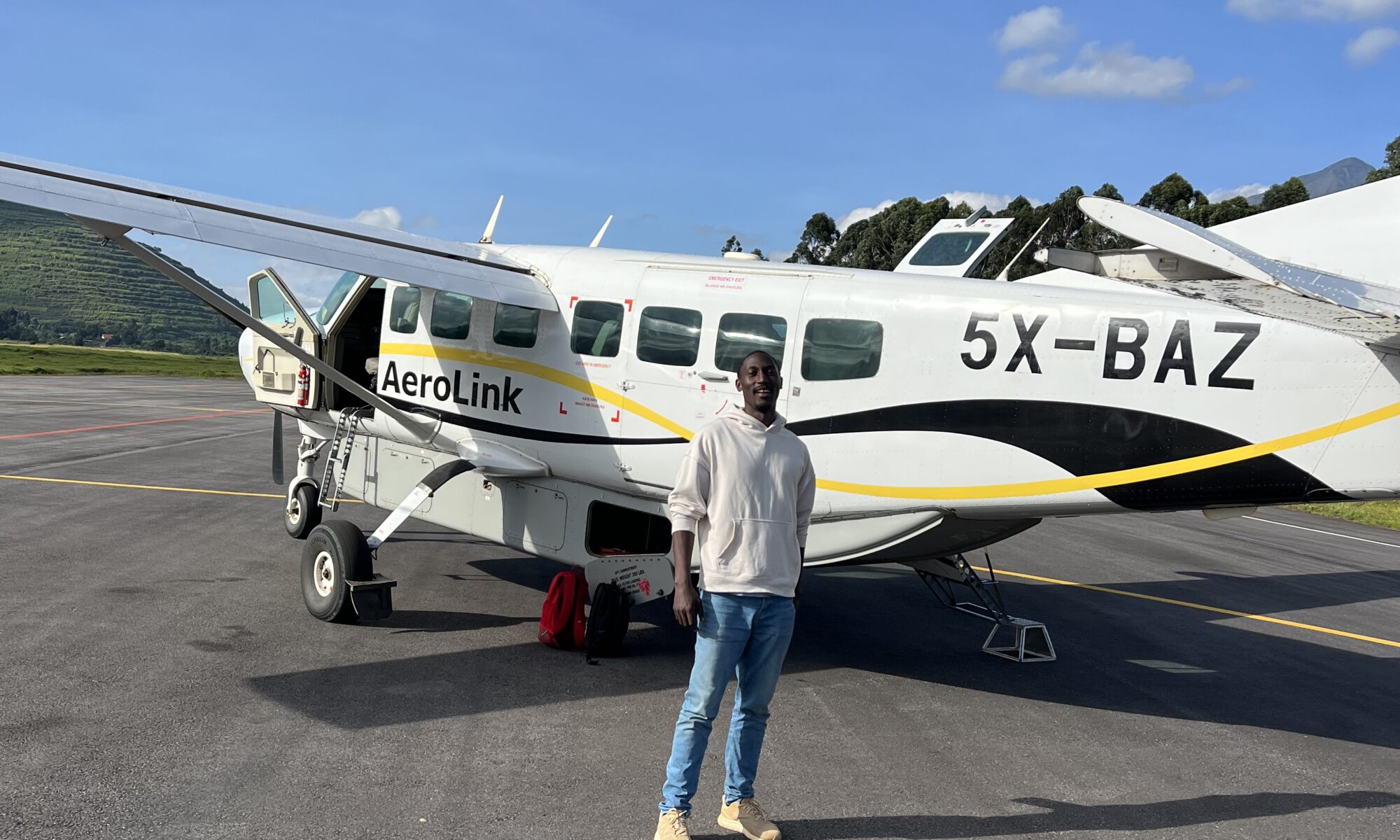
Domestic flights can significantly reduce the amount of road travel required to reach south-western Uganda.

Fly-in gorilla safaris are particularly attractive for travelers with limited time, luxury travelers, honeymooners and people who simply prefer not to spend full days driving.

However, flying to Bwindi does not mean the aircraft lands beside the gorillas.

Flights operate to airstrips serving the wider region, after which a road transfer is required to reach the appropriate lodge.

The best airstrip depends partly on your trekking sector.

This is another reason the permit and itinerary need to be planned together.

A carefully designed fly-in safari can make gorilla trekking possible even within a relatively short East African holiday.

Can You Travel From Kigali to Bwindi?

Uganda and Rwanda can sometimes be combined conveniently because Kigali is geographically close to the south-western Uganda region.

For certain Bwindi and Mgahinga itineraries, entering Uganda through Rwanda can make logistical sense.

However, international border arrangements, immigration requirements and visa rules can change.

Travelers should therefore check the regulations applicable to their actual travel period rather than relying on older online information.

A Uganda-Rwanda combination can be particularly attractive for travelers interested in experiencing both countries or for those incorporating Volcanoes National Park and Bwindi within the same itinerary.

Where Should You Stay for Gorilla Trekking?

The most important rule is to stay close to the trekking headquarters shown on your permit.

Everything else comes afterwards.

Bwindi offers a wide variety of accommodation.

Budget properties provide simple rooms and essential facilities for travelers primarily focused on the wildlife experience.

Mid-range lodges offer greater comfort, private bathrooms, good meals and attractive settings without the cost of high-end safari properties.

Luxury lodges can provide some exceptional experiences.

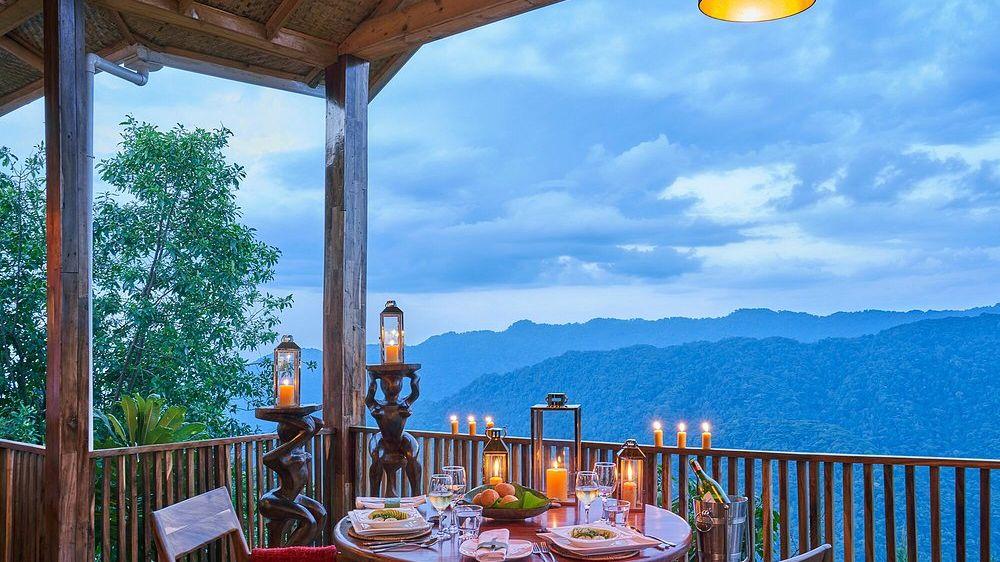
Private cottages, panoramic forest views, sophisticated meals, fireplaces and highly personalized service can be particularly enjoyable after a long day trekking.

There is something deeply satisfying about returning from the forest, removing muddy boots, taking a hot shower and relaxing while looking back toward the hills where you have just seen gorillas.

However, luxury does not compensate for poor geography.

A spectacular lodge several hours from your trekking starting point may be less appropriate than a simpler property in the correct location.

This is why Buutu Safaris matches accommodation with both the permit and the surrounding itinerary.

Should You Stay One or Two Nights in Bwindi?

For one gorilla trek, two nights is usually a sensible minimum.

You arrive during the afternoon or evening before trekking and sleep near the park.

The following morning you trek the gorillas and then return to the lodge.

Spending another night after the trek allows you to relax and absorb the experience. Leaving immediately after a demanding trek is possible in some itineraries but can make the day feel unnecessarily rushed.

You may return muddy and tired.

Having time for a shower, a meal and a quiet evening looking through photographs is often greatly appreciated.

Travelers doing two gorilla treks should generally consider three nights.

Can Children Go Gorilla Trekking?

Gorilla trekking has a minimum age requirement, generally 15 years in Uganda & Rwanda.

Families with younger children can still enjoy a remarkable Uganda safari.

One solution is for parents to trek on different days while the other parent remains with younger children.

Another option is to structure the holiday around activities that the whole family can enjoy together and add gorilla trekking for eligible family members.

Uganda’s national parks provide excellent family wildlife viewing from safari vehicles and boats.

Children can see elephants, giraffes, hippos, buffaloes, monkeys and numerous other animals without needing to participate in the gorilla trek.

Families should always provide children’s ages during the planning process.

Is Gorilla Trekking Worth the Money?

For most travelers who are passionate about wildlife, gorilla trekking is worth the cost.

There is no need to pretend it is inexpensive.

The permit represents a significant investment, particularly when combined with international travel.

However, value should not be measured only by the number of minutes spent with the gorillas.

The permit gives controlled access to one of the rarest wildlife experiences on Earth. It also supports a conservation system involving rangers, trackers, monitoring and the protection of the forest itself.

Tourism also creates employment throughout communities surrounding the protected areas. Guides, porters, drivers, lodge staff, farmers, craft producers and numerous other people participate directly or indirectly in the tourism economy.

The experience itself is difficult to compare with ordinary sightseeing.

You are not buying a performance. You are being given limited access to the habitat of a wild great ape.

For many of our guests, the encounter becomes one of the strongest memories of their lives.

How Does Gorilla Tourism Help Conservation?

Mountain gorillas survive because their habitat is protected and because substantial resources are invested in conservation.

Tourism can help generate those resources.

Permit revenue contributes to protected-area management, while the broader tourism economy creates jobs around the forests.

Community participation is particularly important. National parks cannot exist successfully as isolated islands surrounded by communities that receive no benefits from conservation. People living beside wildlife inevitably experience costs as well as benefits.

Land is limited. Animals can sometimes move beyond protected boundaries. Agricultural pressure can increase.

Tourism can help create an economic reason for maintaining the forest.

Hiring porters, staying in locally connected lodges, buying community products and using responsible local operators all help broaden the economic footprint of conservation tourism.

This does not mean tourism solves every environmental challenge.

It does mean that well-managed tourism can make living gorillas economically more valuable than a destroyed forest.

Is Gorilla Trekking Ethical?

Gorilla trekking can support conservation when it is carefully managed.

The ethical foundation depends on limiting visitor numbers, controlling human behavior and prioritizing gorilla welfare above tourist convenience.

This is why the rules matter.

A visitor who attempts to approach closer than instructed because they paid for an expensive permit misunderstands the nature of the experience.

The permit does not purchase control over the animal. It gives permission to enter the gorilla’s environment under conservation conditions. Health regulations also matter because gorillas are biologically close to humans and can be vulnerable to human illnesses.

Responsible tourism sometimes requires accepting inconvenience.

If rangers tell you not to do something, the correct response is to respect the rule even if breaking it might produce a better photograph.

In conservation tourism, the welfare of the animal must always come before the visitor’s social media account.

Why Should You Book With a Local Uganda Safari Company?

Gorilla safaris contain many moving parts.

The permit determines the trekking sector.

The sector affects accommodation.

Accommodation influences transfer times.

The day before the gorilla trek may determine which side of Bwindi you should approach.

The day after the trek may influence whether you continue toward Queen Elizabeth, Lake Bunyonyi, Mgahinga, Rwanda or an airstrip.

A booking platform can sell you a room. What it may not explain is whether that room makes sense within your actual route.

Local operators like us work with these distances repeatedly. We understand that locations appearing close on an online map can require surprisingly long journeys through mountainous terrain.

We can also coordinate several different elements of the safari at once.

At Buutu Safaris, we can arrange gorilla permits, chimpanzee permits, private safari vehicles, driver-guides, accommodation, domestic flights and additional wildlife activities as part of one journey.

Why Choose Buutu Safaris for Gorilla Trekking?

Buutu Safaris is a locally owned Uganda safari company with decades of experience in East African tourism.

Our approach to gorilla safaris is based on local knowledge rather than simply selling a standard itinerary.

We begin by understanding what the guest actually wants.

For some visitors, gorillas are the entire purpose of the journey and everything else should support that experience.

For others, the gorilla trek is one part of a wider safari involving chimpanzees, lions, elephants, the Nile or the Serengeti.

Those travelers should not receive the same itinerary.

We also understand the geography behind gorilla trekking. Selecting the correct trekking sector, accommodation and transport route can dramatically improve the safari.

Our locally based team can help arrange Uganda-only journeys as well as combinations with Rwanda, Kenya and Tanzania.

The objective is straightforward: create a safari that works in reality, not merely one that looks good on paper.

Can Gorilla Trekking Be Combined With Lake Bunyonyi?

Yes. Lake Bunyonyi is particularly convenient for travelers visiting southern Bwindi.

The lake is surrounded by steep cultivated hills and numerous islands, creating a peaceful contrast to the intensity of gorilla trekking.

After several hours climbing through the forest, spending time beside the water can be extremely relaxing.

Visitors can enjoy boat trips, kayaking, community experiences or simply slow down and appreciate the scenery.

Lake Bunyonyi also supports local livelihoods through fishing, farming and tourism.

It can be incorporated naturally between Bwindi and other parts of Uganda.

Can You Combine Gorilla Trekking With Kenya or Tanzania?

Yes, and these combinations can produce some of Africa’s greatest wildlife journeys.

Uganda provides the forest and primate experience while Kenya or Tanzania introduces the great savanna ecosystems.

A traveler might begin with mountain gorillas in Bwindi and then fly toward the Masai Mara.

Another might combine gorillas with the Serengeti and Ngorongoro Crater.

The contrast is enormous.

In Uganda you may spend a morning walking beneath dense rainforest canopy.

Several days later you could be watching lions cross open grassland while thousands of wildebeest move across the horizon.

For travelers visiting East Africa from North America, Europe, Asia or Australia, combining these destinations can make excellent use of a long international journey.

Are Mountain Gorillas Only Found in Uganda?

No.

Wild mountain gorillas survive in two main landscapes in this part of Africa.

One is Bwindi Impenetrable National Park. The other is the Virunga mountain ecosystem extending across Uganda, Rwanda and the Democratic Republic of Congo.

This extremely limited natural range is part of what makes mountain gorillas so special. They cannot be seen naturally in Kenya, Tanzania, South Africa or the majority of other African safari destinations.

Anyone wishing to see wild mountain gorillas must travel to this small region of Africa.

Are Gorillas Monkeys?

No.

Gorillas are great apes.

The great apes include gorillas, chimpanzees, bonobos, orangutans and humans.

The connection becomes surprisingly obvious during a gorilla encounter.

It is not simply their physical appearance.

Their hands, facial expressions, social relationships and interaction with young animals can feel remarkably familiar.

This sense of recognition is one reason people frequently describe gorilla trekking as emotional rather than merely exciting.

Watching a lion is thrilling.

Looking into the face of a gorilla can create a different reaction altogether.

What Is a Silverback Gorilla?

A silverback is an adult male gorilla that has developed the distinctive silver-grey colouring across its back.

Within a gorilla family, a dominant silverback often has an extremely important social role.

He may influence where the family moves, protect members from threats and intervene during conflicts.

His physical size can be astonishing.

Photographs rarely communicate the impression created by seeing those shoulders and arms at close range.

Yet visitors are often equally surprised by the calmness of the animal.

The silverback may spend most of the encounter feeding quietly, apparently uninterested in the group of excited humans nearby.

This contrast between immense physical strength and relaxed behavior makes silverbacks particularly fascinating to observe.

What Do Mountain Gorillas Eat?

Mountain gorillas eat a largely plant-based diet.

They consume leaves, stems, shoots and numerous other forms of vegetation available within their habitat.

Watching them feed is more interesting than it may initially sound.

Their hands manipulate vegetation with remarkable precision.

A gorilla may pull a plant toward itself, remove the less desirable parts and eat selected sections with a deliberate efficiency that reflects years of familiarity with the forest.

Feeding also creates social interaction as different members of the family move around one another.

Young gorillas frequently appear more interested in playing than eating, while adults may feed methodically for long periods.

What Is a Gorilla Family?

Gorillas live in social groups often described as families.

A group may contain a dominant silverback, adult females, younger males, juveniles and infants.

Family size and composition can change over time.

Young males mature, individuals move between groups, infants are born and older gorillas eventually die.

This means information about individual families can quickly become outdated.

Online lists describing exact group composition from several years ago should therefore not be treated as permanent.

Your rangers and the park authorities will have the most relevant information about the family assigned on the day of your trek.

Will You Definitely See Gorillas?

Gorilla trekking generally has a very high success rate because habituated families are monitored by trackers.

However, these remain wild animals.

No responsible operator should promise a wildlife sighting with absolute certainty.

The gorillas are not contained within an enclosure.

They move according to food availability, social relationships and their own natural behavior.

Trackers use their knowledge of the previous day’s movements and signs in the forest to locate them.

The uncertainty is actually part of what makes trekking different from visiting captive wildlife.

You have to find the animals in their own environment.

Does Gorilla Trekking Take All Day?

It can. Some visitors locate their gorilla family relatively quickly and return to the lodge before lunch. Others may spend many hours in the forest.

For planning purposes, the gorilla trek should be considered the primary activity of the day.

Avoid arranging an important afternoon activity that depends on returning at a specific time.

If you finish early, the extra time becomes a pleasant bonus.

If the trek is long, you will be grateful that nothing else was scheduled.

What Happens If It Rains During Gorilla Trekking?

Rain is part of the experience.

Bwindi is a rainforest and showers can occur even when the morning begins with clear skies.

A lightweight waterproof jacket is therefore essential.

Camera equipment and important personal items should also be protected.

Rain can make the trail more difficult because mud develops rapidly on steep slopes.

Walk slowly and accept help from your porter.

Interestingly, rain can also produce some of the most beautiful forest conditions.

The vegetation becomes saturated, mist may appear and the entire landscape takes on a darker, richer appearance.

The memory of meeting gorillas in a rain-soaked forest can be extraordinary.

What If You Become Sick Before Gorilla Trekking?

Tell your ranger guide.

Do not hide illness simply because you have paid for an expensive permit.

Gorillas are closely related to humans and disease transmission is a serious conservation concern.

Park authorities may restrict participation when a visitor has symptoms of a communicable illness.

Rules should always be confirmed according to current park regulations.

The principle is straightforward.

The health of the gorillas takes priority over the visitor’s desire to complete the trek.

Do You Need Travel Insurance for Gorilla Trekking?

Comprehensive travel insurance is strongly recommended for any Uganda safari.

Travelers should check that their policy is appropriate for the activities included in the itinerary.

Coverage can differ substantially between insurance providers.

Medical treatment, evacuation, cancellation, baggage and unexpected disruption are all worth considering.

Travelers with pre-existing medical conditions should pay particular attention to policy terms.

Insurance is one of those things you hope never to use, but it becomes extremely important if something unexpected happens.

Do You Need Vaccinations for Gorilla Trekking in Uganda?

Travel health recommendations and entry requirements can change.

Travelers should seek up-to-date advice from qualified medical professionals and official health authorities before traveling.

This should be done well in advance because some preventative measures may require time.

Do not rely entirely on an old safari blog when making health decisions.

A page written several years ago may contain requirements that have since changed.

What Should You Know About Altitude?

The gorilla regions of south-western Uganda are mountainous.

Visitors arriving from lower elevations may notice that walking uphill feels more demanding than expected.

Most healthy travelers adapt without difficulty, but hydration and sensible pacing are important.

The effects of altitude become more noticeable when combined with steep terrain and physical exertion.

Travelers with medical conditions that could be affected by altitude or strenuous exercise should discuss the journey with an appropriate healthcare professional.

Is Tipping Expected During Gorilla Trekking?

Tipping is generally appreciated for good service but should remain voluntary.

Porters, guides and other staff often play a major role in making the experience successful.

Your safari guide can provide information about current local practices.

Carrying suitable cash can make tipping easier.

The important thing is not to become anxious about exact amounts.

A tip should represent appreciation for service rather than becoming another complicated obligation.

What Else Can You Do in Bwindi?

Bwindi is far more than a place to see mountain gorillas.

It is one of Africa’s great mountain forests and contains extraordinary biological diversity.

Travelers with additional time can explore the forest through guided walks, birdwatching and other nature experiences.

The surrounding communities also provide opportunities to understand the human landscape around the protected area.

This broader perspective is important.

The forest does not exist separately from the communities around it.

People farm the surrounding hills, operate lodges, work as guides and porters and participate in numerous tourism enterprises.

Spending additional time around Bwindi allows travelers to understand the destination rather than simply arriving, seeing gorillas and leaving immediately.

What Else Can You Do in Mgahinga?

Mgahinga is particularly attractive to active travelers.

Golden monkey tracking provides an opportunity to experience another endangered primate within the bamboo forests.

Volcano hiking can take visitors onto the slopes of the Virunga mountains.

Birdwatching is also rewarding.

The combination of gorillas, golden monkeys and mountain scenery makes Mgahinga an excellent destination for travelers who want to spend several days in one region rather than constantly moving between national parks.

How Should You Plan a Gorilla Safari?

The first stage is deciding approximately when you want to travel.

Exact dates are helpful, but even knowing the month gives a safari planner somewhere to begin.

The next consideration is the number and ages of travelers.

Age matters because of the minimum age requirement for gorilla trekking.

The third question is what you want the trip to include beyond gorillas.

Some travelers want nothing more than one excellent gorilla encounter.

Others want chimpanzees.

Some want lions and elephants.

Others want to continue to Rwanda, Kenya or Tanzania.

Your available time then shapes what is realistic.

A four-day safari cannot comfortably contain the same experiences as a ten-day journey.

Accommodation preferences and budget should also be discussed early.

Once those factors are understood, gorilla permit availability can be checked and an appropriate sector identified.

The rest of the itinerary should then be built around that permit.

This approach creates a much more coherent safari than simply adding activities one at a time.

What Is a Good Three-Day Gorilla Safari?

A three-day safari is the fastest conventional way to experience Uganda’s mountain gorillas when traveling by road.

The first day involves the journey from the Entebbe or Kampala region toward Bwindi.

The second day is dedicated to gorilla trekking.

The third day is the return journey.

This itinerary is best suited to travelers with very limited time.

It delivers the gorilla experience but does not provide much opportunity to explore Uganda’s other wildlife destinations.

What Is a Good Four-Day Gorilla Safari?

Four days provides greater flexibility.

The itinerary can potentially combine gorilla trekking with another experience such as Lake Bunyonyi or limited traditional wildlife viewing, depending on routing.

The extra day also reduces the feeling of spending the entire safari traveling.

For travelers on a short East African holiday, four days can represent a useful compromise between time and experience.

Is Six Days Enough for Gorillas and Chimpanzees?

A six-day itinerary can combine mountain gorillas and chimpanzees when carefully designed.

Kibale National Park provides the chimpanzee experience while Bwindi provides the gorillas.

Queen Elizabeth National Park can sometimes be included between them, introducing traditional game viewing.

This type of itinerary is extremely attractive because travelers experience two great ape species and several distinct ecosystems within less than a week.

What About a Seven-to-Ten-Day Uganda Safari?

Seven to ten days is where Uganda begins to reveal its full diversity.

Chimpanzees can be combined with Queen Elizabeth National Park, Bwindi and additional wildlife experiences.

There is more time for boat safaris, game drives and scenic stops.

The itinerary also becomes less rushed.

For many international travelers, this is the ideal range for a first Uganda safari.

Can You Combine Gorillas With Murchison Falls?

Yes.

Murchison Falls creates a fascinating contrast with Bwindi.

At Murchison, the Nile passes through savanna country supporting giraffes, elephants, buffaloes, antelopes and predators before being forced dramatically through the famous waterfall gorge.

Bwindi is completely different.

The open landscape disappears and is replaced by mountain rainforest and primates.

Combining the two demonstrates the extraordinary ecological variety found within Uganda.

Why Is Gorilla Trekking Different From an Ordinary Safari?

Traditional safari is fundamentally an act of observation from a distance.

You usually sit inside a vehicle while animals move through the landscape.

Gorilla trekking changes the relationship.

You have to walk.

The forest surrounds you.

You feel the gradient of the mountain, the mud beneath your boots and the humidity in the air.

You hear birds and insects long before you see the animal you came for.

Finding the gorillas requires physical participation.

Then, when you finally reach them, there is no vehicle separating you.

That physical and emotional proximity creates an experience unlike ordinary game viewing.

Why Do People Find Gorilla Trekking Emotional?

Part of the answer lies in familiarity.

A lion is obviously a magnificent animal, but it feels very different from us.

A gorilla can look strangely familiar.

Hands manipulate vegetation.

A mother holds an infant.

Young animals play.

Adults communicate through gesture and expression.

Their eyes can give the impression of observation rather than simply reaction.

Humans naturally recognise elements of ourselves within that behavior.

Then there is the knowledge that mountain gorillas survive only within a small region of Africa.

You are not simply looking at an animal.

You are seeing a species whose continued survival has required decades of conservation.

Those factors combine to produce an encounter that many travelers struggle to describe afterwards.

Final Advice for Planning Gorilla Trekking in Uganda

The most important advice is to avoid treating gorilla trekking as a simple ticket purchase.

The permit, trekking sector, accommodation and wider itinerary all need to work together.

Book early when your travel dates are fixed.

Stay near the correct trekking headquarters.

Prepare physically for the walk without becoming unnecessarily worried about it.

Wear good boots.

Hire a porter.

Protect your camera from rain.

Follow your ranger.

Most importantly, remember that the purpose of the experience is not simply to obtain photographs.

The greatest moment often comes when you stop taking pictures.

You are sitting inside one of Africa’s oldest forests.

Leaves move above you.

Somewhere close by, an infant climbs onto its mother.

A juvenile disappears behind a tree.

Then an enormous silverback raises his head and looks in your direction.

For a few moments, the normal boundary between human traveler and wilderness becomes remarkably thin.

That is what people travel thousands of kilometers to experience.

Uganda gives travelers the opportunity to do something even more remarkable: to place that encounter within a larger journey through chimpanzee forests, savannahs, mountains, wetlands, lakes and the Nile.

A gorilla trek can therefore become more than the highlight of a safari.

It can become the reason you remember Uganda for the rest of your life.

Plan Your Uganda Gorilla Trekking Safari With Us

We specialise in tailor-made gorilla trekking and wildlife safaris throughout Uganda and East Africa.

Whether you want a short gorilla trekking safari, a combined gorilla and chimpanzee journey, a luxury fly-in safari, a family adventure or a longer itinerary connecting Uganda with Rwanda, Kenya or Tanzania, we can design the journey around your interests, available time and budget.

Our local knowledge helps ensure that your gorilla permit, trekking sector, lodge and safari route work together properly.

A Guide to Gorilla Trekking in Rwanda

Gorilla trekking in Rwanda takes place in Volcanoes National Park, in the north-west of the country near Musanze. The park forms part of the Virunga Massif and protects a spectacular landscape of bamboo forest, montane vegetation and volcanic mountains, including Karisimbi, Bisoke, Sabyinyo, Gahinga and Muhabura. Rwanda is particularly attractive for travelers who want a short gorilla safari because Volcanoes National Park can be reached from Kigali in roughly three hours by road.

The gorilla trekking experience begins early in the morning at the park headquarters, where visitors are briefed before being assigned to a habituated gorilla family. The trek can take anywhere from around 90 minutes to much of the morning depending on the location of the gorillas and the terrain. Once the family is located, visitors are allowed to spend approximately one hour observing the gorillas as they feed, rest, groom and interact.

A standard Rwanda gorilla trekking permit currently costs US$1,500 per person per trek, and the minimum trekking age is 15 years. Special rates are available for some Rwandan, East African and resident categories. Because permits are limited, advance booking is recommended, particularly during popular travel periods.

Gorilla trekking can be physically demanding because the Virunga terrain can be steep, muddy and uneven. Travelers should wear sturdy walking boots, long trousers and protective clothing, and carry a lightweight waterproof jacket. Gaiters and gloves can also be useful. Hiring a porter is highly recommended, both for carrying equipment and for assistance on steep or slippery sections of the trail.

One of Rwanda’s greatest advantages is how easily gorilla trekking can be combined with other experiences. Visitors can track golden monkeys, hike Mount Bisoke or Mount Karisimbi, explore Musanze, visit Lake Kivu or continue to Akagera National Park for a traditional wildlife safari. Rwanda therefore works particularly well for travelers looking for a compact, premium gorilla-focused journey.

For travelers comparing Rwanda and Uganda for gorilla trekking, Rwanda generally offers easier access and is particularly suited to shorter itineraries, while Uganda offers two gorilla parks and greater flexibility for combining gorillas with chimpanzee trekking and extended wildlife safaris. Both destinations provide exceptional mountain gorilla encounters, and Buutu Safaris can also combine Rwanda and Uganda within one tailor-made East African journey.

When you are ready to start planning, tell us your preferred travel dates, number of travelers, approximate safari length and the experiences you would most like to include.
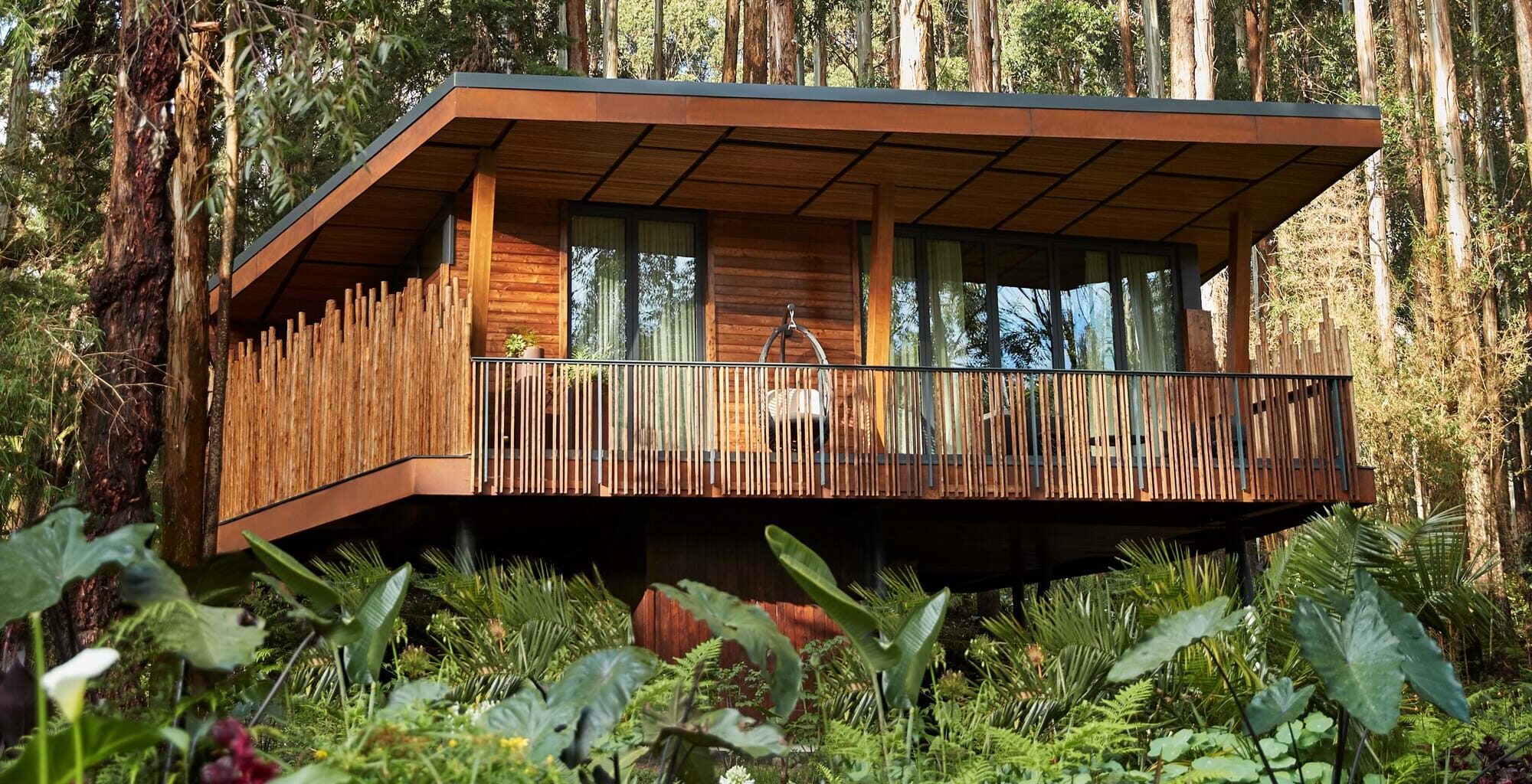
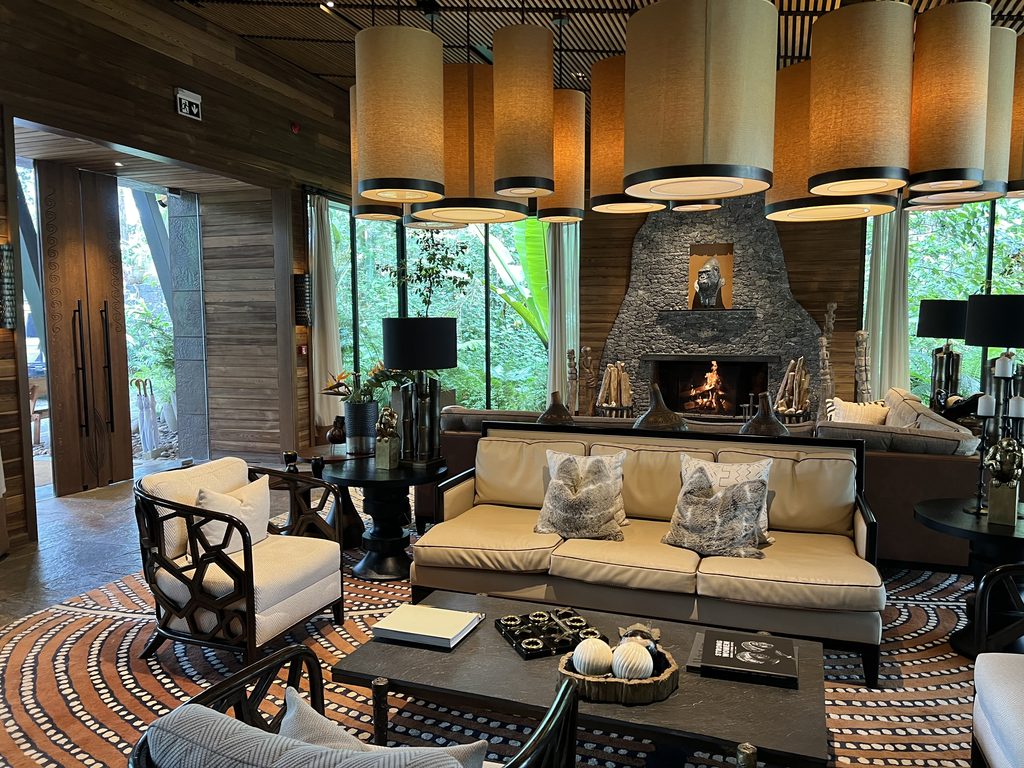
One&Only Gorilla’s Nest Rwanda: Luxury Lodge Review, Prices & Gorilla Trekking Guide (2027)

But is One&Only Gorilla’s Nest worth its premium price?
At Buutu Safaris, we have now experienced the lodge firsthand on two separate visits. Our original two-night stay included an unforgettable trek to the Susa gorilla family, exceptional dining and time in the forest spa. I returned for another overnight stay in April 2026, giving me an opportunity to see how the property had evolved.

One&Only Gorilla’s Nest offers a luxurious escape in the foothills of the Virunga Mountains.

One&Only Gorilla’s Nest is arguably Rwanda’s most exclusive luxury gorilla trekking lodge. It is nestled on 35 – 85 acres among eucalyptus trees near Volcanoes National Park. Located approximately 2.5 hours from Kigali International Airport and only a few minutes from the gorilla trekking briefing headquarters at Kinigi, this intimate forest retreat combines luxury treehouse accommodation, exceptional personalised service, fine dining and convenient access to mountain gorillas.

What impressed us most on our return was the consistency of the staff’s exceptional hospitality and the noticeably improved privacy. The eucalyptus trees and surrounding plants and shrubs have grown, the individual accommodation units feel increasingly secluded within the forest.

This is our firsthand review of One&Only Gorilla’s Nest, including its location, rooms, service, dining, gorilla trekking access, accommodation prices and whether it deserves a place on your luxury Rwanda safari.

One&Only Gorilla’s Nest at a Glance

FeatureDetails
LocationKinigi, Musanze District, Rwanda
National parkVolcanoes National Park
AccommodationLuxury forest treehouses and suites
Kigali International AirportApproximately 2.5–3 hours by road
Helicopter transferApproximately 25 minutes from Kigali
Gorilla trekking briefing pointApproximately 5–10 minutes by road to Kinigi
Gorilla permitUS$1,500 per international visitor
DiningFine dining featuring Rwandan and international cuisine
WellnessForest spa, heated pool and fitness facilities
Other experiencesGolden monkeys, cultural visits, hiking and wellness
Ideal stay2–3 nights, or longer for multiple experiences
Best suited forLuxury travellers, couples, honeymooners and gorilla trekking enthusiasts
Buutu Safaris visitsOriginal two-night stay and April 2026 return visit

Our verdict: One&Only Gorilla’s Nest is an excellent choice for travellers seeking a luxury Rwanda gorilla safari, particularly those who value personalised service, privacy, exceptional accommodation and a short morning transfer to the gorilla trekking starting point.

Is One&Only Gorilla’s Nest Worth It? Our Firsthand Review

One&Only Gorilla’s Nest delivers a style of luxury that goes beyond elaborate interiors and expensive facilities.

What sets it apart is how successfully it combines comfort, nature, personal attention and access to one of Africa’s most remarkable wildlife experiences.

Our first visit left a lasting impression. We were welcomed with traditional Rwandan dancing, shown to an exceptionally spacious forest suite, treated to memorable meals in different restaurants and carefully prepared for our gorilla trek.

On returning in April 2026, we were interested to discover whether the property had maintained the same standards.

I found the staff just as exceptional as we remembered. A warm welcome felt more intimate as Racheal put her hand to her chest as she greeted us.

The warmth of the welcome, attentiveness and professionalism remained defining features of the experience.

We also noticed an important change in the environment: the trees around the accommodation had matured, creating greater natural screening between the suites.

This additional vegetation improved the sense of seclusion and made the resort feel even more deeply integrated into its forest surroundings.

For a luxury lodge, privacy is almost as important as the physical accommodation itself, and this improvement was particularly noticeable.

What stood out during our two visits

  • Exceptional staff and consistently personalised service.
  • Spacious, beautifully furnished accommodation surrounded by eucalyptus trees.
  • Greater privacy during our January 2026 return visit.
  • Convenient access to the Volcanoes National Park trekking headquarters.
  • Memorable dining with locally inspired ingredients.
  • Thoughtful preparation for the gorilla trekking experience.
  • A relaxing forest spa that provided welcome recovery after trekking.
  • These are the qualities that make us comfortable recommending the lodge to travellers seeking an exclusive Rwanda gorilla safari.

Where Is One&Only Gorilla’s Nest Located?

One&Only Gorilla’s Nest is located in Kinigi, near Volcanoes National Park in northwestern Rwanda.

The resort is set within a beautiful eucalyptus forest with the Virunga volcanoes forming the dramatic backdrop to the region.

Its location is one of its greatest practical advantages.

Just Minutes from the Gorilla Trekking Starting Point

One of the biggest advantages of staying at One&Only Gorilla’s Nest is the very short drive to the Volcanoes National Park headquarters at Kinigi, where the gorilla trekking morning briefing takes place.

The headquarters is approximately 5–10 minutes away by road, depending on the exact transfer arrangements.

This makes the early morning much more comfortable.

Instead of a lengthy drive before the day’s activities, guests can enjoy breakfast at the lodge and reach the briefing point without spending a substantial amount of time travelling.

For older travellers, families with eligible trekking-age children, photographers carrying equipment and anyone who prefers a relaxed morning, this proximity is a meaningful advantage.

After the briefing, guests travel with their assigned group towards the appropriate trailhead. That additional journey depends on which gorilla family has been allocated and should not be confused with the short drive to the park headquarters.

Our experience: I particularly value this location because it reduces unnecessary travel before what may already be a physically demanding day in the mountains.

Getting to One&Only Gorilla’s Nest from Kigali

In December 2024, we approached the lodge after crossing the Uganda-Rwanda Border at Cyanika. This was after our first gorilla trek on a safari that had 2 gorilla trekking experiences: the gorilla habituation experience in Uganda and standard gorilla trekking in Rwanda.The drive from Bwindi to One and Only Gorilla Nest took about 5 hours.

In 2026, we drove for approximately 2.5–3 hours from Kigali International Airport by road.

The drive passes through Rwanda’s beautiful hills and rural landscapes towards the Virunga Mountains.

A helicopter transfer from Kigali is also possible, with flight time of approximately 25 minutes, subject to scheduling and weather conditions.

For visitors arriving from the United States, I normally recommend spending at least two nights at the lodge so that the gorilla trek is not squeezed between long travel days.

Our First Visit: An Extraordinary Rwandan Welcome

Our first visit began with a welcome that remains one of our fondest memories of the resort.

As we drove towards the entrance, the distant sounds of traditional Rwandan Intore drums grew louder.

The performers approached our vehicle in an energetic display of traditional dance. The male dancers wore ceremonial headpieces and carried shields and spears, while the women moved gracefully in a performance that celebrated Rwanda’s cultural heritage.

It was a memorable introduction to the property.

Our host, Barbara, welcomed us and guided us into the reception area, where a warm fireplace and beautifully presented refreshments awaited. The open and exceedingly spacious reception was inviting with multiple sitting areas. A massage chair was available for those who wanted neck massages.

The welcome immediately established the atmosphere of the lodge: elegant, attentive and unmistakably Rwandan.

From the beginning, the staff made us feel genuinely welcome rather than simply processed through the formalities of checking in.

That distinction is important at a luxury property.

The meals were first class as the lodge ensured we dined in different dining areas where food was served.

Our January 2026 Return Visit: Exceptional Staff and Greater Privacy

When we returned to One&Only Gorilla’s Nest for an overnight stay in January 2026, we were keen to see how the resort had developed since our previous experience.

Luxury properties can sometimes impress on a first visit but struggle to maintain the same level of service over time.

That was not our experience here.

The staff remained exceptional.

We again encountered the same culture of warm, attentive hospitality that had impressed us during our original stay.

Service felt polished without becoming overly formal, and the overall attention to guest comfort remained outstanding.

A More Private Forest Retreat

The most noticeable physical improvement was the growth of the trees and vegetation around the accommodation.

On our earlier visit, the forest setting had already been beautiful, with treehouses and suites surrounded by greenery.

By January 2026, the trees had matured further, providing more natural screening and greater privacy.

The accommodation felt more enclosed by the forest, with increased separation from neighbouring units.

This change enhanced one of the resort’s greatest attractions: the opportunity to enjoy a luxury retreat surrounded by nature without sacrificing personal space.

The growth of the trees also gave the property a more established, immersive forest atmosphere.

For couples, honeymooners and travellers seeking quiet time after a demanding gorilla trek, this additional privacy makes a meaningful difference.

Our return visit confirmed that One&Only Gorilla’s Nest has retained its exceptional service while its forest environment has become even more attractive.

Luxury Accommodation at One&Only Gorilla’s Nest

The resort offers a collection of freestanding treehouses and suites carefully positioned among eucalyptus trees and landscaped gardens.

Rather than one large hotel building, the accommodation is spread across the forest setting.

This design contributes significantly to the property’s atmosphere.

The rooms combine contemporary luxury with natural materials, local artistic influences, fireplaces, private outdoor spaces and large windows that bring the surrounding greenery into the living areas.

Forest Treehouse

The Forest Treehouse is an attractive option for couples seeking a luxurious forest retreat.

Features include a private deck, a comfortable bedroom, a soaking bathtub, outdoor shower and fireplace.

Its intimate scale makes it particularly appealing for honeymooners and couples whose main priority is spending time together surrounded by nature.

Virunga Suite

The Virunga Suite offers approximately 147 square metres (1,582 square feet) of space.

Its larger living areas and connection to the outdoors provide additional comfort for guests who appreciate spacious accommodation.

Ingagi Suite

The Ingagi Suite offers approximately 251 square metres (2,702 square feet), with generous living spaces and an expansive outdoor deck.

During our original stay, we enjoyed a beautifully secluded suite of this size, situated in a quiet part of the property.

Our host had carefully selected accommodation offering privacy and wonderful views of the surrounding forest.

A golf cart transferred us through the grounds to the suite, where floor-to-ceiling glass windows immediately drew our attention to the greenery outside.

The spacious interior featured elegant furniture, a fireplace, a dining area and beautiful natural finishes.

Outside, the expansive deck was furnished for relaxation, with comfortable seating and an open-air bathtub.

The gentle movement of eucalyptus leaves in the breeze created a remarkably peaceful atmosphere.

This became one of our favourite places to unwind.

Silverback Suite

The Silverback Suite sits at the top of the accommodation range.

It offers exceptionally generous living space, extensive privacy and premium facilities, including a private pool.

For travellers seeking the highest category of accommodation at One&Only Gorilla’s Nest, it is worth considering.

Which Room Would We Recommend?

For couples wanting a luxurious but intimate forest experience, the Forest Treehouse is a strong choice.

For guests who value additional living space and an expansive private deck, the Ingagi Suite is particularly attractive.

For travellers seeking the resort’s most exclusive accommodation experience, the Silverback Suite deserves consideration.

We recommend selecting the room based on the traveller’s privacy requirements, preferred facilities and budget rather than automatically choosing the most expensive category.

How Much Does One&Only Gorilla’s Nest Cost in 2027?

One&Only Gorilla’s Nest is an ultra-luxury property, and its accommodation prices reflect that positioning.Rates range from 

Rates vary considerably depending on the room category, season, occupancy, length of stay and package inclusions.

Accommodation prices depend on the season, room category, occupancy and inclusions. 

The published One&Only Gorilla’s Nest Rwanda rates for 2026–2027 start at approximately US$2,415 per person per night sharing, depending on the season.

These are the rates advertised for the entry-level Forest Treehouse, based on two guests sharing.

One&Only Gorilla’s Nest nightly rates

Travel datesPer person/nightPer room/night (2 guests)
1 Nov – 21 Dec 2026$2,415$4,830
22 Dec 2026 – 6 Jan 2027$4,130$8,260
7 Jan – 28 Feb 2027$3,005$6,010
1 Mar – 31 May 2027$2,415$4,830
Jun – Dec 2027On requestOn request

For 2027, travellers should request a date-specific quotation rather than assume that one published nightly price applies throughout the year.

What Is Included in the Accommodation Rate?

The lodge’s published Forest Treehouse inclusions currently feature:

  • Breakfast, lunch and dinner.
  • Selected beverages with meals.
  • Selected resort activities, subject to availability.
  • Trekking equipment such as ponchos, gaiters and backpacks.
  • Assistance with preparing for outdoor activities.
  • Additional resort services according to the selected booking conditions.

Not every service or experience is necessarily included in every reservation, so inclusions should be confirmed before booking.

Is the Gorilla Permit Included?

Gorilla trekking permits are generally arranged separately unless specifically included in a safari package.

The standard Rwanda gorilla permit costs US$1,500 per international visitor.

This provides access to a guided gorilla trek and up to one hour with a habituated mountain gorilla family once located.

At Buutu Safaris, we can prepare a customised luxury Rwanda safari quotation combining the accommodation, gorilla permits, private transfers, guiding and other requested activities.

Planning a stay in 2027? Request current One&Only Gorilla’s Nest rates and gorilla permit availability for your preferred dates.

Gorilla Trekking from One&Only Gorilla’s Nest

Gorilla trekking is the primary reason many travellers visit Volcanoes National Park.

The experience begins early in the morning with a briefing at Kinigi park headquarters, where visitors receive instructions and are assigned to trekking groups.

From there, guests proceed towards the relevant trailheads with guides, trackers and park staff.

The hiking time depends on the location of the assigned gorilla family, weather conditions, terrain and the group’s pace.

Once the gorillas are located, visitors can spend up to one hour observing them.

Our Trek to the Susa Gorilla Family

During our original stay, we trekked to see the Susa gorilla family.

The experience was extraordinary.

Our encounter involved 23 mountain gorillas, a remarkable sight that made the trek especially memorable.

Watching the interactions between different members of the family reinforced why mountain gorilla trekking remains one of Africa’s most extraordinary wildlife experiences.

Before departing, the lodge staff had carefully prepared us for the day.

They provided or helped organise useful trekking equipment, including walking sticks, gloves, ponchos and gaiters.

Our packed lunch was beautifully presented, reflecting the same attention to detail we experienced throughout our stay.

Although the trek was physically demanding, the combination of the gorilla encounter and the lodge’s thoughtful preparation made it one of the highlights of our visit.

What Should You Bring for Gorilla Trekking?

We recommend sturdy waterproof hiking boots, long trousers, a long-sleeved shirt, gloves, rain protection, drinking water and a small daypack.

Porters are available to assist trekkers and can be particularly helpful on steep or slippery trails.

Guests should also be realistic about their fitness and mobility. Trekking conditions vary daily, and no operator can guarantee an easy walk.

Dining at One&Only Gorilla’s Nest

Food was one of the great pleasures of our original stay.

The lodge offers refined dining that draws inspiration from Rwandan produce while incorporating a range of international culinary influences.

Our first dinner was a beautifully presented four-course meal.

The menu featured locally inspired ingredients, including baby aubergines and fresh seasonal produce.

We selected duck for our main course and thoroughly enjoyed the balance of flavours and presentation.

On another evening, we chose osso buco, a rich and memorable dish that demonstrated the kitchen’s ability to combine familiar international cuisine with the hospitality of Rwanda.

Breakfast was equally impressive.

We enjoyed an extensive selection of dishes before departing for our gorilla trek, and the staff ensured everything was carefully timed around the morning’s activities.

What impressed us was not simply the quality of the food but the service surrounding each meal.

Dining felt unhurried, personal and beautifully coordinated.

For a luxury gorilla lodge, this matters because guests often arrive after long international journeys or return tired from trekking.

The Forest Spa: Relaxation After Gorilla Trekking

After our memorable trek to the Susa gorilla family, we returned to the resort and made our way to the spa.

The wellness facilities are set within the eucalyptus forest, creating a peaceful environment surrounded by greenery, flowers and birdsong.

We chose a full-body massage using coconut oil and locally grown coffee ingredients.

After hours spent walking through the forest, the treatment was exactly what we needed.

The combination of skilled therapists, natural surroundings and soothing treatments made the experience particularly memorable.

Later, we returned to our suite and spent time relaxing on the large outdoor deck.

The tranquil setting was ideal for an evening yoga session and quiet reflection after the day’s adventures.

For travellers planning a luxury gorilla safari, we strongly recommend leaving free time after the trek rather than scheduling too many activities.

The lodge itself is part of the experience and deserves time to be enjoyed.

Other Activities at One&Only Gorilla’s Nest

While mountain gorilla trekking is the main attraction, the resort and surrounding region offer several other experiences.

Golden Monkey Trekking

Golden monkeys inhabit the bamboo forests of Volcanoes National Park.

Their energetic movements, striking colouring and social behaviour provide a very different primate experience from mountain gorilla trekking.

Rwandan Cultural Experiences

Guests can explore local cultural traditions through visits and activities organised in the surrounding communities.

The lodge also offers opportunities to learn about Rwandan coffee, music, storytelling and traditional performances.

Hiking and Nature Experiences

Volcanoes National Park provides opportunities for guided walks and hikes, including routes associated with the Virunga volcanoes and Dian Fossey’s conservation legacy.

Spa and Wellness

Guests can enjoy spa treatments, relaxation, yoga and the lodge’s wellness facilities.

For travellers staying three nights or longer, these experiences can be incorporated without rushing the main gorilla trek.

One&Only Gorilla’s Nest vs Other Luxury Gorilla Lodges in Rwanda

Rwanda has several exceptional luxury lodges near Volcanoes National Park.

Travellers comparing One&Only Gorilla’s Nest often also consider Wilderness Bisate and Singita Kwitonda Lodge.

LodgeDistinguishing characterBest for
One&Only Gorilla’s NestLuxury forest resort with extensive wellness facilitiesTravellers wanting a private forest retreat with a full luxury resort experience
Wilderness BisateDistinctive architecture, intimate setting and conservation emphasisTravellers seeking an architecturally distinctive, conservation-focused stay
Singita Kwitonda LodgeContemporary ultra-luxury accommodation and strong conservation positioningTravellers seeking an exclusive, highly personalised luxury experience

Why we particularly like Gorilla’s Nest: Having stayed there twice, we can speak directly about the service, suite experience, dining, wellness facilities and the improved natural privacy we noticed in January 2026.

A 3-Day Luxury Rwanda Gorilla Trekking Safari at One&Only Gorilla’s Nest

For travellers with limited time, three days and two nights provide an excellent introduction to Rwanda’s mountain gorillas.

Day 1: Kigali to One&Only Gorilla’s Nest

Arrive at Kigali International Airport, where your private Buutu Safaris guide will meet you.

Travel through Rwanda’s beautiful hills towards Volcanoes National Park.

Check in at One&Only Gorilla’s Nest, enjoy your suite and relax before dinner.

Overnight: One&Only Gorilla’s Nest.

Day 2: Gorilla Trekking in Volcanoes National Park

Enjoy an early breakfast before the short transfer to Kinigi park headquarters.

Attend the gorilla trekking briefing and proceed with your assigned guide and group to locate a habituated gorilla family.

Spend up to one hour observing the mountain gorillas.

Return to the lodge for lunch and an afternoon of relaxation.

A spa treatment is an excellent way to finish the day.

Overnight: One&Only Gorilla’s Nest.

Day 3: Return to Kigali

Enjoy breakfast before departing for Kigali.

Depending on your international flight schedule, add a city tour or other experiences before proceeding to the airport.

Optional extension: Add golden monkey trekking, a second gorilla trek, Nyungwe chimpanzees, Akagera National Park or a longer safari in Uganda, Kenya or Tanzania.

When Is the Best Time to Stay at One&Only Gorilla’s Nest?

Gorilla trekking is available throughout the year, and One&Only Gorilla’s Nest can be enjoyed in every season.

The drier periods generally offer more comfortable hiking conditions, while the rainy seasons bring particularly lush forest landscapes.

PeriodGeneral conditions
June–SeptemberTypically drier; popular gorilla trekking period
December–FebruaryOften relatively drier; good for trekking
March–MayWetter, with lush green scenery
October–NovemberWetter conditions and potentially muddy trails

Because Rwanda has a tropical mountain climate, rain can occur at any time of year.

For high-demand travel periods, book accommodation and gorilla permits well in advance.

Frequently Asked Questions About One&Only Gorilla’s Nest

Where is One&Only Gorilla’s Nest in Rwanda?

One&Only Gorilla’s Nest is located in Kinigi, near Volcanoes National Park in northwestern Rwanda, approximately 2.5–3 hours by road from Kigali International Airport.

How far is One&Only Gorilla’s Nest from the gorilla trekking starting point?

The lodge is approximately 5–10 minutes by road from the Kinigi park headquarters, where morning gorilla trekking briefings take place. After the briefing, additional travel to an allocated trailhead may be required.

Is One&Only Gorilla’s Nest worth the money?

For travellers who value privacy, exceptional hospitality, luxury accommodation, fine dining, wellness facilities and convenient access to gorilla trekking, it is a compelling option. Our January 2026 return visit reinforced our positive impression of the staff and the property’s increasingly private forest setting.

How much does it cost to stay at One&Only Gorilla’s Nest in 2027?

Accommodation prices depend on the season, room category, occupancy and inclusions. 

The published One&Only Gorilla’s Nest Rwanda rates for 2026–2027 start at approximately US$2,415 per person per night sharing, depending on the season.

These are the rates advertised for the entry-level Forest Treehouse, based on two guests sharing.

One&Only Gorilla’s Nest nightly rates

Travel datesPer person/nightPer room/night (2 guests)
1 Nov – 21 Dec 2026$2,415$4,830
22 Dec 2026 – 6 Jan 2027$4,130$8,260
7 Jan – 28 Feb 2027$3,005$6,010
1 Mar – 31 May 2027$2,415$4,830
Jun – Dec 2027On requestOn request

Because rates change, we recommend requesting a personalised 2027 quotation rather than relying on a generic nightly rate.

Is the gorilla permit included in the accommodation price?

Not necessarily. The standard gorilla permit for international visitors is US$1,500 per person and is usually booked separately unless specifically included in a package.

How many nights should I stay?

We recommend at least two nights for a comfortable gorilla trekking trip. Three nights allow more time to enjoy the spa, accommodation and optional golden monkey trekking or other activities.

Does One&Only Gorilla’s Nest have a spa?

Yes. The property features forest-inspired wellness facilities and spa treatments, making it particularly attractive for relaxation after gorilla trekking.

Can I visit One&Only Gorilla’s Nest without trekking gorillas?

Yes. Visitors can enjoy the accommodation, dining, wellness facilities and selected cultural experiences without undertaking a gorilla trek.

Is One&Only Gorilla’s Nest suitable for families?

Family suitability depends on the ages of the children, room configurations and the resort’s current booking policies. Mountain gorilla trekking itself is restricted to visitors aged 15 and above. Families should confirm the lodge’s minimum guest age before booking.

Can I combine One&Only Gorilla’s Nest with a safari in Uganda?

Yes. A stay at Gorilla’s Nest can be combined with Uganda’s Bwindi Impenetrable National Park, Kibale National Park or Queen Elizabeth National Park. Travellers can also continue to Kenya or Tanzania for a classic East African safari.

Our Final Verdict: Would We Stay at One&Only Gorilla’s Nest Again?

Absolutely.

Having experienced One&Only Gorilla’s Nest on two separate occasions, including our return visit in January 2026, we remain particularly impressed by the consistency of the staff’s service.

The lodge combines an exceptional location near Volcanoes National Park with luxury accommodation, beautiful grounds, memorable dining and a wonderfully relaxing spa.

On our return, the maturing forest vegetation had created noticeably greater privacy, enhancing the sense of staying within a secluded natural retreat.

And for gorilla trekkers, the short drive to the Kinigi briefing point is a genuine practical advantage.

There are several outstanding luxury gorilla lodges in Rwanda, and the best choice ultimately depends on personal preferences.

But for travellers seeking a luxurious forest resort with exceptional service and convenient access to mountain gorilla trekking, One&Only Gorilla’s Nest remains one of our strongest recommendations.


Plan Your Luxury Rwanda Gorilla Safari with Buutu Safaris

Experience One&Only Gorilla’s Nest with local safari experts who have stayed there themselves.

Buutu Safaris is a family-owned Ugandan safari company operating since 1995, specialising in gorilla trekking and tailor-made East African wildlife journeys.

We arrange luxury gorilla safaris in Rwanda and Uganda, including accommodation, gorilla permits, private transportation, experienced guiding and onward travel.

Whether you are planning a three-day Rwanda gorilla escape, a luxury honeymoon or a longer East African safari, our team can design an itinerary around your interests, travel dates and preferred style of accommodation.

The 3-Day Rwanda Gorilla Safari: The Ultimate Guide for a Seamless 2026 Adventure

There is a moment in the high-altitude forests of Rwanda’s Volcanoes National Park when the silence of the jungle is broken by the gentle rustle of bamboo. Suddenly, you look up, and there he is—a majestic silverback, his eyes reflecting a quiet, ancient intelligence. This is not just a wildlife encounter; it is a transformative, bucket-list experience that stays with you forever.

If you’re planning your 2026 travel calendar, you might be wondering: Is a gorilla safari really feasible in a short amount of time? The answer is a resounding yes. Rwanda has become the premier choice for travelers seeking a world-class, seamless gorilla trekking experience without the need for extensive travel time.

In this guide, we break down exactly how you can experience the magic of Rwanda’s mountain gorillas in just three days.

Why Choose Rwanda for Your Gorilla Safari?

Rwanda is one of Africa’s biggest success stories of the past decades. Since rebuilding and transforming after the 1994 genocide, Rwanda has emerged as one of Africa’s safest and most remarkable travel destinations, renowned for its world-class gorilla trekking experiences in Volcanoes National Park, breathtaking landscapes, and commitment to conservation and sustainable tourism. While other destinations offer incredible encounters, Rwanda’s “Land of a Thousand Hills” is unique for its efficiency.

  • Unmatched Accessibility: Volcanoes National Park is just a 2.5 to 3-hour drive from Kigali International Airport. Forget long, bumpy cross-country journeys—you can land in Kigali, enjoy a smooth, paved drive through stunning terraced hillsides, and be at the edge of the jungle by the afternoon.
  • Luxury & Comfort: Rwanda has positioned itself as a world-class luxury safari destination. From eco-luxe lodges that offer panoramic views of the Virunga volcanoes to highly professional, English-speaking ranger teams, the quality of service here is second to none. Luxury gorilla lodges in Rwanda offer world-class accommodation near Volcanoes National Park, combining elegant suites, exceptional service, fine dining, breathtaking volcano views, and exclusive access to unforgettable gorilla trekking experiences. One and Only Gorilla Nest, Bisate Lodge, and Singita lodges lead the way here.
  • Safety & Infrastructure: Rwanda is widely regarded as one of the safest and most well-organized countries in Africa, making it an ideal choice for first-time visitors to the continent.

Your Perfect 3-Day Itinerary

This condensed itinerary is designed to maximize your time in the rainforest while ensuring you arrive refreshed for your trek.

Day 1: Arrival in Kigali and the Scenic Drive

After touching down at Kigali International Airport, your private guide will meet you for a brief tour of the vibrant, clean capital city. You’ll visit the Kigali Genocide Memorial—a moving and essential stop that provides deep insight into Rwanda’s resilient history. Afterward, enjoy a scenic 2.5-hour drive through the lush “Land of a Thousand Hills” to your lodge near Volcanoes National Park. For those who have time to spare upon arrival, a visit to the museum and other attractions in Kigali city can be organised.

Day 2: The Trek of a Lifetime

This is the day you’ve been waiting for. After an early breakfast, you’ll head to the park headquarters in Kinigi for your briefing. Your expert ranger will then lead you into the bamboo-clad foothills of the Virunga mountains. Tracking times vary depending on how far they gorillas have gone out to forage, but once you encounter the gorilla family, you are granted one hour to observe them as they feed, play, and interact. It is a profound, life-changing experience. After the trek, return to your lodge to relax and share stories of the day.

Day 3: Cultural Immersion or Golden Monkeys

Before heading back to Kigali, you have a choice: visit the Iby’Iwacu Cultural Village to learn about traditional Rwandan life, or embark on a golden monkey trek—another unique primate experience in the same park. Following this, your guide will transport you back to Kigali for your evening departure.

Essential Logistics for 2026

  • Gorilla Permits: In 2026, the cost for a standard mountain gorilla trekking permit in Rwanda is $1,500 per person. Because demand is extremely high and the number of visitors per day is capped to protect the gorillas, we recommend booking your permit at least 4–8 months in advance.
  • Best Time to Visit: While you can trek year-round, the drier months (mid-December to early February, and June to September) generally offer the most comfortable hiking conditions.
  • What to Pack: Sturdy waterproof hiking boots, breathable long-sleeved clothing, garden gloves (for grip in the vegetation), and a high-quality camera with a silent shutter mode.


Ready to Start Your 2026 Adventure?

A Rwanda gorilla safari is more than just a trip—it’s an encounter with the wild that shifts your perspective on the natural world. At Buutu Safaris, we specialize in crafting seamless, stress-free itineraries that handle all the complex logistics, from permit acquisition to luxury transport.

Don’t let 2026 slip away. Spaces for the upcoming trekking season are filling up fast.

[Click here to contact our safari experts and book your 3-Day Rwanda Gorilla Adventure today.]

Have questions about the trek or need help choosing the right lodge for your budget? Drop a comment below, and our team will get back to you!

Is Uganda a Good Honeymoon Destination for Americans?

Romantic candlelit dinner overlooking Bwindi during a luxury Uganda honeymoon safari

Yes. Uganda is an exceptional honeymoon destination for American couples who want adventure, wildlife, privacy, and experiences that feel genuinely different from a conventional beach honeymoon. A Uganda honeymoon can combine mountain gorilla trekking in Bwindi Impenetrable Forest, private game drives, chimpanzee trekking, romantic safari lodges, sunsets over the Nile, and some of Africa’s most beautiful landscapes.

It is particularly suited to couples who would rather celebrate their marriage with extraordinary shared experiences than spend their entire honeymoon beside a swimming pool.

Imagine waking before sunrise in a forest lodge, trekking together through one of Africa’s oldest rainforests and eventually finding yourself sitting only a short distance from a family of mountain gorillas. A few days later you could be watching elephants beside the Nile, searching for lions on the savannah or enjoying drinks while the African sun disappears beyond the horizon.

For many couples, those are the kinds of memories a honeymoon is supposed to create.

Uganda is therefore not simply somewhere to go on honeymoon. It is somewhere to have an adventure you may still be talking about decades later.

Why Choose Uganda for a Honeymoon?

The greatest advantage Uganda offers honeymooners is variety.

Many African destinations are famous primarily for one experience. Uganda allows couples to experience rainforest, savannah, lakes, rivers, mountains and primates during the same journey.

A honeymoon might include:

  • Mountain gorilla trekking in Bwindi Impenetrable National Park
  • Chimpanzee trekking in Kibale National Park
  • Lions, elephants, buffaloes and other wildlife in Queen Elizabeth National Park
  • Boat safaris and game drives in Murchison Falls National Park
  • Romantic scenery around Lake Bunyonyi
  • Walking, cycling or horseback experiences around Lake Mburo
  • Private sundowners, bush breakfasts and dinners
  • Luxury forest and safari lodges surrounded by wilderness

This variety makes Uganda particularly attractive to Americans travelling a long distance to Africa. Instead of flying thousands of miles for a single experience, couples can experience several very different sides of Africa within one honeymoon.

Gorilla Trekking Could Be the Highlight of Your Honeymoon

For many American honeymooners, the single biggest reason to choose Uganda is the opportunity to see mountain gorillas in the wild.

There are very few wildlife encounters anywhere in the world that compare with meeting a mountain gorilla family.

The experience begins long before you see the gorillas. You walk beneath enormous trees, through tangled vegetation and across the steep valleys of Bwindi with trackers and guides searching for signs of the gorilla family.

Then suddenly the forest can become quiet.

A silverback may appear through the vegetation. An infant may climb over its mother. Young gorillas may play in the branches above you.

And you are experiencing it together.

That emotional element makes gorilla trekking particularly powerful as a honeymoon experience. Unlike simply photographing wildlife from a vehicle, gorilla trekking requires couples to undertake the adventure together.

Uganda Wildlife Authority currently charges foreign non-residents US$800 per person for a standard gorilla trekking permit, while special low-season permits of US$600 apply in April, May and November under the rates introduced in 2026.

Because gorilla permits are limited and must now be secured with full payment when booked, honeymooners should ideally arrange their gorilla safari well ahead of their preferred travel dates.

Uganda Offers the Privacy Honeymooners Want

One of the most underrated advantages of a Uganda honeymoon is space.

Uganda can feel remarkably intimate when an itinerary is designed properly.

You can travel with your own private safari guide and vehicle, choose smaller lodges, stay in private cottages and structure your days around your interests rather than joining a large organised group. For honeymooners, that makes a significant difference.

A morning game drive can be followed by a relaxed lunch rather than rushing to the next attraction. In case it’s in Queen Elizabeth or Kidepo Valley National, then the viewpoint can become the location for a private sundowner. You can spend longer photographing elephants, lions and sometimes leopards among others if you wish or simply return to your lodge early and enjoy the afternoon together.

At Buutu Safaris, we believe a honeymoon safari should not feel like a standard group tour with a honeymoon label attached to it. The itinerary should be designed around the couple.

Is Uganda a Luxury Honeymoon Destination?

Yes — although Ugandan luxury is often different from the large resort-style luxury Americans may be accustomed to.

Some of Uganda’s most romantic accommodation consists of small safari lodges hidden beside rivers, overlooking savannah or surrounded by rainforest.

The luxury is often found in the location.

You might have a private cottage overlooking Bwindi Forest, wake to birds calling outside your room, enjoy dinner beside a fireplace after gorilla trekking or sit on a private veranda overlooking an African valley.

Elsewhere, honeymooners can stay beside the Nile or overlooking wildlife-rich plains where elephants, antelope or hippos may be visible nearby.

For couples seeking even greater comfort, parts of a Uganda safari can also be arranged using scheduled or private domestic flights, considerably reducing long road journeys between Entebbe and destinations such as Bwindi.

That combination of adventure during the day and excellent accommodation in the evening works particularly well for honeymoon travel.

Uganda Is Excellent for Couples Who Want More Than a Safari

A honeymoon does not have to involve game drives every day.

Some of Uganda’s best honeymoon moments happen between the major wildlife experiences.

Consider spending a quiet afternoon overlooking the islands of Lake Bunyonyi after trekking gorillas. Take a boat onto the Nile as elephants approach the riverbanks. Walk through communities surrounding Uganda’s national parks. Visit crater lakes. Have breakfast overlooking the savannah. Enjoy a private sundowner after a game drive. Or simply spend a completely unscheduled afternoon at your lodge.

A well-designed honeymoon should have space between the adventures.

Trying to visit every national park in ten days usually creates an exhausting holiday. For honeymooners, we generally prefer fewer destinations, carefully selected lodges and enough time to actually enjoy them.

What Is the Best Uganda Honeymoon Itinerary?

For Americans travelling all the way to East Africa, approximately 8–12 days in Uganda works particularly well.

One example could be:

Days 1–2: Entebbe
Arrive, recover from the international journey and begin the honeymoon at a relaxed pace.

Days 3–4: Kibale Forest
Travel into western Uganda for chimpanzee trekking, forest walks and beautiful crater-lake scenery.

Days 5–6: Queen Elizabeth National Park
Private game drives, the Kazinga Channel boat safari, sundowners and the possibility of seeing elephants, buffaloes, lions, hippos and numerous antelope species.

Days 7–9: Bwindi Impenetrable Forest
Stay in a romantic forest lodge and undertake the defining experience of the honeymoon: mountain gorilla trekking.

Days 10–11: Lake Bunyonyi or Lake Mburo
Slow the journey down with beautiful landscapes, private meals and time together before returning to Entebbe.

Couples with less time can concentrate primarily on Bwindi and Queen Elizabeth National Park, while longer honeymoons can add Murchison Falls, Kibale or Kidepo Valley and Jinja for some adventure activities.

Can You Combine a Uganda Honeymoon With a Beach Holiday?

Absolutely — and this may be the perfect combination for many American honeymooners.

Uganda is landlocked, so couples who imagine finishing their honeymoon beside the Indian Ocean can combine Uganda with destinations such as Zanzibar.

The contrast works beautifully:

Adventure first. Beach second.

Spend the first part of the honeymoon trekking gorillas and exploring Uganda’s national parks before flying onward for several days beside the ocean.

It gives couples two completely different honeymoons within one journey: one filled with extraordinary wildlife experiences and another dedicated almost entirely to relaxation.

When Is the Best Time for a Honeymoon in Uganda?

Uganda can be visited throughout the year.

The drier periods are traditionally popular for safari travel because trails and roads can be easier to navigate. However, couples should not automatically dismiss the greener months.

Rain creates extraordinarily beautiful landscapes, particularly around Uganda’s forests and highlands, and some periods can have fewer visitors.

For couples interested primarily in gorilla trekking, April, May and November now have another advantage: Uganda Wildlife Authority introduced a discounted foreign non-resident gorilla permit rate of US$600 during these months.

For honeymooners, the “best” month therefore depends on whether your priority is weather, photography, availability, price or avoiding busier travel periods.

How Much Does a Uganda Honeymoon Cost?

There is no single price for a Uganda honeymoon because the biggest variables are accommodation level, number of days, domestic flights, activities and whether the safari is private.

However, couples should think of their honeymoon in terms of experience rather than simply nightly hotel cost.

Major expenses can include:

  • International flights
  • Private safari vehicle and guide
  • Accommodation and meals
  • Gorilla permits
  • Chimpanzee permits
  • National park fees
  • Boat safaris and other activities
  • Domestic flights where included

A carefully designed itinerary can also mix accommodation levels — perhaps using excellent mid-range properties in some destinations while choosing a particularly special luxury lodge for the gorilla trekking portion of the honeymoon.

That approach can provide a memorable experience without paying luxury prices every night.

What Do Americans Need to Enter Uganda?

American passport holders travelling for tourism generally need to obtain a Ugandan tourist visa online. Uganda’s Directorate of Citizenship and Immigration Control currently lists the single-entry tourist visa at US$50 and requires a passport with at least six months’ validity among the application documents.

Travelers should always apply through Uganda’s official immigration portal rather than unofficial visa websites. Uganda’s immigration authorities have specifically warned travelers about fraudulent third-party e-visa portals.

What Vaccinations Do American Honeymooners Need for Uganda?

American travelers should consult a travel-medicine professional before travelling.

Yellow Fever Vaccination Certificate is No Longer Mandatory for Entry into Uganda.The CDC also recommends prescription malaria-prevention medication for travelers to Uganda.

Ideally, couples should arrange their travel-health consultation well before departure rather than waiting until the week before their honeymoon.

Is Uganda Safe for American Honeymooners?

This is an important question and one that should be answered transparently.

Safari operators routinely organise journeys for international visitors, and professional safari planning includes experienced guides, appropriate transport, carefully selected accommodation and sensible routing.

However, American travelers should also check official U.S. government guidance before travelling.

Important August 2026 update: the U.S. Department of State currently lists Uganda at Level 4 — Do Not Travel, citing crime, health, terrorism and unrest, with health concerns linked to the current Ebola situation. The CDC is also advising enhanced health precautions for travel to Uganda. These conditions and advisories can change, so American couples considering travel should check the latest State Department and CDC guidance and ensure their travel insurance covers their intended trip.

This section should be updated whenever official travel advice changes.

Is Uganda Better Than Kenya or Tanzania for a Honeymoon?

It depends on what kind of honeymoon you want.

Kenya and Tanzania are outstanding choices for classic savannah safaris, particularly for couples whose priority is seeing large concentrations of plains wildlife.

Uganda’s advantage is different.

It combines a traditional African safari with some of the continent’s greatest primate experiences.

Few honeymoon experiences can compare with walking through Bwindi together and encountering mountain gorillas in their natural forest.

For couples who want their honeymoon to be adventurous, intimate and slightly unconventional, Uganda can therefore offer something Kenya or Tanzania alone cannot provide.

And couples do not necessarily have to choose one country. Uganda can easily become the gorilla component of a wider East African honeymoon.

Who Should Choose Uganda for Their Honeymoon?

Uganda is especially suitable for couples who:

  • Love wildlife and nature
  • Want an adventurous honeymoon
  • Have dreamed of seeing mountain gorillas
  • Prefer experiences to conventional resorts
  • Appreciate small lodges and wilderness
  • Enjoy photography
  • Want a private safari rather than mass tourism
  • Are comfortable with some early mornings and adventurous roads
  • Want stories they will still tell many years later

Uganda may be less suitable if your ideal honeymoon consists entirely of beaches, nightlife, shopping and remaining inside a five-star resort.

But for two people who look at marriage as the beginning of an adventure, Uganda seems an unusually appropriate place to begin one.

Uganda Honeymoon FAQs

Is Uganda good for a honeymoon?

Yes. Uganda is particularly good for adventurous couples who want gorilla trekking, wildlife safaris, beautiful scenery, private guides and intimate safari lodges rather than a conventional resort honeymoon.

Can honeymooners go gorilla trekking in Uganda?

Yes. Gorilla trekking in Bwindi Impenetrable National Park is one of Uganda’s most popular experiences for honeymoon couples. Foreign non-resident permits currently cost US$800 per person, with discounted US$600 permits during April, May and November.

How many days should a Uganda honeymoon be?

Around 8–12 days is ideal for many couples. This allows enough time for gorilla trekking plus one or two additional safari destinations without making the honeymoon feel rushed.

Where is the most romantic place in Uganda?

There is no single answer, but Bwindi Impenetrable Forest, Lake Bunyonyi, the Nile and Uganda’s western crater-lake region are among the country’s most atmospheric honeymoon destinations.

Can you combine gorilla trekking and a safari on a honeymoon?

Yes — and this is one of Uganda’s greatest advantages. Couples can combine gorilla trekking in Bwindi with game drives in Queen Elizabeth National Park, chimpanzee trekking in Kibale and boat safaris before or after seeing the gorillas.

Can Uganda be combined with Zanzibar for a honeymoon?

Yes. A popular concept is to spend the adventurous part of the honeymoon gorilla trekking and travelling on safari in Uganda before finishing with several relaxing days on an Indian Ocean beach.

Start Planning Your Uganda Honeymoon

Your honeymoon should be more than another holiday. It should contain moments that become part of your story together.

Buutu Safaris creates private Uganda honeymoon safaris combining mountain gorilla trekking, wildlife, exceptional landscapes and carefully selected lodges into journeys designed around each couple.

Whether you dream of meeting mountain gorillas in Bwindi, watching elephants beside the Nile, enjoying a private African sunset or combining Uganda with an Indian Ocean beach escape, we can tailor the journey around your interests, travel dates and budget.

Tell us how you imagine your honeymoon — and let us design an unforgettable Uganda safari around the two of you.

Is Gorilla Trekking Safe? A Comprehensive Guide for Travelers

Daudi Mutalya -Chief Exploring Officer, Buutu Safaris

When picturing a 400-pound silverback gorilla standing just meters away in an African rainforest, it is completely natural to wonder: Is gorilla trekking actually safe?

After decades of leading treks through the misty mountain slopes of Bwindi Impenetrable Forest and Volcanoes National Park, here is what we at Buutu Safaris always tell our travelers: gorilla trekking is exceptionally safe. Over our many years on the ground, we’ve guided thousands of guests—from solo travelers to multi-generational families—to unforgettable encounters with endangered mountain gorillas without a single incident. Thanks to rigorous conservation frameworks, professional habituation processes, and armed ranger escorts, every safety protocol is tightly controlled from the moment you step onto the trailhead.

To help put your mind at ease, let’s break down how safety works on the ground in Uganda and Rwanda, what risks to actually look out for, and how you can ensure a secure, stress-free journey.


1. The Gorillas Themselves: Gentle Giants, Not Predators

Many first-time travelers fear that mountain gorillas might behave aggressively. In reality, gorillas are predominantly peaceful, vegetarian primates that share roughly 98% of their DNA with humans.

Furthermore, the gorilla families you visit are fully habituated. This means they have spent 2 to 3 years undergoing a careful, scientific process led by conservationists to gently accustom them to human presence without altering their natural wild behaviors. They view human observers as neutral, non-threatening visitors and remain remarkably calm around quiet, respectful groups.


2. Professional Armed Rangers and Security Infrastructure

You will never be left to wander the rainforest alone. Every single trek is strictly managed and led by experienced conservation professionals:

  • Armed Rangers: Small trekking groups (capped at a maximum of 8 visitors per gorilla family) are accompanied by armed park rangers and expert trackers. These rangers carry firearms primarily as a precaution against unexpected wild animals (such as wild forest elephants or buffaloes) and are extensively trained to read gorilla body language.
  • Destination Stability: Both Uganda (specifically southwestern parks like Bwindi and Mgahinga) and Rwanda (Volcanoes National Park) maintain robust security measures, dedicated tourism police units, and active park patrols to ensure international visitors remain completely secure throughout their stay.

3. What the Real Risks Are (It’s Not the Animals)

While the gorillas pose virtually no threat when rules are respected, the environment itself presents physical challenges. The real “risks” on a gorilla trek are terrain-related:

  • Rugged Terrain: Mountain rainforests feature steep, muddy slopes, slippery pathways, and high-altitude hiking conditions.
  • Insects and Thick Vegetation: Biting ants, stinging nettles, and thorny brush are natural parts of the jungle ecosystem.
  • The Safety Solution: You can easily mitigate these environmental risks by wearing sturdy, broken-in waterproof hiking boots, long trousers tucked into thick socks, light gardening gloves, and hiring a local porter at the trailhead to assist you over slick ground.

Want a seamless, expertly guided trekking experience where every safety detail is taken care of? Explore our custom-crafted Uganda and Rwanda Gorilla Safaris and let our veteran team handle your permits and logistics.

4. Golden Rules for Absolute Safety

Gorilla trekking safety is a two-way street. Adhering to established park regulations protects both you and the endangered apes:

  • Maintain Distance: Always keep a minimum distance of 10 meters [VERIFY] from the gorillas to prevent disease transmission and avoid crowding them.
  • Never Run: If a young gorilla approaches or a silverback displays a mock chest-beat, never run away, as running triggers a natural chase instinct. Instead, stay calm, crouch down slowly, and avoid direct eye contact as instructed by your ranger.
  • Health First: Because gorillas are highly susceptible to human respiratory illnesses, anyone showing signs of a cold or flu is barred from trekking. Surgical masks are often required [VERIFY] during your 1 hour with the gorillas.

Ready to Trek in Complete Safety?

Let Buutu Safaris secure your official permits, private 4×4 transport, and expert local driver-guides for a worry-free experience.

Click Here to Plan Your Safe Safari Today

Frequently Asked Questions (FAQs)

Q: Has a tourist ever been attacked by a mountain gorilla?

On regulated, ranger-led treks, unprovoked attacks by habituated mountain gorillas are virtually unheard of. Incidents only occur if travelers violate safety rules, attempt to touch the animals, or ignore ranger instructions.

Q: Is gorilla trekking safe for solo female travelers and seniors?

Yes! Gorilla trekking is heavily structured and group-oriented, making it exceptionally safe for solo female travelers, seniors, and families alike. Porters are available to assist guests of all fitness levels up steep paths, and the minimum age requirement is 15 years in both Uganda and Rwanda.

Q: Which country is safer for gorilla trekking—Uganda or Rwanda?

Both Uganda and Rwanda are stable, welcoming, and safe for international travelers. Rwanda features paved highways and shorter drive times from Kigali, while Uganda offers a deeply immersive rainforest adventure with world-class security in Bwindi and Mgahinga.

Book Your Safe, Seamless Adventure with Buutu Safaris

Your peace of mind is our highest priority. From securing official permits through authorized government channels to pairing you with veteran driver-guides and top-tier safari lodges, Buutu Safaris ensures your entire expedition is safely managed from arrival to departure.

Have questions or ready to reserve your trekking permits? Contact our safari experts today to start planning your secure, unforgettable mountain gorilla adventure.

Author: Daudi Mutalya — Chief Exploring Officer, Buutu Safaris

How Uganda’s Rapid Ebola Response Kept the 2026 Outbreak Under Control

Uganda’s Proven Ability to Contain Ebola Reassures International Travelers

When news of Ebola cases in East Africa makes international headlines, many travelers naturally wonder whether it is still safe to visit Uganda. The good news is that Uganda has once again demonstrated why it is recognized as one of Africa’s leaders in outbreak preparedness and disease control.

During the 2026 Ebola outbreak linked to neighboring Democratic Republic of the Congo (DRC), Uganda’s Ministry of Health acted quickly to identify imported cases, trace contacts, isolate patients, and strengthen surveillance across the country. While Uganda reported a limited number of cases connected to cross-border transmission, health authorities successfully prevented widespread community transmission through rapid public health interventions. The World Health Organization also noted that Uganda had reported no new cases after early June 2026 while response measures continued.

For visitors planning a gorilla trekking safari or wildlife adventure, Uganda’s response demonstrates the country’s experience, preparedness, and commitment to protecting both residents and international guests.

Why Uganda Responded So Quickly

Uganda has decades of experience responding to infectious disease outbreaks, including previous Ebola and Marburg virus events. This experience has helped the country develop one of the strongest disease surveillance systems in the region.

When Ebola cases linked to the DRC outbreak were detected in Uganda in May 2026, health authorities immediately activated emergency response systems that included:

  • Rapid laboratory testing
  • Isolation and treatment of confirmed patients
  • Intensive contact tracing
  • Screening at border crossings
  • Public awareness campaigns
  • Coordination with the World Health Organization and international health partners

These measures enabled officials to quickly identify exposed individuals and reduce opportunities for further transmission.

Strong Contact Tracing Made the Difference

One of Uganda’s greatest strengths during the outbreak was its ability to trace people who had been in contact with confirmed patients.

Health teams monitored contacts daily throughout the incubation period, ensuring that anyone who developed symptoms was isolated and tested immediately. This rapid response prevented isolated cases from becoming widespread community outbreaks.

International health organizations have consistently recognized contact tracing as one of the most effective tools for controlling Ebola outbreaks.

Border Health Measures Reduced Cross-Border Transmission

Because Uganda shares a border with the Democratic Republic of the Congo, cross-border surveillance became a critical part of the response.

Authorities strengthened health screening at major border crossings, increased monitoring of travelers, and worked closely with neighboring countries to exchange information quickly. Community health teams were also deployed to border districts to educate residents about recognizing symptoms and reporting suspected cases.

This coordinated regional approach helped reduce the risk of further imported infections.

Public Awareness Helped Communities Stay Safe

Uganda’s Ministry of Health placed significant emphasis on public education throughout the response.

Radio broadcasts, television campaigns, social media updates, and local health workers provided accurate information about:

  • How Ebola spreads
  • Early warning signs
  • When to seek medical care
  • Hygiene practices
  • Safe reporting procedures

Providing timely, reliable information helped reduce misinformation and encouraged communities to cooperate with health officials.

What This Means for Gorilla Trekking Visitors

One of the most common questions travelers ask is:

Is it safe to visit Uganda after the Ebola outbreak?

Uganda’s response demonstrates that the country has established systems to detect, monitor, and manage infectious disease risks effectively.

Tourism activities such as gorilla trekking operate under strict health guidelines designed to protect both visitors and endangered mountain gorillas. National parks maintain health protocols that include keeping a safe distance from gorillas, limiting group sizes, and requiring visitors who are unwell to postpone their trek.

Most gorilla trekking destinations, including Bwindi Impenetrable National Park and Mgahinga Gorilla National Park, are located far from areas affected by imported Ebola cases.

Uganda’s Healthcare Preparedness Continues to Improve

The 2026 response built upon years of investment in:

  • Disease surveillance
  • Emergency operations centers
  • Laboratory capacity
  • Community health systems
  • Healthcare worker training
  • International partnerships

Organizations such as the World Health Organization, Africa CDC, and Uganda’s Ministry of Health continue supporting preparedness efforts to ensure rapid detection and response to future public health threats.

Frequently Asked Questions

Did Uganda have Ebola in 2026?

Yes. Uganda reported a limited number of Ebola cases linked to an outbreak in the Democratic Republic of the Congo. Most were imported cases or closely linked contacts, and authorities implemented extensive containment measures.

Was the outbreak widespread across Uganda?

No. Health authorities contained the outbreak through rapid case detection, contact tracing, isolation, and public health interventions, preventing widespread national transmission.

Is gorilla trekking safe after the outbreak?

Uganda’s tourism sector works closely with health authorities to maintain strict visitor health protocols. Travelers should always follow current travel advice and health recommendations before departure.

Why is Uganda considered effective at controlling Ebola?

Uganda has extensive experience managing Ebola outbreaks, strong laboratory capacity, trained healthcare professionals, effective surveillance systems, and established partnerships with international public health organizations.

Final Thoughts

Uganda’s response to the 2026 Ebola outbreak highlights the country’s resilience, preparedness, and commitment to public health. Rather than allowing isolated imported cases to spread unchecked, authorities acted swiftly to identify infections, monitor contacts, strengthen border surveillance, and keep communities informed.

For international visitors planning a safari, Uganda remains one of Africa’s most experienced countries in managing infectious disease outbreaks. Its proven public health systems, combined with world-class wildlife experiences and renowned conservation efforts, continue to make it a trusted destination for gorilla trekking and unforgettable safari adventures.

How to get to Bwindi Impenetrable Forest for Gorilla Trekking!

Traveler beside an Aerolink aircraft at Kisoro Airstrip for a fly-in gorilla safari in southwestern Uganda

By Air

You can fly from Entebbe International Airport. You’ll access the southern sectors of Rushaga and Nkuringo while at Kisoro airstrip. And, if you fly to Kihihi airstrip, you’ll be able to easily access the northern sectors of Ruhija and Buhoma. Scheduled and chartered flights are available and operated by domestic airline operators. We’ll book a flight and transfer you from the airstrip to the lodge for your stay.

By Road

This depends on which sector you will be doing your gorilla trekking in Bwindi Forest. Bwindi can be accessed through the main high-way road from Entebbe/Kampala. It is approximately an 8-10 hours drive. You can access the northern sectors of Ruhija and Buhoma by turning off along the Kabale-Kisoro road. You will see the signpost of Uganda Wildlife Authority which you will follow up to the designated sector for your trek. The southern sectors of Rushaga and Nkuringo trailheads can be reached using the road turning off at Muko along the Kabale-Kisoro Highway.

To make the distance shorter, opt to land in Kigali. It is a 4-5-hour journey from Kigali to Bwindi Impenetrable National Park.

Important Considerations:

  • Road Conditions: The roads to Bwindi can be challenging, especially during the rainy season. A 4×4 vehicle is recommended.
  • Accommodation:We’ll book your accommodation in advance, especially bookings during the peak season.
  • Gorilla Permits: We’ll help you obtain your gorilla trekking permit well in advance as they are limited and in high demand.
  • Tour Operator: Consider booking a tour with a reputable tour operator such as Buutu Safaris to handle the logistics and provide a hassle-free experience.

How Fit Do I Need to Be for Gorilla Trekking?

“Am I fit enough to see the gorillas?” It is the number one question we hear at Buutu Safaris. If you are wondering whether you need to be an Olympic athlete to trek through the dense jungles of Bwindi or Volcanoes National Park, take a deep breath—the answer is much more approachable than you might think. Gorilla trekking is a physical activity, but it is not a race. Because you only get one hour with the gorillas, there is no benefit to rushing; the pace is set by the slowest member of your group, and rangers are accustomed to accommodating various fitness levels.

While you should expect to hike anywhere from two to six hours across uneven, hilly terrain, if you can walk comfortably for a few hours, you are likely in a great position to succeed. You don’t need to hit the gym for years to prepare, but consistent, light conditioning 8–12 weeks before your departure can make your experience significantly more enjoyable. We recommend focusing on cardio—such as brisk walking, cycling, or jogging—for 30–45 minutes, three to four times a week. Additionally, strengthening your legs and core with exercises like squats and lunges will provide the stability needed for navigating muddy, uneven forest trails.

At Buutu Safaris, we prioritize your comfort and success by offering tailored support. Hiring a local porter is a game-changer; they act as your personal assistant on the trail, helping you over difficult sections and carrying your pack so you can focus entirely on the forest environment. We also offer premium “fly-in” safaris that minimize long, bumpy road transfers, ensuring you arrive at your trek feeling fresh and energized. By preparing your body with moderate exercise and utilizing our expert support, you will find that the physical challenge is merely the prelude to an incredible encounter.

Get more information on the Ultimate Gorilla Trekking Guide

Plan Your Gorilla Trek with Confidence

Get expert help with permits, trekking sectors, fitness considerations and safari planning in Uganda or Rwanda.

Gorilla Trekking with Children: Is It Allowed in Uganda and Rwanda?

A family safari to East Africa can be one of the most memorable trips you ever take. Seeing elephants, giraffes, and lions together is exciting for children, but for many families, the ultimate experience is coming face-to-face with a mountain gorilla.

This naturally raises an important question for parents: Can children go gorilla trekking in Uganda or Rwanda?

The short answer is yes—but only if they are at least 15 years old.

Both Uganda and Rwanda currently set the minimum age for gorilla trekking at 15 years. Children younger than 15 can still enjoy an incredible family safari in either country, but they cannot participate in the official gorilla trek.

What Is the Minimum Age for Gorilla Trekking?

The minimum age for gorilla trekking is:

DestinationMinimum Gorilla Trekking Age
Uganda15 years
Rwanda15 years

In Uganda, the Uganda Wildlife Authority states that the minimum age for tracking and viewing mountain gorillas is 15 years.

Rwanda has the same rule. Visit Rwanda confirms that visitors must be 15 years or older to participate in gorilla tracking in Volcanoes National Park.

Therefore, a family travelling with a 15-, 16- or 17-year-old can trek together, provided everyone has a valid gorilla permit and is physically capable of completing the trek.

Why Can’t Children Under 15 Trek Gorillas?

The age restriction is not simply about whether a child is physically strong enough to walk through the forest. There are several important conservation and safety reasons behind the rule.

Protecting Gorillas from Human Disease

Mountain gorillas are genetically very close to humans, which means they are susceptible to some human respiratory infections.

A seemingly minor cold or flu carried by a visitor can potentially be transmitted to gorillas. Uganda Wildlife Authority therefore has strict health and distancing procedures designed primarily to protect the gorillas from human illnesses.

Young children may find it more difficult to follow instructions regarding distance, coughing, sneezing or remaining quiet around the gorillas.

Gorilla Behaviour Can Be Unpredictable

Habituated mountain gorillas are accustomed to seeing people, but they remain wild animals.

During an encounter, a gorilla may walk towards visitors, vocalise loudly or even perform a display. An adult silverback can weigh well over 100 kilograms.

Visitors must remain calm and follow the ranger’s instructions. Running, screaming or making sudden movements could create unnecessary risk.

Older teenagers are generally better able to understand and respond appropriately to these situations.

Gorilla Trekking Can Be Physically Demanding

Another factor is the terrain.

In Uganda, gorilla trekking takes place in Bwindi Impenetrable National Park and Mgahinga Gorilla National Park. Uganda Wildlife Authority advises that treks can last approximately two to seven hours, depending on the location of the gorilla family.

The forest may involve:

  • steep hills
  • slippery trails
  • thick vegetation
  • mud
  • stream crossings
  • high altitude
  • several hours of continuous walking

Rwanda’s Volcanoes National Park also involves trekking through mountainous terrain.

Although some gorilla families may be found relatively quickly, there is never a guarantee that a trek will be short.

Can a 15-Year-Old Go Gorilla Trekking?

Yes.

Once a child has reached the age of 15, they can participate in gorilla trekking in both Uganda and Rwanda under the same general conditions as an adult visitor.

For active teenagers who enjoy wildlife and outdoor adventures, gorilla trekking can be an extraordinary experience.

Parents should still consider the teenager’s:

  • fitness level
  • ability to walk for several hours
  • comfort around wild animals
  • ability to follow ranger instructions
  • enthusiasm for the experience

A reluctant teenager may not enjoy several hours climbing through a wet forest simply because their parents want them to see gorillas.

On the other hand, teenagers interested in wildlife, photography, conservation or nature often consider gorilla trekking one of the highlights of an African safari.

Can a 14-Year-Old Go Gorilla Trekking in Uganda?

Under the official Uganda Wildlife Authority guidelines, the minimum age for tracking and viewing gorillas is 15 years.

Families sometimes encounter online articles suggesting younger children may be allowed under exceptional circumstances. Parents should not plan a safari on the assumption that an exception will be granted.

The safest approach is to regard 15 as the required minimum age unless Uganda Wildlife Authority provides written approval for a specific situation.

This is particularly important because gorilla permits are limited and often purchased months before travel.

Can Children Under 15 Go Gorilla Trekking in Rwanda?

No. Rwanda also officially sets the minimum gorilla trekking age at 15 years.

Gorilla trekking takes place in Volcanoes National Park, where visitors hike through the Virunga Mountains to find habituated mountain gorilla families.

Families travelling with children younger than 15 should therefore plan alternative activities for them while older family members undertake the gorilla trek.

What Can Younger Children Do While Parents Trek Gorillas?

Having a child under 15 does not mean you should postpone your entire Uganda or Rwanda safari.

In fact, both countries offer excellent opportunities for family travel.

Family Safaris in Uganda

Uganda is particularly suitable for families because gorilla trekking can easily be combined with a traditional wildlife safari.

While parents or older siblings trek gorillas, younger children can participate in age-appropriate activities depending on where the family is staying.

Elsewhere on the safari, families can enjoy:

Game drives: Children can see elephants, lions, giraffes, buffaloes, zebras, antelopes and many other animals from the safety and comfort of a safari vehicle.

Boat safaris: Uganda has excellent wildlife cruises, including the Kazinga Channel in Queen Elizabeth National Park and the Nile in Murchison Falls National Park.

Lake Bunyonyi: Families can relax beside one of Uganda’s most beautiful highland lakes after visiting Bwindi.

Community and cultural experiences: Selected community visits, crafts, storytelling and village activities can introduce younger travellers to local cultures.

Nature and birdwatching activities: Uganda is one of Africa’s richest birding destinations, making even short nature walks surprisingly rewarding.

For families with children of different ages, we can therefore arrange the itinerary so that older family members trek gorillas while younger children have their own supervised activities.

Is Uganda or Rwanda Better for Gorilla Trekking with Teenagers?

Both destinations offer outstanding gorilla encounters, but the overall travel experience is different.

Choose Uganda if you want a broader family safari

Uganda works especially well for families wanting to combine gorillas with:

  • chimpanzees
  • lions
  • elephants
  • giraffes
  • boat safaris
  • Lake Bunyonyi
  • traditional game drives
  • longer multi-day safaris

Gorilla trekking takes place in Bwindi Impenetrable National Park and Mgahinga Gorilla National Park.

Families can therefore build an entire wildlife holiday around the gorilla trek rather than travelling to East Africa solely for one activity.

Choose Rwanda if you want a shorter gorilla-focused trip

Rwanda can be very convenient for families who have limited time.

Volcanoes National Park is relatively accessible from Kigali, making it possible to incorporate gorilla trekking into a shorter itinerary.

Rwanda’s gorilla permit currently costs US$1,500 per person per day, and the minimum trekking age remains 15.

The best choice therefore depends less on the quality of the gorilla experience—which is exceptional in both countries—and more on the type of safari your family wants.

How Difficult Is Gorilla Trekking for Teenagers?

There is no single answer because every gorilla trek is different.

Sometimes gorillas are found relatively close to the starting point. On other days, they may have travelled deep into the forest.

For families travelling with teenagers, tell your safari specialist about the ages and fitness levels of everyone trekking.

Where possible, park authorities and guides may take physical ability into consideration when allocating visitors to gorilla groups, although an easy trek can never be guaranteed.

Teenagers should have:

  • comfortable waterproof hiking boots
  • long trousers
  • long-sleeved shirts
  • gardening or trekking gloves
  • a lightweight rain jacket
  • drinking water
  • a small backpack

Walking poles can also be helpful, particularly during wet conditions.

What Happens When You Find the Gorillas?

Reaching the gorillas is one of Africa’s great wildlife moments.

After hiking through the forest with trackers and rangers, the guide will normally ask visitors to leave unnecessary equipment behind before approaching the gorilla family.

Then the forest suddenly opens.

You might see a silverback sitting quietly beneath the trees, juveniles climbing through branches or a mother holding a young gorilla against her chest.

Visitors are instructed to remain quiet and follow the ranger’s directions.

In Uganda, a standard gorilla trek allows visitors approximately one hour with a habituated gorilla family.

For many families travelling with older teenagers, it becomes the moment they remember most from their African safari.

What If One Child Is Under 15 and Another Is Over 15?

This is actually quite common.

Imagine a family travelling with a 16-year-old and a 12-year-old.

The parents and 16-year-old can go gorilla trekking while arrangements are made for the 12-year-old to stay with an approved caregiver or participate in another suitable activity.

After the trek, the whole family continues the safari together.

This allows families to experience Uganda or Rwanda without excluding younger children from the holiday simply because they cannot participate in one particular activity.

Should Families Wait Until Every Child Is 15?

Not necessarily.

If seeing gorillas together as an entire family is the main purpose of the trip, waiting until the youngest child turns 15 may make sense.

But if your family wants a wider African safari, there is no reason younger children cannot travel.

You could combine gorilla trekking for eligible family members with wildlife experiences that everyone can enjoy.

In Uganda, for example, a family itinerary might include:

Entebbe → Murchison Falls → Queen Elizabeth National Park → Bwindi → Lake Bunyonyi

This gives children opportunities to see giraffes, elephants, hippos, crocodiles, lions and other wildlife before reaching the gorilla forests.

Are Gorilla Safaris Good for Families?

Absolutely—with good planning.

A family safari introduces children and teenagers to wildlife in an entirely different way from seeing animals on television or in a zoo.

They learn that mountain gorillas survive within a fragile ecosystem shared with local communities and that tourism can play an important role in conservation.

Uganda Wildlife Authority notes that tourism revenue from gorilla permits contributes to conservation and community programmes around the parks.

For teenagers in particular, standing quietly in an African rainforest watching a wild mountain gorilla only metres away can create a connection with wildlife that stays with them for life.

Frequently Asked Questions About Gorilla Trekking with Children

What is the minimum age for gorilla trekking in Uganda?

The official minimum age is 15 years according to Uganda Wildlife Authority.

What is the minimum age for gorilla trekking in Rwanda?

The minimum age is also 15 years according to Visit Rwanda.

Can a 15-year-old trek gorillas?

Yes. A 15-year-old is eligible to obtain a gorilla trekking permit in Uganda or Rwanda.

Can a 14-year-old trek gorillas?

Families should plan on the basis that no, because the official minimum age is 15.

Is gorilla trekking dangerous for teenagers?

Gorilla trekking is carefully managed by trained trackers, guides and rangers. Visitors must follow park rules because mountain gorillas remain wild animals.

Is Uganda good for a safari with children?

Yes. Uganda is particularly suitable for families because gorilla trekking can be combined with game drives, boat safaris, primate experiences, cultural activities and relaxing destinations such as Lake Bunyonyi.

Which is better for families: Uganda or Rwanda?

For families wanting a longer and more varied wildlife safari, Uganda generally offers more opportunities to combine gorilla trekking with traditional big-game safaris. Rwanda is particularly attractive for travellers wanting a shorter, convenient gorilla-focused itinerary.

Planning a Family Gorilla Safari

Gorilla trekking with children requires slightly more planning than an ordinary safari, but it can become one of your family’s greatest adventures.

The key rule to remember is simple:

Children must be at least 15 years old to go gorilla trekking in both Uganda and Rwanda.

Younger children, however, can still travel on safari and enjoy many other wildlife and cultural experiences while eligible family members trek gorillas.

At Buutu Safaris, we can design family gorilla safaris around the ages, interests and fitness levels of everyone travelling. Whether you want a short gorilla adventure or a longer journey combining Bwindi, chimpanzees, Queen Elizabeth National Park, Murchison Falls and Lake Bunyonyi, we can arrange the itinerary so every member of the family has something memorable to experience.

Planning a gorilla safari with children? Tell us the ages of your children, your travel dates and how many days you have in East Africa, and we can recommend the best Uganda or Rwanda family safari itinerary for you.

Gorilla Trekking Trip Report May 2026

What is gorilla trekking in Bwindi really like? Read our May 2026 trip report featuring a close encounter with the Bitukura gorilla family in Uganda.

Gorilla Trekking never ceases to amaze. I happened to win the office’s lottery to lead a group of 3 guests on a 4 day gorilla trekking expedition to Bwindi Impenetrable Forest. You see, at Buutu Safaris we insist on tracking every gorilla family. This enables us to get in depth knowledge about gorilla tracking in Uganda and Rwanda. As such we are able to tailor the best gorilla trekking safari experiences for our guests. What that means is that we have to track all the gorilla families in Uganda and Rwanda! Yes, it is a tough job but someone has got to do it. This time round, it just so happened that someone was in front of me.

On this 4 Day Gorilla Trekking safari, we set off quite early at about 06:00am from Jinja city to beat the Kampala traffic jam. Day 1 on this safari is meant to reduce the monotony of driving a long distance. The journey from Jinja or Kampala to Bwindi can take 10 – 12 hours. As such, we decided to break this safari up so the journey takes 2 days. These 2 days are designed to be spent partly exploring the medley of wonders in Lake Mburo National park which is found along the way to Bwindi Impenetrable Forest Naational Park.

So on day 1, we started the drive that took us through the equator crossing point, to Mbarara town and through the tea estates.

We arrived in Lake Mburo National Park in time for an evening game drive. We drove through the mating grounds in search of the usual suspects like the Zebras, Buffalos and Giraffes. We saw plenty of Uganda kob antelope and luckily a lone leopard. We then made our way to the lodge arriving late but still in time for dinner.

The following morning, we had a leisurely breakfast before we embarked on the second leg of our journey to Bwindi. Half way through the journey to Bwindi.

After a journey that took us through Lake Mburo National Park, we made it to the Ruhija sector of Bwindi. Ruhija, like the Buhoma, Rushaga and Nkuringo sectors of Bwindi offers sweeping views of the impressive tropical rainforest. Our early arrival allowed us a good view of the thick jungle we were going to trek through.

On day 3, the sun rose quickly as the morning mist rose above the forest. After an early breakfast, we made our way to the park headquarters a few minutes away from our lodge. We were welcomed by the hospitable rangers of Uganda Wildlife Authority and the porters from the community. We were joined by 2 other travellers making the total of our group 5. The maximum number of people that can trek a gorilla family in a day is 8. The smaller the number of people trekking a family the better that’s why I always prefer going gorilla trekking in the off season. The excitement in the group was tangible as one could easily tell the moment of truth was upon us. The thrilling journey into Bwindi was about to commence.

As always, the rangers took time to explain the do and don’ts as they prepared us to head into the depth of Bwindi Impenetrable Forest. We were allocated slots to track the Bitukura family.

We headed out for a five minute drive before we were dropped off at the tracking starting point. The rangers led us into the forest but this time we walked along the forest borders. Unlike my previous outings, this time round we stayed close to the forest edge and even when we went deep into the forest, the forest cover was not as dense. The climb was still steep but it was nothing close to the trekking in Nkuringo and Rushaga where we trekked across cliff sides. This particular gorilla family, the Bitukura family likes to remain close to the edge of the forest and often wanders into the community.  So this time round the lead trackers said they had not moved far out into the jungle to find the family.

And sure enough within 30 minutes we found the lead trackers who had gone into the forest earlier to locate the gorillas nesting grounds from the previous night. And behold we saw movement and what appeared to be a very dark object. There was a juvenile and a black back gorilla.

We moved closer and started a count of the gorilla family. The silverback was calm and cool. The juveniles were restless as usual and the silverback was a picture of cool and quiet confidence. But unlike my previous experiences in Buhoma, Rushaga and Nkuringo sector, this gorilla family was unsettled and constantly on the move.

It turns out one of the gorillas had just recently passed away and left an orphan. The rest of the group was thus taking extra care to look after the orphan. It was quite touching to watch the silverback gorilla take the orphan on his back and take extra care to ensure the orphan baby was well.

However, it appeared our presence was unwelcome so the gorillas kept moving as though to get away from us. And when the gorillas realised we were unrelenting in our pursuit, the gorillas moved to a thicket and suddenly stopped. Unknown to us, the ground below the thicket was littered with ants which swiftly made their way into our pants. Within a few moments everyone in the group was fighting off ants. The rangers scratched, our guests smilingly brushed off and the porters laughed as they too tried to fend off the ants. Luckily, those who wore good boots and tucked their trousers into their pants survived the worst of the ant attack. As we scrambled to get away from the ants, the gorillas were unbothered and I dare say they were happy having led us into the ants. So as they wanted, we made our way out of the area as the one hour was almost over.

We began the trek back to the starting point shortly after. The one hour we were allowed had quickly elapsed and the ant attack was not allowing us extra time with the gorillas. We quickly arrived at the briefing point where we were given certificates and congratulated.

After the tracking we made the 2 hour journey to Lake Bunyonyi where we spent the evening and the night. The drive to Lake Bunyonyi took 2 hours during which we had the chance to see the best of the gorilla highlands. Upon arrival we relaxed into our exquisite Arcadia Lodge and Day 4 started with a leisurely breakfast at what is arguably Uganda’s scenic lodges, Arcadia Lodge lake Bunyonyi. We enjoyed the sweeping views of Lake Bunyonyi upon the backdrop of the three volcanoes which could all be seen on what was a crisp clear morning. The trouble is that we only had a short morning here. So after a hearty breakfast we made our way back to Kampala. Once again we made the most of the Ugandan roadside as we drove through the roadside markets, towns and gardens. We made sure to capture the area making stops to take pictures of the pristine locations along the way and of buzzing activity at some of the colourful roadside markets. In fact we were lucky to find fresh fruit from finger bananas and passion fruit which made good snacks. We got to Entebbe airport at 5pm as we used a shortcut that helped us avoid the worst of kampala traffic.

Ready for Your Own Gorilla Encounter in Bwindi?

Every gorilla trek tells a different story. From watching a silverback care for an orphaned gorilla to exploring the mist-covered forests of Bwindi, no two encounters are ever the same.

At Buutu Safaris, our firsthand knowledge of Uganda’s gorilla families helps us design treks around your interests, fitness level and travel preferences.

By Daudi Mutalya

CEO I Gorilla Specialist & Conservationist

Explore Our 4-Day Uganda Gorilla Trekking Safari