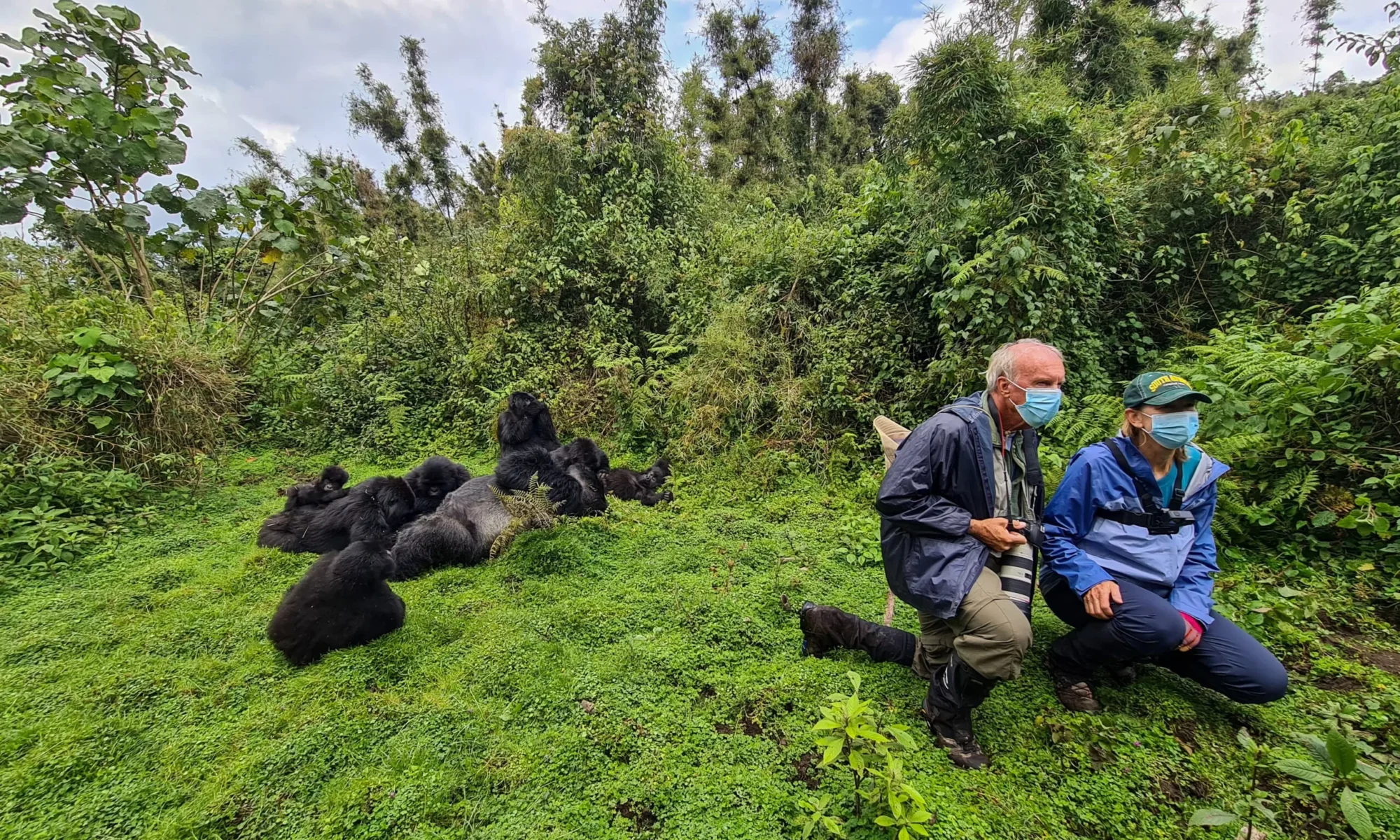
A Guide Gorilla Trekking Adventure in Rushaga

mmerse yourself in the heart of Bwindi Impenetrable National Park and embark on an unforgettable gorilla trekking adventure in the Rushaga sector. This remote and enchanting region offers a unique opportunity to encounter these majestic creatures in their natural habitat.

Why Choose Rushaga for Gorilla Tracking?

The Rushaga sector is home to several habituated gorilla families, making it an excellent choice for gorilla trekking. Here’s why you should consider this destination:

  • High Success Rate: With multiple habituated families, the chances of finding and spending time with gorillas are high.
  • Remote and Peaceful: The Rushaga sector is less crowded than other areas of Bwindi, allowing for a more intimate and peaceful experience.
  • Stunning Scenery: Trek through lush rainforests, rolling hills, and breathtaking views.
  • Cultural Immersion: Experience the rich culture of the local Batwa people, the original inhabitants of the forest.

Planning Your Gorilla Tracking Adventure

Before you embark on your gorilla tracking adventure, here are some essential things to consider:

  • Permits: Gorilla trekking permits are limited and in high demand. Book your permit well in advance through a reputable tour operator or directly with the Uganda Wildlife Authority.
  • Physical Fitness: Gorilla tracking involves hiking through challenging terrain, so it’s important to be in good physical condition.
  • What to Pack: Pack comfortable hiking boots, rain gear, insect repellent, sunscreen, and a first-aid kit.
  • Respectful Behavior: Remember to maintain a safe distance from the gorillas and follow the guidelines set by your guide.

A Day of Gorilla Tracking

Your gorilla trekking adventure will begin early in the morning with a briefing at the park headquarters. You will be assigned a group and a guide who will lead you through the forest. The trek can take anywhere from 30 minutes to several hours, depending on the location of the gorilla family.

Once you find the gorillas, you will have one hour to observe them in their natural habitat. This is a truly magical experience that will stay with you forever.

Beyond Gorilla Tracking

In addition to gorilla tracking, there are many other activities you can enjoy in the Rushaga sector, including:

  • Hiking to the Batwa Cultural Trail
  • Visiting the Nkuringo Community Center
  • Birdwatching
  • Nature walks

Tips for a Successful Gorilla Tracking Experience

  • Book your trip during the dry season (June to September and December to February) for better weather conditions.
  • Hire a reputable tour operator with experienced guides.
  • Be prepared for challenging terrain and changing weather conditions.
  • Respect the gorillas and their habitat.
  • Relax and enjoy the experience!

Gorilla tracking in Rushaga is an unforgettable adventure that offers a unique opportunity to connect with these incredible creatures. With careful planning and a sense of adventure, you can make your dream of seeing gorillas in the wild a reality.

A Guide to Gorilla trekking in Buhoma

Buhoma, located in the Bwindi Impenetrable National Park in southwestern Uganda, is one of the most popular destinations for gorilla trekking in the world. Here, you have the chance to encounter these gentle giants in their natural habitat, an experience that is sure to be the highlight of your trip to Uganda.

Planning Your Trip

Before you embark on your gorilla trekking adventure, there are a few things you need to know.

  • Permits: Gorilla trekking permits are limited and can sell out quickly, so it is important to book your permit in advance. You can book your permit through a tour operator or directly through the Uganda Wildlife Authority (UWA).
  • Best Time to Visit: The best time to visit Buhoma for gorilla trekking is during the dry seasons, from June to September and from December to February. During these months, the weather is typically dry and sunny, making it easier to spot the gorillas.
  • What to Pack: Be sure to pack comfortable walking shoes, long pants, a long-sleeved shirt, a raincoat, and insect repellent. You will also need to bring a daypack with snacks, water, and binoculars.

The Gorilla Trek

Gorilla trekking is a challenging but rewarding experience. The trek can take anywhere from a few hours to a full day, depending on the location of the gorilla family you are tracking. Once you find the gorillas, you will be able to spend an hour with them before you have to leave.

Tips for a Successful Trek

  • Stay Quiet: Gorillas are shy creatures, so it is important to stay quiet during the trek.
  • Follow Your Guide’s Instructions: Your guide will know the best way to approach the gorillas and will keep you safe.
  • Respect the Gorillas’ Space: Do not get too close to the gorillas or make any sudden movements.
  • Bring a Camera: You will want to capture this once-in-a-lifetime experience on camera.

Other Things to Do in Buhoma

In addition to gorilla trekking, there are a number of other things to see and do in Buhoma. You can visit the Batwa Cultural Center, go on a nature walk, or visit the Buhoma Community Rest Camp.

Conclusion

Gorilla trekking in Buhoma is an unforgettable experience. If you are looking for an adventure that will take you off the beaten path, then this is the perfect destination for you.

The One and Only Gorilla Nest: Africa’s Number One Luxury Safari Experience

One & Only Gorilla’s Nest Opens in a new windowwww.oneandonlyresorts.com

One & Only Gorilla’s Nest, Rwanda

Would you like to know more about One&Only Gorilla’s Nest or plan a trip to Rwanda?

Would you like to go gorilla trekking Rwanda?

Buutu Safaris https://www.buutusafaris.com/

The One and Only Gorilla Nest is an eco-chic retreat that offers an unparalleled opportunity to experience the magic of Rwanda while indulging in world-class hospitality. This 5-star resort is nestled on the edge of Volcanoes National Park in Rwanda making it the idyllic lodge for those going gorilla trekking Rwanda. We were excited to be back because this time we had 2 nights at what is arguably the most luxurious gorilla safari lodge. 

As we drove in, the rapturous sound of the Intore Rwanda traditional dance commenced in the distance, setting alight an anticipative mood. The drums grew louder and soon the vigorous dancers were around our approaching car as it came to a standstill. Upon alighting, the dancing men adorned in regal headgear with shield and spear in arm perform greeted us as the women continued dancing so elegantly as they mimicked the movement of the grey crown crested cranes.The dance was a fitting welcome that left a lasting impression.

Barbara, our host, walked us into the stunning welcome area where we sat by the cozy fireplace. Barbara briefed us about the lodge which covers 35 acres and is replete with spas, restaurants, tennis courts, gym. The enticing snacks that awaited us at the buffett set on beautiful live edge tables  grabbed our immediate attention but the spa, restaurant and stunning gardens all remained on top our list too.

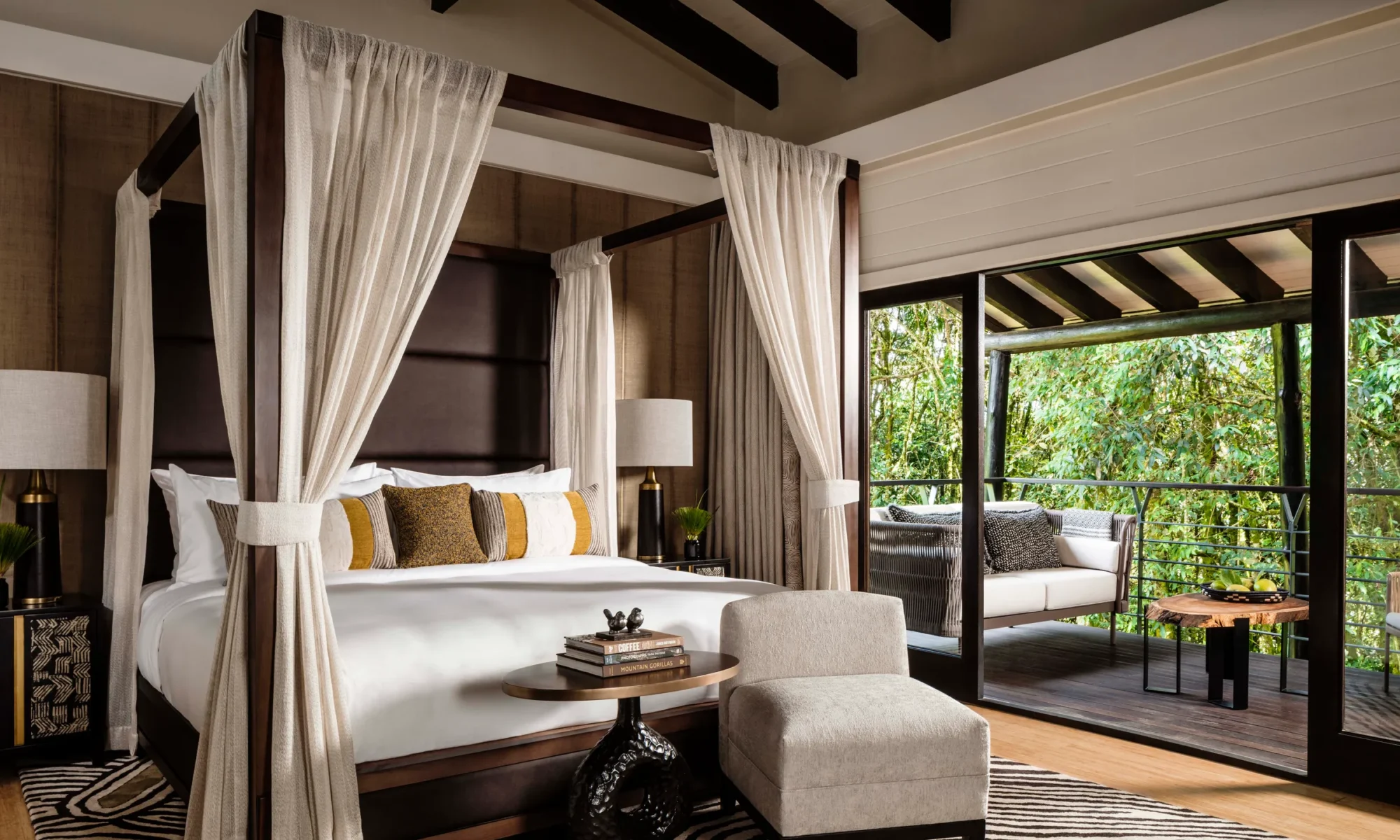
The Gorilla Nest boasts a collection of stunning forest treehouses, each offering breathtaking views of the surrounding rainforest and volcanic hills. Every inch of the suite is well curated.Barbara ensured we got the most secluded suite with prime views of the forest.

We were driven in golf carts to our suite which was located in the far reaches of the property. The 2,700ft (251sqm) spacious suite was designed with floor to ceiling glass windows which optimised the lush green views of the forest outside. The expansive living and dining spaces were complemented with a cosy fireplace. The room was extravagantly furnished with a beautiful live edge dining table in the dining area, sofas and a fireplace. The master bed  stick and own umbrellas, porcelanosa bathware, outdoor bathtub, bath robins and slippers.

The doors opened to a large deck into the eucalyptus forest where the leaves constantly rustled as the breeze welcomed us into this space. The large balcony was furnished with a daybed, two sets of sofas set on each end of the balcony and a beautiful open air bathtub. The first night was ideal as pillows were just right. The pillows were just perfect. 

At dinner, we were eager to try out the world famous The One and Only Gorilla Nest food. We enjoyed a four course meal where the menu was replete with dishes made of mainly locally grown ingredients like baby aubergine etc. At every meal the offers of Rwandan and international cuisine seemed limitless. We settled for duck and it was served as the main dish for our first dinner..

In the morning, our butler drove us to breakfast where a sumptuous menu awaited. Before we set off, the staff ensured we were well prepared for the trek providing all the extras including walking sticks, gloves, ponchos and gators. We set off for the gorilla trekking to see the Sussa family which afforded us the thrill of seeing 23 gorillas! Our lunch box was so well packed complete with champagne bottles. 

After the long trek we returned to the lodge and headed for the spa. The one of a kind jungle spa is set amidst the eucalyptus trees, surrounded by beautiful, eye-catching flowers and soundtracked by bird song. The smell of freshly picked roses beckoned us further into the spa where an extensive range of spa and wellness treatments awaited. We opted for the full body massage which was done with coconut oil and locally grown coffee beans. It  TURNED OUT to be an immersive wellness experience that rejuvenated and revitalised with nature inspired energies. 

Thereafter, we set off to enjoy our suite. Our extensive balcony provided the luxury of silence for our evening yoga session. As we moved we felt in touch with nature’s energies making for a transcendental evening. 

Once again dinner presented another occasion to enjoy the best of the meals.The rich tastes of our Ossobuki made for a great meal inspired by Rwandan ingredients.

The morning came by so fast and in what felt like an instant it was departure time. 

Why Choose The One & Only Gorilla’s Nest?

  • Prime Location: Situated just minutes from the park headquarters, the resort offers convenient access to gorilla trekking adventures and other activities within the park.
  • Exceptional Service: The resort’s dedicated staff provides personalized service, ensuring a truly unforgettable experience.
  • World-Class Dining: The resort’s restaurant serves exquisite cuisine, showcasing the flavors of Rwanda and beyond.
  • Sustainability: One&Only Gorilla’s Nest is committed to sustainability, incorporating eco-friendly practices throughout the resort.

Activities at The One & Only Gorilla’s Nest

  • Gorilla Trekking: The highlight of any visit to Volcanoes National Park is a once-in-a-lifetime encounter with the majestic mountain gorillas.
  • Golden Monkey Trekking: Embark on a thrilling trek to see the playful golden monkeys in their natural habitat.
  • Hiking and Nature Walks: Explore the park’s diverse landscapes on guided hikes and nature walks.

Cultural Experiences: Immerse yourself in Rwandan culture by visiting local villages and learning about the country’s rich heritage.

FAQs

1. What is the best time to visit One & Only Gorilla’s Nest?

The best time to visit One & Only Gorilla’s Nest is during the dry seasons, which are:

  • June to September: This is generally considered the peak season with the best weather. Expect less rain and pleasant temperatures, making trekking more comfortable.
  • December to February: Another dry period with good weather conditions for exploring the park.

Why these times are ideal:

Better Weather: Less rain means drier trails and more comfortable trekking conditions.

Clearer Views: Reduced rainfall often results in clearer views of the stunning volcanic scenery.

Peak Season: While this means higher prices and more crowds, it also ensures the best availability for gorilla trekking permits.

2. How much does it cost to stay at The One & Only Gorilla’s Nest?

4. Is One&Only Gorilla’s Nest family-friendly?

A safari in Uganda is 30 percent cheaper compared to one in neighbouring Kenya

Our riverboat guide looks at me earnestly. ‘Did you know that hippos are actually really bad swimmers but elephants can swim very well?’ asks Clinton.

We are on a small boat in Murchison Falls game park on the Victoria Nile River in north-west Uganda. There are hippo eyes all around our boat, their crinkly eyebrows peeping above the water.

‘They look like they’re swimming but their feet are on the muddy ground flats,’ he says.

Just then, there is a gasp from my fellow travellers. In the middle of the river, a family of elephants is crossing. They are up to their bellies in water, feet on the shallow bottom. Two babies have their trunks firmly wrapped around their mothers’ tails for security.

The big bull flaps his ears as the boat approaches. At the back of the line are the teenagers. They’re having a ball, lolloping around like overgrown labradors. They suck water up and then spray it every which way. One of them ducks under and rolls over. Another dives submarine-style and uses his trunk as a snorkel. ‘See how they swim?’ says Clinton.

Uganda is a small landlocked country in East Africa. It shares borders with Kenya and Tanzania and is crammed with wildlife, but the price of its safaris is comparatively cheaper. A good-value safari costs about £200 per day – 30 per cent lower than in Kenya.

And the bonus is that you are not competing with crowds. You won’t have to share your lion with 20 other vehicles jostling for the best camera positions. If you have the budget, there is also the option to visit gorillas in the Bwindi Impenetrable Forest – a permit in Uganda costs half that of one in Rwanda.

Another plus is the accommodation. There are lots of authentic options, built with techniques in harmony with the environment.

English is the common language and the country is relatively stable after civil wars raged in the 1970s and 1980s. The current president, Yoweri Museveni, has been in power for nearly 40 years and under pressure for human rights violations. He helped to topple Idi Amin and has held office since 1986, although he is facing mounting calls to step down.

Murchison Falls is the country’s biggest game park. Ibra, my driver, and I head out at first light for a land-based adventure.

‘Look,’ says Ibra. Ahead is a small herd of giraffes, walking with that peculiar swaying grace. One stretches up its neck and nibbles a delicacy from a thorn tree. We are so close that I can see the individual chin hairs on the big male. 

‘Giraffes have the same number of vertebrae in their necks as humans – seven. But it’s just that theirs can be 10 inches long,’ says Ibra. One for the pub quiz. As we drive on, four different types of antelope play tag with our jeep. A sullen group of water buffalos – the most dangerous animal in the bush – glare out at us from a water hole.

We have the park to ourselves but then we spot a small cluster of vans. A lion is moving slowly through the grasses, coming in and out of view.

It’s an adrenaline rush.

Later, I spot two sets of furry ears in the bush and then a hyena breaks cover and gallops straight ahead of us for several hundred yards. ‘I’ve never seen one do that before,’ concedes Ibra.

Uganda is not all about safari. It has good restaurants and a busy nightlife scene in the cities. Music and dancing are a major part of life and Ugandans will twerk at any opportunity.

Women wear wrap skirts and headscarves in bright colours. They rule the open-air markets, sitting in front of piles of mangos, pineapples and large avocados.

Don’t try Ugandan food if you are on a protein or keto diet. It majors in carbohydrates and the portions are vast.

My favourite food is the Rolex. It’s an omelette wrapped in a chapatti and made fresh in front of you on an iron griddle at tiny roadside stalls. 

After the excitement of seeing the Big Five, I want to relax for my last few days so head to Lake Bunyonyi, known for its peace and bird-watching. I’m picked up by boat and cruise across the water to my lodge on one of the 29 islands. Blue kingfishers and regal-crested cranes swoop over the boat.

I’m billeted in a thatched hut with no door; the shower is outside and warmed by the sun.

My last day is spent watching a family of kingfishers dart in the shallows as regal-crested cranes fly by – and remembering those mischievous teenage elephants snorkelling down the Nile.

What You Need To Know When Planning For A Gorilla Trekking Safari?

Gorilla Trekking is a thrilling and once-in-a-lifetime experience that allows you to get up close and personal with some of the world’s most magnificent creatures – the mountain gorillas. Found in the dense forests of Uganda, Rwanda, and the Democratic Republic of Congo, these gentle giants are critically endangered and only a limited number of permits are issued per day to ensure their conservation. 

Choosing the right safari operator: 

When planning a gorilla trekking safari, it is crucial to select a reliable and experienced safari operator. Look for operators with a good track record in organising wildlife safaris, particularly gorilla treks. They should have knowledgeable guides, good reviews from previous clients, and prioritise the safety and well-being of the gorillas and tourists alike.

Uganda:

The Pearl of Africa- Uganda is a popular destination for gorilla trekking, offering a unique opportunity to explore the lush Bwindi Impenetrable National Park. This park is home to almost half of the world’s remaining mountain gorillas, making it the best place to encounter these majestic creatures. In addition to the gorillas, Bwindi is teeming with other wildlife, including over 120 mammal species and over 350 bird species.

Rwanda:

Land of a Thousand Hills Rwanda is another excellent destination for gorilla trekking, with Volcanoes National Park being the main attraction. This park is famous for its breathtaking landscape and its population of habituated mountain gorillas. Trekking through the misty forests of Volcanoes National Park is an awe-inspiring experience that offers a chance to witness the gorillas in their natural habitat.

The Democratic Republic of Congo:

An Adventure in the Wild For the more adventurous traveller, the Democratic Republic of Congo provides an off-the-beaten-path gorilla trekking experience. Virunga National Park is home to the critically endangered mountain gorillas and offers a chance to explore one of Africa’s most biodiverse regions. While trekking in Congo can be challenging, it rewards visitors with stunning scenery and a truly authentic experience in the wild. 

Booking a Permit to partake in a gorilla trekking safari:

It is essential to book a permit in advance. Due to conservation efforts, permits are limited and sell out quickly, especially during peak seasons. It is advisable to book your permit several months in advance to secure your spot and avoid disappointment. The permits are often quite expensive, but the funds generated from them go towards gorilla conservation efforts. 

Guidelines for a Successful Trek:

Gorilla trekking requires physical fitness and a sense of adventure. You will be walking through dense forests and uneven terrains, so it is vital to be prepared with appropriate hiking gear. Remember to bring sturdy hiking boots, long pants, waterproof clothing, and insect repellent. Additionally, respect the gorillas’ space and follow the guidelines provided by your tour guide to ensure their well-being and minimise the impact on their natural habitat. Conclusion Gorilla trekking is an extraordinary experience that offers a unique insight into the world of these gentle giants.

Whether you choose Uganda, Rwanda, or the Democratic Republic of Congo as your destination, the opportunity to see mountain gorillas up close will leave a lasting impression. Remember to plan ahead, choose a reputable safari operator such as Buutu Safaris, and respect the gorillas and their environment. Start planning your gorilla trekking adventure today and embark on an unforgettable journey into the heart of Africa’s forests.

Choose the Right Destination

When it comes to gorilla trekking, there are three main destinations to choose from: Uganda, Rwanda, and the Democratic Republic of Congo. Each offers a unique experience, but all provide an opportunity to observe these magnificent creatures in their natural habitat. Uganda, known as the “Pearl of Africa,” is home to the famous Bwindi Impenetrable National Park. This lush rainforest is home to nearly half of the world’s mountain gorilla population.

Trekking in Uganda offers a chance to not only see gorillas but also discover other incredible wildlife and stunning landscapes. Rwanda, often referred to as the “Land of a Thousand Hills,” is known for its beautiful Volcanoes National Park. Here, visitors can engage in an unforgettable gorilla trekking experience. The park is easily accessible from the capital city of Kigali, making it a convenient choice for travellers with limited time. For the more adventurous traveller, the Democratic Republic of Congo provides an off-the-beaten-path gorilla trekking experience. Virunga National Park is home to the critically endangered mountain gorillas and offers a chance to explore one of Africa’s most biodiverse regions. While trekking in Congo can be challenging

How do you differentiate Chimpanzees from Gorillas?

Many times people will come visit Uganda and Rwanda to see mountain Gorillas and Chimpanzees but often confuse gorillas for chimpanzees.These two Apes  have distinctive features,and this is how you will be able to tell a difference on your next primate safari in Uganda and Rwanda.

Comparing Mountain Gorillas vs Chimpanzees;

Classification:

While mountain gorillas and chimpanzees are both Great Apes, the former belongs to the Gorilla Beringei  species while the latter is part of the Pan troglodytes species.

It is undeniable that humans are closely related to these primates but the chimpanzees share more DNA with us (98.6%) compared to the Gorillas that share 98.2% only. This less than 2% genetic difference is remarkable.

Appearance:

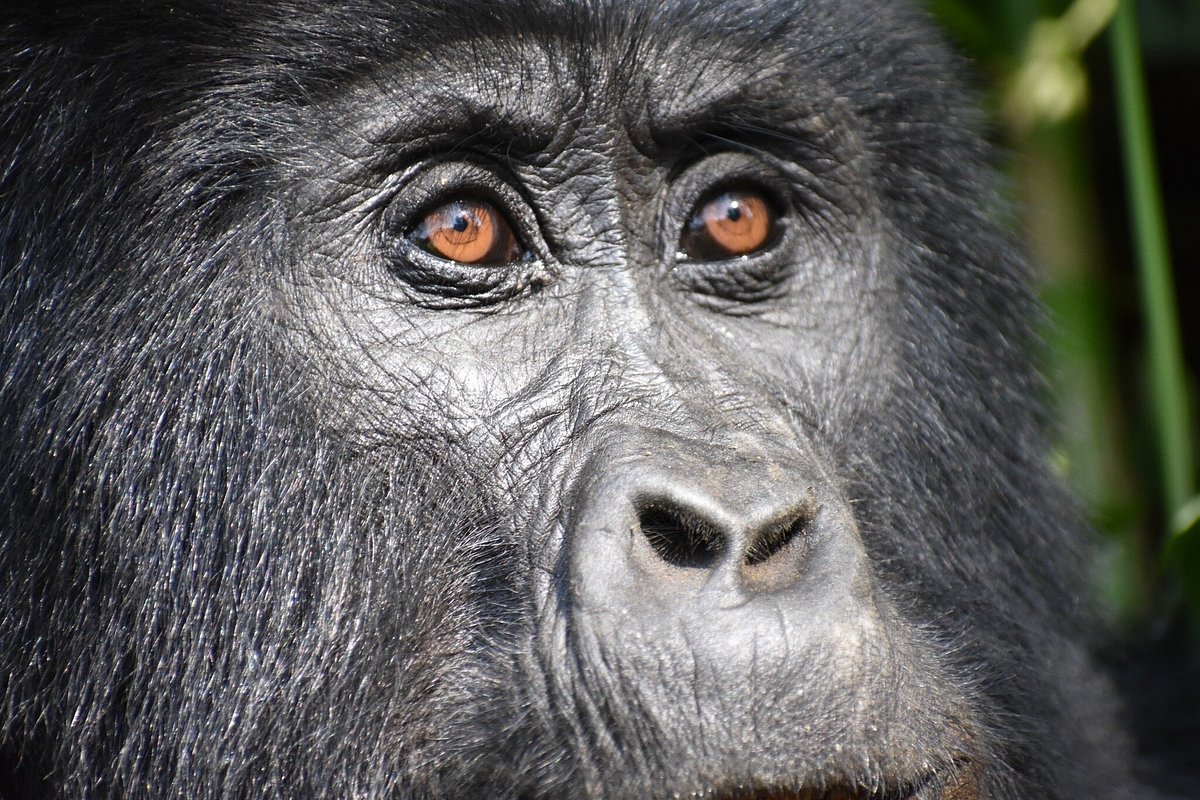
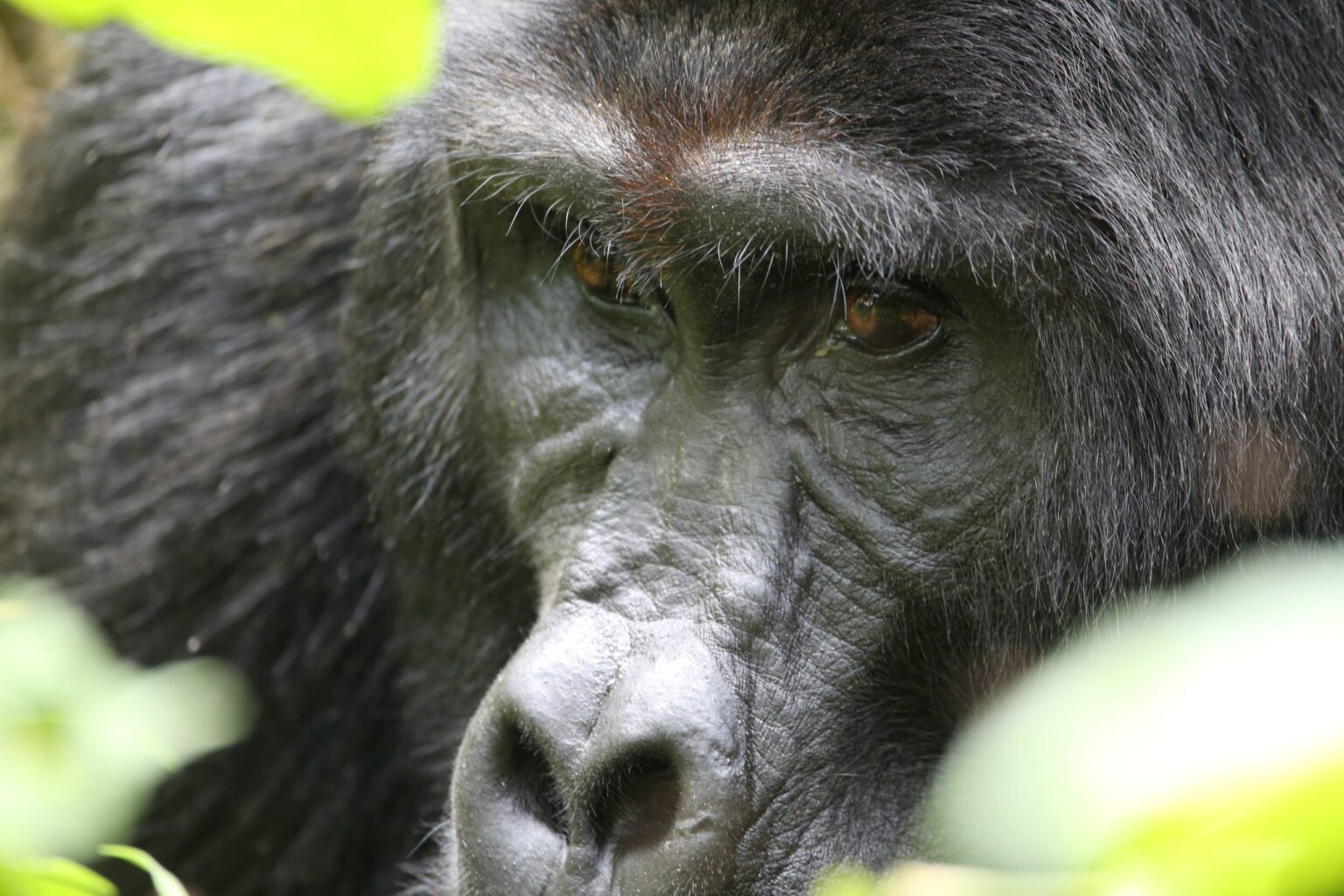
Mountain Gorillas have a long and thick fur coat, blue-black or brownish-gray in color, which provides insulation against colder temperatures. Young, reproductively immature male gorillas are known as “blackbacks.” Fully mature males sport a swath of silver-colored hair along their backs, leading them to be called “silverbacks.” This silvering begins at about age 13.

As babies, chimpanzees’ expressive, human-like faces are bare of fur and pinkish in color, as are the palms of their hands and soles of their feet. But as they mature, this pinkish skin coloring changes to black. White beards adorn the underside of chins for both males and females.

The chimps also have large ears that frame the faces of these primates and provide them with excellent hearing. Endowed with good eyesight and color vision, chimpanzee’s forward-facing eyes allow them to clearly focus on objects. 

Intelligence:

It is for a fact that both gorillas and chimpanzees are intelligent species but when you compare them, chimpanzees are more intelligent compared to the mountain gorillas.

During your Uganda Gorilla & Chimpanzee Safari, you will notice their intelligence owing to the fact that they are more closely related to us humans.

Size, strength and Lifespan

Mountain gorillas weigh approximately 227kg(500 pounds) and are 6 feet tall compared to the chimpanzees that weigh approximately 68 kgs (150 pounds) and are  5 feet tall.

As a matter of fact, gorillas are known to be the largest Apes in their family line and surprisingly, they are 10 times heavier and stronger than humans.

Average chimpanzee lifespan in the wild is between 45 and 50 years, with some living as long as 60 years. Then for mountain gorillas in the wild it is 40 – 50 years.

Diet

Like their human cousins, chimpanzees are omnivores. That is, their diet consists of both plant and animal life. While the bulk of their diet is seasonal fruits, leaves, flowers, bark, seeds, and nuts, chimpanzees also hunt and eat mammals smaller than themselves, including other primates such as colobus monkeys. Groups of chimpanzees have cooperated to successfully stalk and kill young antelopes, often using sticks as weapons. To munch on one of their favorite snacks, termites, chimpanzees will use a twig to dislodge the insects from their nests. They use rocks to smash open nuts and use leaves to catch water.

Mountain gorillas eat a mostly vegetarian diet that consists of leaves, stems, bark, shoots, roots, flowers, and fruit. Less than 1 percent of its diet comes from insects. Adult males consume up to 75 lb (34 kg) a day; adult females consume up to 40 lb (18 kg) a day. Gorillas get their daily water requirement through the plants they eat.

Social

Chimpanzees and gorillas are both social primates, which you will attest to during our primate tours but the fact still remains that the former are more sociable, friendly, welcoming, and will be attentive to your presence.

Gorillas on the other hand are down to earth but docile, quite shy, and prefer going about their daily routines.

Geographical location and nature of habitats

These Great Apes live in the dense rainforests of Africa and can’t live in the same home range owing to their protective and territorial behavior.

However, you will be surprised by how gorillas live in far more isolated locations than their counterparts that can stay in less dense vegetation like forested savannahs. This isn’t possible with the gorillas that occupy the humid rainforests, most cases in isolated locations.

The mountain gorillas (one of the sub-species of gorillas) for instance live in the dense rainforest on mountains hence making it more difficult to track gorillas than it is with chimpanzees.

Gorillas prefer building their nests on the ground and live in relatively smaller families/groups of 5-20 individuals while chimpanzee nests are mainly built on trees and they live in larger communities/troops of up to 40 individuals.

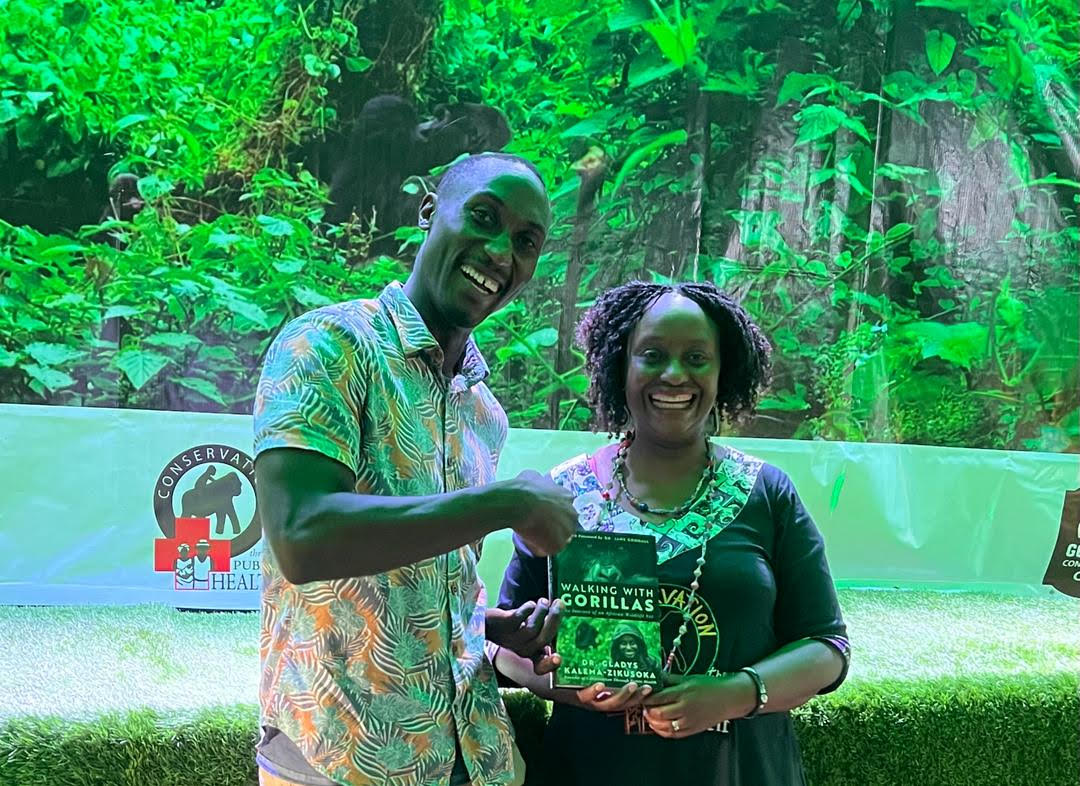
A Conversation with Dr Gladys Zikusooka -Kalema on her new book “Walking With Gorillas”

Our Chief Exploring Officer Daudi Mutalya Balye had the good fortune of catching up with Dr Gladys Zikusoka-Kalema at the launch of her groundbreaking book – Walking With Gorillas. The book details the remarkable journey undertaken by Uganda’s first wildlife vet and the great work of the men and women of Uganda in the conservation of Uganda’s rich biodiversity. We spoke and posed pertinent questions to her for insights of one of Uganda’s leading thinkers and conservationists.

Daudi Mutalya (Buutu Safaris): Congratulations on the monumental book “Walking with the Gorillas”. It was impossible to put the book down when I started reading. I hope more people will read the book and that the book will inspire young and old for generations to come. Thank you for taking the lead in writing a good African story. Gorilla conservation in Uganda has been a tremendous success. How can we scale up this successful conservation model?

Dr Zikusooka Kalema: Yes. I think the success is down to the fact that when Bwindi Impenetrable National Park (BINP) was created, conservation had changed from keeping people out and wildlife in, to engaging communities in conservation. And so that is the main reason gorilla conservation has been a success story. Most of the people from the area were employed by the park. The park focused on employing people from the area around the park. 20% of the park entry fees goes to the communities and 10 dollars from every permit goes to the communities. All this really helped. 

And, the entrepreneurs, the porters have all been supported. The porters are some of the wealthiest in the community. The whole industry has developed around gorillas. The schools and the clinics were supported. It supported the entire economy and turned it around. So people were more willing to protect gorillas because they knew there was a future.

Local involvement, increased revenue sharing and improved veterinary care. All gorillas which fall sick will have someone attending to them. And also improving community health because when people are healthy, they will not make the gorillas sick, and that’s what we focus on in Conservation Through Public Health. The revenue sharing can improve but it is better than in most places.

Daudi Mutalya BTS: The success of gorilla conservation has led to more gorillas. We can assume the continued success of gorilla conservation is going to further increase the number of gorillas so how do we then increase the space for gorilla habitat? 

I think we can increase the space for the gorillas by expanding the park. We have no choice. Rwanda has already started doing it. Uganda has to do it. We have to expand the park by convincing people to sell their land. We can’t run away from it. And they have already started selling to tour operators.

Which I feel is not very good because the gorillas will be locked in by the lodges. Some areas like where there is that narrow neck is a key area. We need land for the gorillas themselves.

I know some lodges do put aside land but others just put buildings.

Daudi Mutalya BTS: We have a rich traditional heritage and yet a huge part has been lost in times of modernity. You have a rich Buganda traditional background. How do we reclaim some of the lost traditional conservation practices that were at the core of conservation?
Through conservation education. 

Documenting everything is key to preserving our traditional heritage. We are not very good at doing things as Africans. We are good at talking but not writing. 

Engaging the cultural institutions, our ancestors for example the Buganda, Tooro kingdom or whichever kingdom. They all have clan leaders and people with this traditional knowledge. Our ancestors and clan leaders, all that is very important. We need to tap it before it disappears. 

When we were celebrating 10 years of UWEC we got the Nabagereka (The Queen of Buganda) to help. In fact, I write about it in the book. 

Buutu Safaris: How do we get conservation outside the park to a more traditional way where conservation remains at the centre of our society?

We need to engage the kingdoms and work closely with the clan leaders. I am so glad that Prince Wassajja was here. We need to revitalise that – working closely with the clan leaders.

Thank you so much once again. All the best with the book tour.

Is Gorilla Trekking Ethical?

Yes, a resounding yes. Gorilla trekking based conservation was created as an African centric solution with conservation and poverty alleviation as top priorities. Its success over the last ten years provides a good template for responsible tourism as it has demonstrated how inclusive travel can help in fighting poverty in Africa.

In the 1990s, the government of Uganda responded to the dire mountain gorilla crisis by creating Bwindi Impenetrable National Park and Mgahinga National Park in the south west of the country. Similarly, Rwanda government created Volcanoes National Park which sits on the border with Uganda and shares an eco-system with Mgahinga National Park. These three parks created a safe haven for mountain gorillas as habitat loss was stopped and poaching reduced.

The governments acknowledged that to conserve the unique forest habitat, the mountain gorillas and other fauna, they had to address the poverty question which precipitated human gorilla conflict. Gorilla trekking was the innovative solution that was created to conserve the forest while enabling Ugandans and Rwandans rise from poverty.

To ensure conservation was aligned to needs of the communities, the government put in place a revenue sharing scheme where 20% of the revenue from gorilla trekking was shared with the local communities. On our visit to Rushaga village in Bwindi last year, we witnessed the revenue sharing as members of Rushaga community received cows from their portion of the revenue they received.

The government effort also created direct employment for marginalised youth who previously engaged in poaching wildlife. As safari lodges opened to accommodate tourists around the national parks, more opportunities were created for Africans in the hospitality sector.As the tourist numbers increased, more opportunities were created in birding and guiding, arts and crafts and for traditional experiences like local gin brewing arose.

The evidence of the success is best seen in the attitude change towards gorillas. There are no fences around the gorilla forest but the communities are now the zealous protectors of the forest. Communities are the intelligence network and work diligently with the authorities to protect the forest and gorillas. Mountain gorillas are now revered in these communities. In Rwanda, the fanfare at the baby gorilla naming ceremony “Kwita Izina ” of new gorillas attests to the intimate connection gorillas have taken in society.

Gorilla trekking has saved gorillas from extinction, enabled thousands rise from poverty and improved independence of African countries by providing much needed non AID revenue. Gorilla trekking has spurred conservation based economy inone of the most unique ecological areas. Thousands of visits every year make it possible to conserve the unique gorilla ecosystem and the mountain gorillas. The gorilla conservation model prioritizes the wellbeing of Ugandans and Rwandans living on margins by creating employment and important opportunities for artisans and dancers especially for women and youth.

Gorilla trekking is probably one of the most successful conservation project in Africa in the last 20 years thanks to the efforts of UWA and RWA. Gorilla trekking conservation gives insights into how humanity can create green sustainable economy.

Having said that, the authorities need to limit the numbers of trekkers per day which means the price needs to rise further. Less number of visitors will cause no distress to gorillas, or damage to their environment. There are various studies have highlighted the contribution of the revenue sharing scheme in Bwindi Impenetrable Forest National Park communities.

There is also the persistent question of the Batwa families who have remained inpoverty despite numerous government interventions to compensate them for their displacement during the creation of national parks. The main reasons for the failure remain a lack of coordination between government and private organizations; unscrupulous Ugandans and Rwandans who use Batwa plight to profit, rampant alcoholism and family breakdown in Batwa.

Responsible tourism is key to conservation of these habituated animals. Strict adherence to standard protocols set in place, and limiting the  number of visitors will create a  viable sustainable green economy.

The beautiful Long Horned Ankole Cows of Uganda

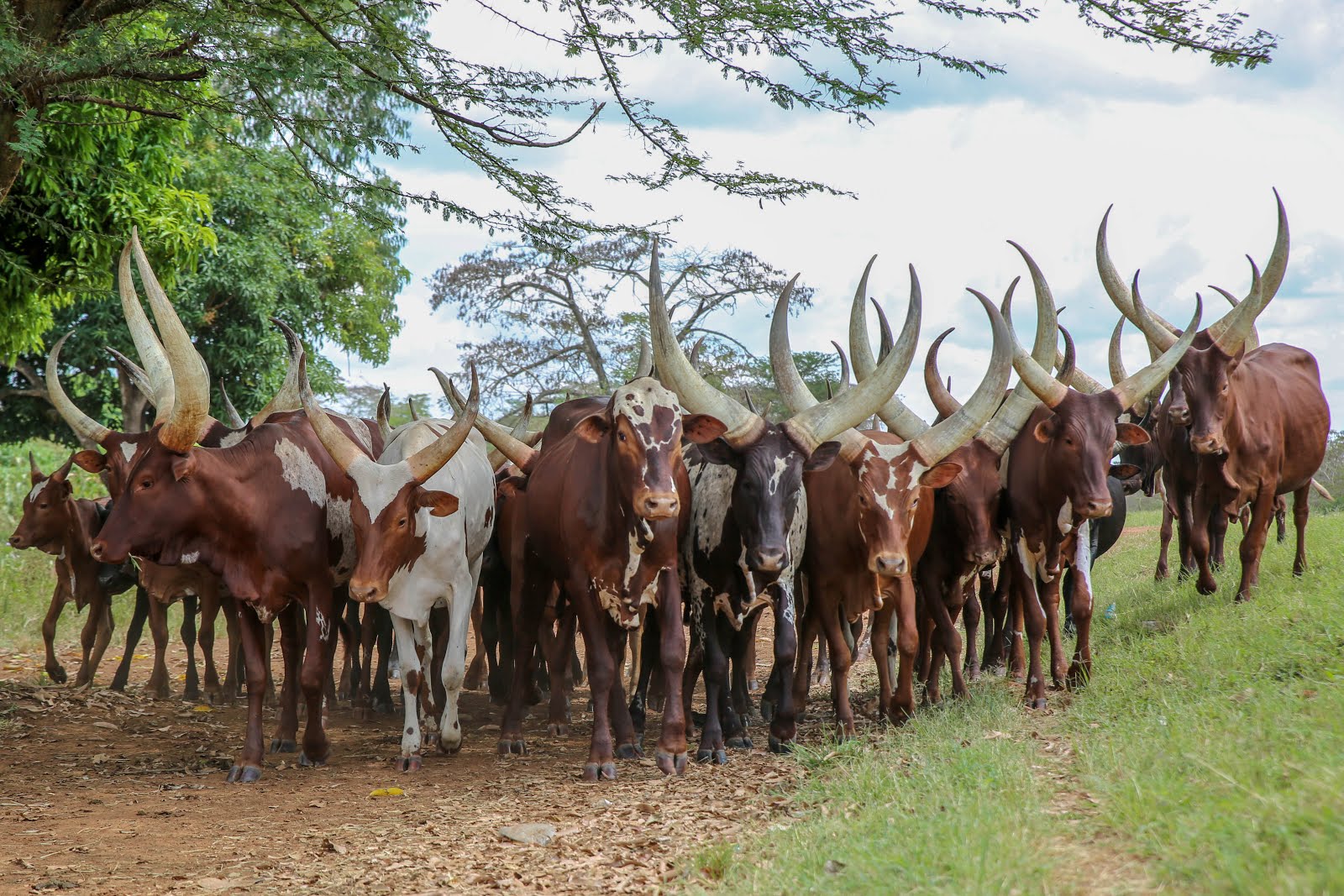
Any visitor to Uganda will tell you one of the most exciting animals you will see outside the national parks is the magnificent long horned Ankole cow. These beautiful ancient cows are originally from the Ankole region in western Uganda but can now be found in most parts of Uganda and in Rwanda. In Rwanda, they are aptly called Inyamba and are known as the cows of royalty/kings.If you’re lucky, you will find yourself pleasantly delayed at a point in your journey as a herd crosses the road.The president of Uganda who is of Ankole origin is said to own a herd of up to 5,000 cows.

Ankole cows have been in Uganda since the middle ages and are said to have descended from Sanga cows in Ethiopia whose origin can be traced back to Europe via Egypt. In fact, images of long horns can also be found in ancient Egyptian art.
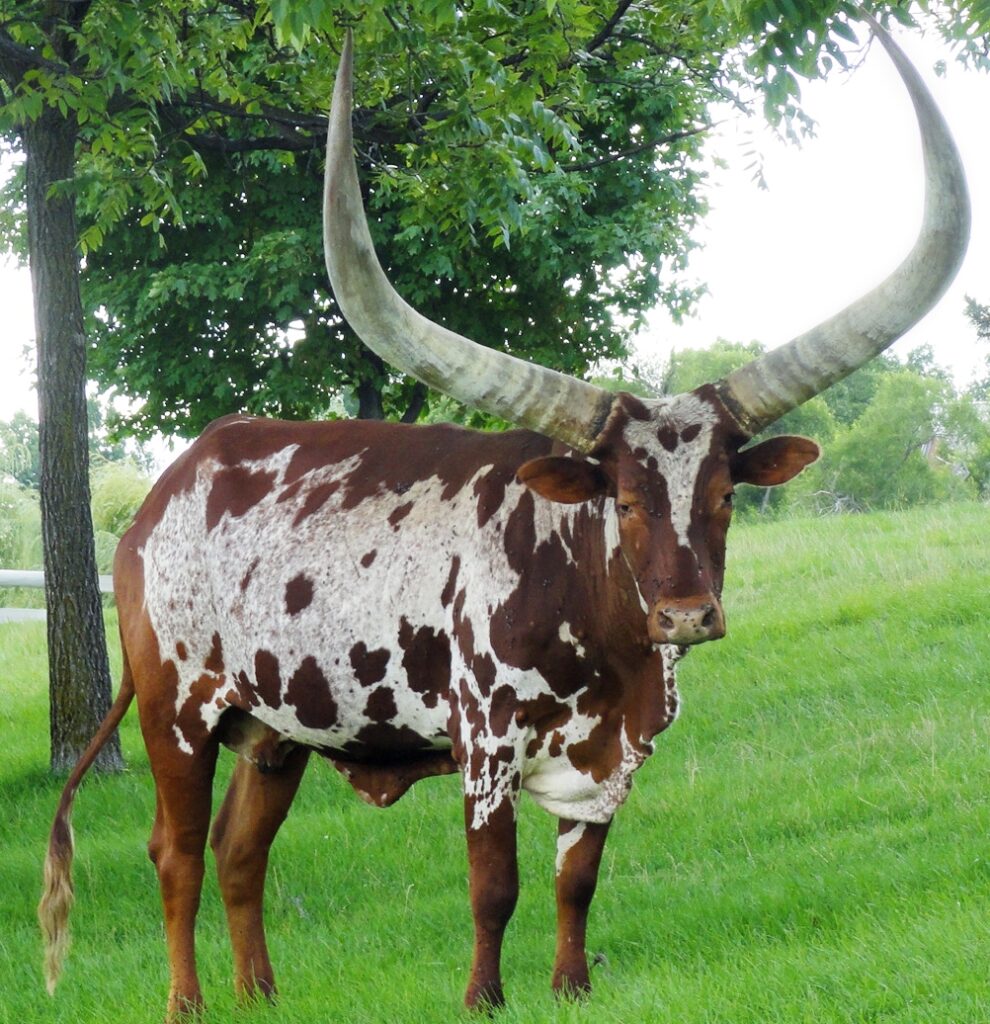
Ankole cows have imposing horns, the largest and most dramatic horns of any breed of cattle in the world. Horns can grow to have horn bases that measure 28 inches in circumference, 8 inches in diameter and 2.5 metres from tip to tip. The horns vary from lateral almost flat growth to an upswept arched shape known as lyre, sometimes with the tips almost touching. These huge horns were used by the cows to protect themselves against predators like hyenas and leopards. The cows banded together and formed a circle with the horns on the outside. They also act as a natural cooling system by circulating blood through to the ends of the horn to disperse the heat before returning it to the body.
These proud owners do not keep the cows just for the beef and milk but also for the pride that comes with having more cows.
Ankole cows are so revered and are still a sign of wealth and pride for the owners. These cows were so important legend has it that once the theft of a king’s favourite cow led to a full scale war that claimed hundreds of lives.

The cows are considered sacred by the Ankole because in days gone by, theAnkole people’s lives wholly depended on the cows. The cattle provided food in the form of meat and milk for domestic consumption. They provided a vital source of food when none would otherwise have been available, especially in times of drought. In the harsh environment in which this breed has adapted for centuries, survival was the primary consideration in their evolution. Through all of these years they became highly tolerant to brutal extremes of tropical Africa. They were rarely slaughtered for meat, except in ceremonies such as the coming of adulthood, the funeral of a loved one. Even when slaughtered, it was taboo to slaughter a young or healthy cow. Slaughtering a healthy cow was the equivalent of cannibalism. As such, only the infertile or old cows were slaughtered for meat. Pastoralists rarely ate meat but occasionally drained blood and mixed it with milk to make a yogurt-like high protein drink.

The cows are now a vital source of income for herders who rear them for beef and milk. Ankole cows are also a valuable gift for dowry. It is the most important gift one can give.
Their dung is used as organic manure in banana plantations as well as for plastering or smearing of huts and houses. For the cows in Rwanda even the dung is used to create art.Last but not least the horns and the skin are used for decoration.
The beauty of these fascinating cows has caught the eyes of many including the president of South Africa Cyril Ramaphosa who bred one in South Africa and recently sold one of his cows for $150,000. Ankole cows have been taken to far flung lands like Ethiopia, UK, Kenya, Egypt, Sweden and U.S.A.

Given these events and a history of profiting from the cultural heritage of indigenous tribes, a Kampala-based law firm, KTA Advocates patented the long-horned Ankole cow as a unique livestock specific to Ankole region in particular and Uganda in general. KTA Advocates say the protection of the image of the long-horned Ankole cow will be under the Geographical Indications Act of 2013.
If you are a meat lover then you can enjoy the roadside barbeque beef on sticks or a steak.
– For more history of Ankole kingdom and Ankole cows:- Igongo Cultural Museum Farm. Stay around Lake Mburo National Park where you can spend a day on an ankole cow farm. Experience the traditional pastoral life as you milk cows and make ghee.

Save Murchison Falls

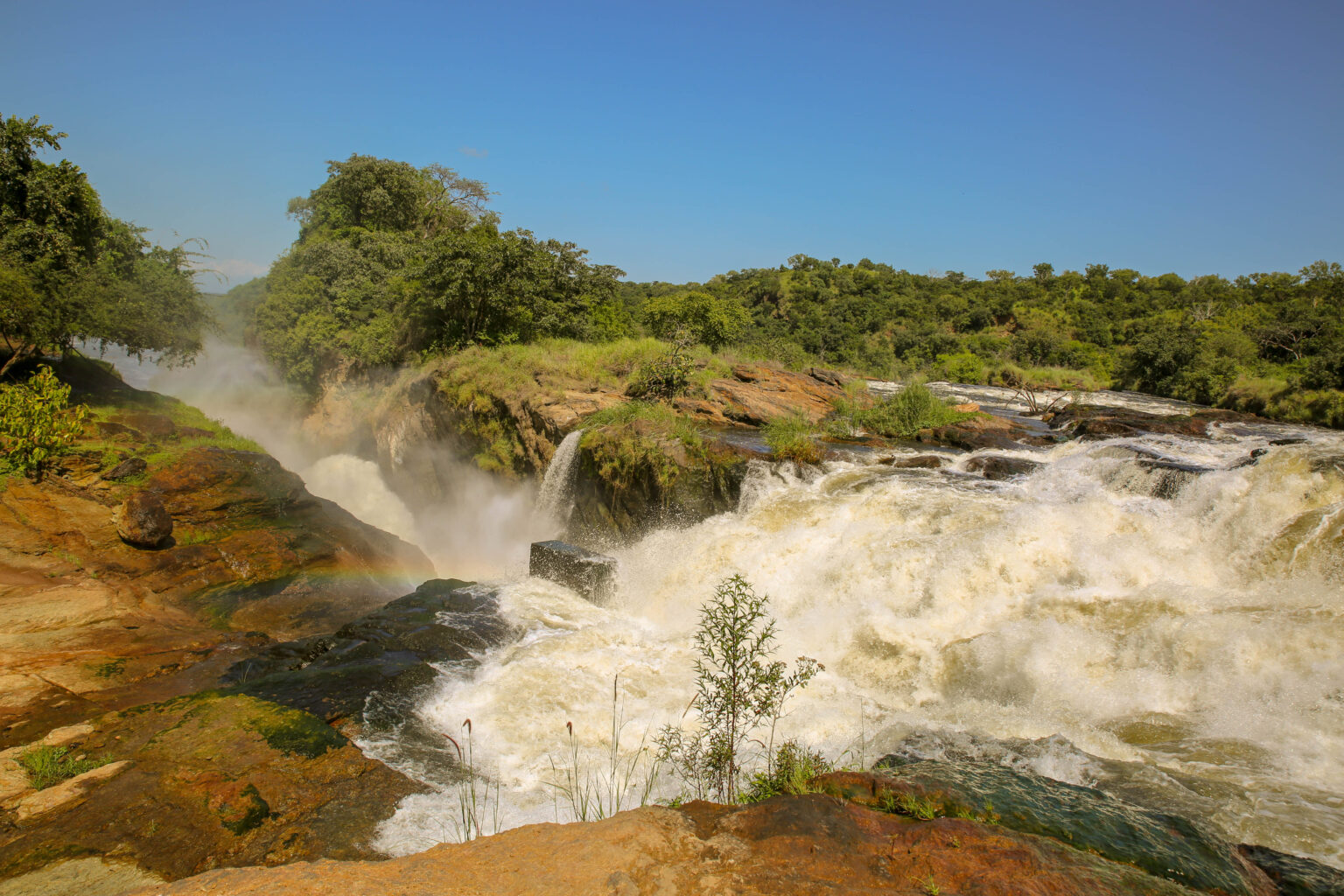
Murchison Falls is one of the most iconic sights of Uganda ‘’The Pearl of Africa.” It is said to be the world’s most powerful waterfall as the Nile gushes through a 6 metre gorge at the river’s narrowest point in its 6,670km length. The legendary waterfall is also the historical place of the Babiito dynasty of Bunyoro Kingdom which traces its origins back to this waterfall. A hike up the falls from the bottom is probably one of the most exhilarating hikes in the world as one has views of the falls from different angles.

Midway through the hike, one sees both Murchison Falls and Uhuru Falls. Words and Youtube videos simply cannot do it justice, so I would advise everyone to visit. The falls are the centerpiece of the expansive 5,072 square km Murchison Falls conservation area, Uganda’s biggest and most popular national park. The park is home to elephants, Nubian giraffes, lions, leopards, hyenas, herds of buffalo, antelopes, chimpanzees & other primates, over 450 species of birds, and a vast range of biodiversity. These unique features attract over 100,000 visitors a year and this number is growing at an annual rate of 8%. The economic benefits are in the tens of millions of dollars from the park fees, chimpanzee and hike fees and the lodge fees paid by these visitors. But, for some seemingly unfathomable reason, the Uganda government wants to dam this thunderous waterfall.

Of course the argument is that we need power, but we now have more power in Uganda than we can consume. So this government’s energy projects beggar belief, especially in times like this where the environmental crisis is claiming more biodiversity by the day all over the world. Is the Uganda government ready to destroy Murchison Falls or Uhuru falls for that matter? Over the last ten years the government has built 3 dams on the Nile in Uganda. In 2010, we watched helplessly as the beautiful Bujagali falls were destroyed by a dam, and then the Karuma, Ayago and Itanda falls. In Jinja, we suffered the brunt of the effects as tourism declined after the falls disappeared. But this time round, we are not going to just sit back and watch as our heritage is destroyed. We have to secure Murchison Falls for future generations of Ugandans and the entire world.

In Jinja, before the construction of the Isimba dam in 2013, we had discussions with Ministry of Energy officials about this government’s energy strategy. We advised against the construction of many dams along the river and instead proposed the government focus on one mega dam –like the Ethiopians have done –as this would have a lower environmental impact. The Uganda government’s multiple dam construction strategy is akin to the construction of numerous pit latrines all over one’s homestead/compound. Pit latrines are most useful but digging many in one’s compound creates a hazardous nuisance. No sane Ugandan builds pit latrines in their front yard. So it is wise for one to construct one deep latrine tucked away behind the house. But the government didn’t listen. Six years later, the government still hasn’t learnt this and is now back to construct yet another dam on the Nile.

Have we not learnt from the environmentally tragic western capitalistic system of economics? The European and US capitalistic approach had initially failed to factor in economic benefits of nature into their capitalistic economic model. As such, environmental damage to the world at large as a result of the pervasive profit driven production and consumption took its toll on the environment in Europe, the United States and the world at large as a few individuals and nations benefited at the cost of the majority. And now, nearly 200 years after the start of the industrial revolution, Americans and Europeans have only just realised the damage the economic system has caused. Western countries are in panic, doing whatever is necessary to save the world from plastic and other detrimental effects of uncontrolled capitalistic production.

Western governments have imposed strict taxes on harmful commodities and pursued brave subsidy programs to encourage greener living. Indeed Europeans and Americans have lost so much biodiversity that they now flock to sub-Saharan countries to see biodiversity like mahogany and mvule trees, elephants, birds and plants that their forefathers destroyed in their own countries during the madness of unbridled capitalism. One would think that Ugandans would ask themselves why a European or an American pays $1,500 for a flight to come to Uganda to spend a further $10,000 just to drive around Uganda and see the country we have. But, it appears our politicians are lost in maximising power and economic benefit whereas the average Ugandan is preoccupied by short term needs like paying school fees, constructing houses and going for Kwanjula (traditional wedding ceremonies). We barely ever take time to think about the environment –the very thing that sustains our life. Future generations will judge us very harshly, so I implore fellow Ugandans to come together and not only fight for Murchison Falls, but also start taking environmental issues seriously. Selfish leadership will capitalize on our ignorance and rob not only us, but our future generations.

There are many renewable energy alternatives that are now viable in Uganda. Solar energy is one such alternative that ought to be explored given the monumental leaps in the technology in the last 5 years. The government can learn from the UK, a country with minimal sunshine yet their government encourages citizens to use renewable energy. The UK used a two pronged approach that allowed individuals to take matters in their own hands and invest in solar energy using government grants and subsidies. As such wind turbines and solar powered homes increased to one million. The government also encouraged large scale investment in renewable resources.
The UK government’s solar energy initiatives were so successful that for the first time in 2016 the sun provided more energy to the UK grid than coal plants. Uganda has a lot more sunlight hours than the UK as it straddles the equator. There are many sustainable alternative means of meeting our energy needs.
Leave Murchison Falls be.